
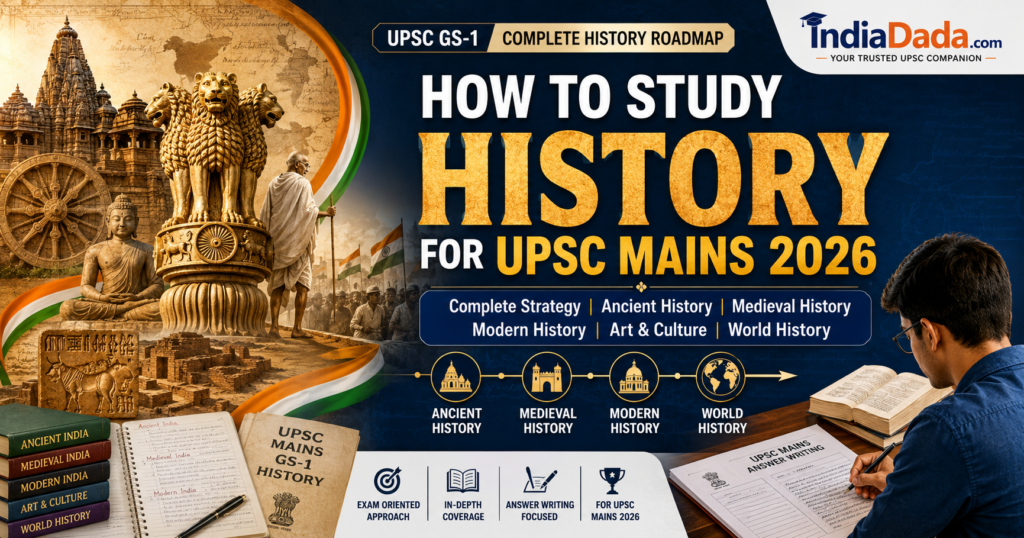
How To Study History For UPSC Mains?
Complete History Preparation Strategy, Weightage Analysis & Study Roadmap
Introduction
UPSC Civil Services Examination में History सबसे महत्वपूर्ण और सबसे अधिक Scoring विषयों में से एक माना जाता है। History केवल GS Paper-1 तक सीमित नहीं है, बल्कि Prelims, Essay, Ethics, Interview तथा Optional Subjects में भी इसका प्रभाव दिखाई देता है।
अधिकांश अभ्यर्थी History को बहुत बड़ा और कठिन विषय मानकर डर जाते हैं। वास्तविकता यह है कि UPSC पूरे इतिहास को नहीं पूछता बल्कि कुछ विशेष Themes, Concepts और Repeated Areas पर अधिक ध्यान देता है।
यदि सही Strategy, PYQ Analysis और Smart Revision Technique अपनाई जाए तो History GS-1 में अत्यंत अच्छे अंक दिलाने वाला विषय बन सकता है।
UPSC GS-1 History Weightage Analysis
| History Segment | Approximate Marks |
|---|---|
| Modern History | 20-30 Marks |
| Ancient History | 10-15 Marks |
| Medieval History | 5-10 Marks |
| Art & Culture | 15-25 Marks |
| World History | 10-15 Marks |
| Post Independence | 5-10 Marks |
Biggest Mistake Made By Aspirants
अधिकांश विद्यार्थी History को Chronological Story की तरह पढ़ते हैं और Kings, Battles तथा Dates याद करने में समय बर्बाद करते हैं।
UPSC का फोकस अब Political History से अधिक Social Change, Cultural Developments, Religious Movements, Economic Transformation और Historical Analysis पर है।
Ideal Priority Order For History Preparation
- Modern History
- Ancient History
- Art & Culture
- Medieval History
- World History
- Post Independence
इसी क्रम में अध्ययन करने से कम समय में अधिकतम Coverage प्राप्त किया जा सकता है।
80% Coverage Strategy
UPSC GS-1 में पूछे जाने वाले अधिकांश प्रश्न इन्हीं तीन क्षेत्रों के आसपास केंद्रित रहते हैं।
Three Layer Preparation Formula
- Syllabus Analysis
- Previous Year Questions Analysis
- Current Affairs Integration
इन्हीं तीन Layers पर आधारित तैयारी History को अधिक प्रभावी और Exam-Oriented बनाती है।
Golden Rule
Read Themes, Not Stories.Read Concepts, Not Just Dates.Read Analysis, Not Just Events.
Modern History Strategy For UPSC
Freedom Struggle, Gandhi, Social Reform & British Policies
Why Modern History Is Most Important?
UPSC GS-1 History का सबसे महत्वपूर्ण भाग Modern History है। लगभग हर वर्ष Modern India से प्रत्यक्ष या अप्रत्यक्ष प्रश्न पूछे जाते हैं।
Modern History केवल घटनाओं (Events) का अध्ययन नहीं है बल्कि भारत में हुए राजनीतिक, सामाजिक, आर्थिक और वैचारिक परिवर्तनों को समझने का विषय है।
UPSC Modern History Weightage
| Area | Importance |
|---|---|
| Freedom Struggle | ★★★★★ |
| Gandhian Era | ★★★★★ |
| British Policies | ★★★★☆ |
| Social Reform Movements | ★★★★☆ |
| Revolutionary Activities | ★★★☆☆ |
| Constitutional Developments | ★★★★☆ |
Most Important Theme: Gandhi
UPSC का सबसे पसंदीदा Modern History Topic महात्मा गांधी हैं।
सिर्फ आंदोलनों के नाम याद करना पर्याप्त नहीं है। गांधी की Philosophy, Strategy, Methods और Impact को समझना आवश्यक है।
Topics Related To Gandhi
- Champaran Satyagraha
- Kheda Movement
- Ahmedabad Mill Strike
- Non-Cooperation Movement
- Civil Disobedience Movement
- Quit India Movement
- Constructive Programme
- Trusteeship Theory
- Gram Swaraj
- Non-Violence
Important Comparisons Asked By UPSC
| Comparison | Importance |
|---|---|
| Gandhi vs Ambedkar | Very High |
| Gandhi vs Tagore | High |
| Gandhi vs Subhash Bose | High |
| Moderates vs Extremists | Very High |
British Policies You Must Study
- Permanent Settlement
- Ryotwari System
- Mahalwari System
- Drain of Wealth
- Commercialization of Agriculture
- Deindustrialization
- Railways & Communication
Social Reform Movements
UPSC बार-बार Social Reform Movements से Analytical Questions पूछता है।
| Reformer | Contribution |
|---|---|
| Raja Ram Mohan Roy | Brahmo Samaj |
| Swami Dayanand | Arya Samaj |
| Jyotiba Phule | Social Justice |
| Vivekananda | Spiritual Nationalism |
| Ishwar Chandra Vidyasagar | Women Reforms |
Topics You Should Revise Multiple Times
- Congress Sessions
- Freedom Struggle Timeline
- Social Reformers
- British Economic Policies
- Gandhian Philosophy
- Constitutional Developments
Golden Formula For Modern History
Freedom Struggle+Gandhi+Social Reform+British Economic Policies=70%+ Modern History Coverage
Last Minute Revision Strategy
- Focus On Themes, Not Dates
- Revise Gandhi Thoroughly
- Learn Reformers Through Comparison
- Practice Previous Year Questions
- Prepare 10 Marker & 15 Marker Answers
Ancient History Strategy For UPSC
Harappa, Vedic Age, Buddhism, Jainism, Maurya & Gupta Period
How UPSC Asks Ancient History?
अधिकांश अभ्यर्थी Ancient History को राजाओं, युद्धों और वंशों की सूची समझकर पढ़ते हैं। लेकिन UPSC का दृष्टिकोण बिल्कुल अलग है।
UPSC Ancient History में Political Events से ज्यादा Culture, Society, Religion, Economy और Ideas पर फोकस करता है।
What To Study & What To Avoid?
| Study More | Study Less |
|---|---|
| Society | Battle Dates |
| Religion | King Lists |
| Culture | Minor Dynasties |
| Economy | Detailed Chronology |
| Philosophy | Political Events |
Harappan Civilization
Harappan Civilization UPSC का स्थायी पसंदीदा विषय है।
- Town Planning
- Drainage System
- Trade & Commerce
- Religion
- Craft Production
- Decline Theories
Vedic Age
UPSC अक्सर Early Vedic और Later Vedic Society की तुलना पूछता है।
| Early Vedic | Later Vedic |
|---|---|
| Pastoral Economy | Agricultural Economy |
| Tribal Society | Complex Society |
| Simple Rituals | Elaborate Rituals |
| Women Status Better | Women Status Declined |
Most Important Area: Buddhism
Ancient History का सबसे महत्वपूर्ण Topic Buddhism है।
- Life of Buddha
- Four Noble Truths
- Eight Fold Path
- Buddhist Councils
- Spread of Buddhism
- Buddhist Architecture
- Decline of Buddhism
Jainism
UPSC अक्सर Buddhism और Jainism को Comparative Perspective में पूछता है।
- Mahavira
- Tirthankaras
- Ahimsa
- Triratna
- Jain Literature
- Contribution to Society
Buddhism vs Jainism
| Buddhism | Jainism |
|---|---|
| Middle Path | Extreme Austerity |
| Founder Buddha | Mahavira |
| Four Noble Truths | Triratna |
| Moderate Approach | Strict Discipline |
Mauryan Empire
UPSC Mauryan Empire को केवल राजनीतिक दृष्टि से नहीं बल्कि प्रशासनिक और सांस्कृतिक दृष्टि से देखता है।
- Chandragupta Maurya
- Kautilya & Arthashastra
- Ashoka
- Dhamma Policy
- Mauryan Administration
- Mauryan Art
Gupta Age
Gupta Period को Classical Age of India कहा जाता है।
- Science & Technology
- Literature
- Art & Sculpture
- Religion
- Economy
- Cultural Developments
Most Repeated UPSC Themes
- Buddhism
- Jainism
- Vedic Society
- Harappan Civilization
- Ashoka
- Dhamma
- Gupta Golden Age
- Ancient Economy
Golden Formula For Ancient History
Harappa+Vedic Age+Buddhism+Jainism+Maurya+Gupta=80%+ Ancient History Coverage
Last Minute Revision Strategy
- Revise Comparisons
- Focus On Religious Developments
- Learn Social Changes
- Revise Buddhism Thoroughly
- Practice Analytical Questions
Medieval History Strategy For UPSC
Bhakti Movement, Sufism, Cholas, Vijayanagara & Cultural Developments
How To Study Medieval History?
अधिकांश अभ्यर्थी Medieval History को सबसे कठिन और सबसे कम उपयोगी विषय मानते हैं। लेकिन UPSC का दृष्टिकोण अलग है।
UPSC Medieval India में Political Dynasties, Battles और Kings की तुलना में Cultural Transformation, Religious Movements और Social Developments पर अधिक प्रश्न पूछता है।
What To Study?
| High Priority Topics | Low Priority Topics |
|---|---|
| Bhakti Movement | Minor Kings |
| Sufism | Battle Details |
| Cholas | Dynasty Lists |
| Temple Culture | Political Events |
| Vijayanagara Empire | Chronological Memorization |
Most Important Topic: Bhakti Movement
Medieval History का सबसे महत्वपूर्ण Topic Bhakti Movement है।
UPSC केवल संतों के नाम नहीं पूछता बल्कि Bhakti Movement के सामाजिक प्रभाव, धार्मिक सुधार और सांस्कृतिक योगदान पर फोकस करता है।
- Alvars
- Nayanars
- Kabir
- Guru Nanak
- Tulsidas
- Surdas
- Mirabai
Sufism
Bhakti Movement के साथ Sufism को संयुक्त रूप से पढ़ना चाहिए।
| Bhakti | Sufism |
|---|---|
| Hindu Tradition | Islamic Mysticism |
| Devotion To God | Love For God |
| Regional Languages | Khanqah Tradition |
| Social Equality | Spiritual Equality |
South Indian Kingdoms
UPSC बार-बार दक्षिण भारत से जुड़े सांस्कृतिक प्रश्न पूछता है।
- Cholas
- Pallavas
- Chalukyas
- Rashtrakutas
- Vijayanagara Empire
Why Cholas Are Important?
- Temple Architecture
- Local Self Government
- Maritime Trade
- Bronze Sculpture
- Nataraja Tradition
Vijayanagara Empire
Vijayanagara Empire UPSC का नियमित पसंदीदा विषय है।
- Krishnadevaraya
- Hampi
- Temple Culture
- Trade Networks
- Urban Development
Temple Culture In Medieval India
Temple केवल धार्मिक स्थल नहीं थे बल्कि आर्थिक, सामाजिक और सांस्कृतिक केंद्र भी थे।
- Education Centres
- Economic Activity
- Art Patronage
- Community Integration
Most Repeated UPSC Themes
- Bhakti Movement
- Sufism
- Chola Administration
- Vijayanagara Empire
- Temple Economy
- Regional Cultures
- Medieval Society
Golden Formula For Medieval History
Bhakti+Sufism+Cholas+Vijayanagara+Temple Culture=80%+ Medieval History Coverage
Last Minute Revision Strategy
- Focus On Bhakti & Sufism
- Revise Cholas Thoroughly
- Understand Temple Economy
- Prepare Comparative Tables
- Practice PYQs
Art & Culture Strategy For UPSC
Religion, Architecture, Sculpture, Paintings, Literature & Performing Arts
Why Art & Culture Is Important?
UPSC GS Paper-1 में Art & Culture सबसे अधिक Scoring और Concept-Based विषयों में से एक है।
अधिकांश अभ्यर्थी Art & Culture को Facts का विषय समझते हैं, जबकि UPSC इसे Civilization, Religion, Society और Cultural Evolution के रूप में देखता है।
यदि सही क्रम में पढ़ा जाए तो Art & Culture को बहुत आसानी से Master किया जा सकता है।
Correct Study Order For Art & Culture
यही वह क्रम है जिसकी सहायता से पूरे Art & Culture को Logic के साथ समझा जा सकता है।
Step 1: Religion & Philosophy
कला (Art) को समझने से पहले Religion को समझना आवश्यक है क्योंकि भारतीय कला का अधिकांश भाग धार्मिक विचारों से प्रेरित है।
- Harappan Religion
- Vedic Religion
- Upanishads
- Buddhism
- Jainism
- Puranic Hinduism
- Bhakti Movement
- Sufism
Step 2: Architecture
धार्मिक विचारों के विकास के साथ Architecture भी विकसित हुआ।
| Architecture Topic | Priority |
|---|---|
| Stupa | ★★★★★ |
| Rock Cut Caves | ★★★★★ |
| Temple Architecture | ★★★★★ |
| Indo-Islamic Architecture | ★★★★☆ |
| Mughal Architecture | ★★★★☆ |
Step 3: Sculpture
Architecture के बाद Sculpture पढ़ना सबसे आसान हो जाता है क्योंकि दोनों एक-दूसरे से जुड़े हुए हैं।
- Mauryan Sculpture
- Gandhara School
- Mathura School
- Amaravati School
- Gupta Sculpture
- Chola Bronze
- Nataraja
Step 4: Paintings
| Painting Tradition | Importance |
|---|---|
| Bhimbetka | Very High |
| Ajanta | Very High |
| Bagh | Moderate |
| Mughal Paintings | High |
| Rajput Paintings | High |
| Pahari Paintings | High |
Step 5: Literature
- Vedas
- Upanishads
- Ramayana
- Mahabharata
- Tripitaka
- Jain Literature
- Sangam Literature
- Bhakti Literature
- Foreign Travellers
Step 6: Performing Arts
UPSC Mains में अपेक्षाकृत कम प्रश्न आते हैं लेकिन तथ्यात्मक दृष्टि से महत्वपूर्ण हैं।
- Classical Dance Forms
- Hindustani Music
- Carnatic Music
- Natyashastra
- Folk Theatre
- Puppetry
Most Important Comparisons
| Comparison | UPSC Importance |
|---|---|
| Buddhism vs Jainism | ★★★★★ |
| Nagara vs Dravida | ★★★★★ |
| Gandhara vs Mathura | ★★★★★ |
| Mughal vs Rajput Paintings | ★★★★☆ |
| Nirguna vs Saguna Bhakti | ★★★★☆ |
Most Repeated UPSC Themes
- Buddhism
- Jainism
- Temple Architecture
- Ajanta Paintings
- Gandhara School
- Mathura School
- Bhakti Movement
- Sangam Literature
- Foreign Travellers
- Nataraja
Golden Formula For Art & Culture
Religion+Architecture+Sculpture+Paintings+Literature=80%+ UPSC Art & Culture Coverage
Last Minute Revision Strategy
- Revise Comparison Tables
- Practice PYQs
- Focus On Architecture
- Revise Buddhism & Jainism
- Memorize Important Personalities
- Read One Page Revision Notes
World History & Post-Independence Strategy
French Revolution, World Wars, Decolonization & Nation Building
How UPSC Asks World History?
अधिकांश अभ्यर्थी World History को बहुत विशाल विषय मानते हैं, लेकिन UPSC केवल कुछ महत्वपूर्ण वैश्विक घटनाओं पर ही फोकस करता है।
UPSC का उद्देश्य Dates याद करवाना नहीं बल्कि यह समझना है कि इन घटनाओं ने आधुनिक विश्व व्यवस्था, लोकतंत्र, राष्ट्रवाद, समाजवाद और उपनिवेशवाद को कैसे प्रभावित किया।
Priority Order For World History
| Topic | Importance |
|---|---|
| French Revolution | ★★★★★ |
| Industrial Revolution | ★★★★★ |
| American Revolution | ★★★★☆ |
| Russian Revolution | ★★★★★ |
| World War I | ★★★★☆ |
| World War II | ★★★★★ |
| Colonialism & Imperialism | ★★★★☆ |
| Decolonization | ★★★★☆ |
French Revolution
UPSC का सबसे पसंदीदा World History Topic।
- Liberty
- Equality
- Fraternity
- Rise of Nationalism
- End of Feudalism
Industrial Revolution
यह केवल मशीनों का विकास नहीं था बल्कि समाज, अर्थव्यवस्था और राजनीति में बड़े परिवर्तन का आधार बना।
- Industrial Capitalism
- Urbanization
- Labour Class
- Global Trade Expansion
Russian Revolution
UPSC अक्सर Russian Revolution के वैश्विक प्रभाव पर प्रश्न पूछता है।
- Rise of Socialism
- Communist Ideology
- Lenin
- Soviet Union Formation
World Wars
| World War I | World War II |
|---|---|
| 1914-1918 | 1939-1945 |
| League of Nations | United Nations |
| European Conflict | Global Conflict |
| Rise of Nationalism | Cold War Beginning |
Decolonization
द्वितीय विश्व युद्ध के बाद एशिया और अफ्रीका के देशों ने स्वतंत्रता प्राप्त करनी शुरू की।
- India
- Indonesia
- Vietnam
- African Nations
Post Independence India
UPSC Post-Independence India को Nation Building Perspective से पूछता है।
Most Important Post Independence Topics
- Integration of Princely States
- Sardar Patel
- Constitution Implementation
- Linguistic Reorganization of States
- Green Revolution
- Five Year Plans
- Nation Building Challenges
Topics To Ignore
हर छोटी विदेशी क्रांति, सभी देशों का विस्तृत इतिहास या अत्यधिक तथ्यात्मक घटनाओं पर समय खर्च करने की आवश्यकता नहीं है।
UPSC मुख्य Themes और Historical Impact पर फोकस करता है।
Golden Formula For World History
French Revolution+Industrial Revolution+Russian Revolution+World Wars+Decolonization=80%+ World History Coverage
Golden Formula For Post Independence
Integration of States+Nation Building+Planning+Reorganization=Maximum Coverage
Last Minute Revision Strategy
- Revise Major Revolutions
- Compare World Wars
- Focus On Impact Rather Than Dates
- Revise Nation Building Topics
- Practice Previous Year Questions
Final History Strategy For UPSC
Revision Plan, PYQ Analysis, Answer Writing & 90 Day Roadmap
What UPSC Really Wants?
UPSC History में केवल Facts नहीं पूछता बल्कि आपकी Historical Understanding, Analytical Ability और Interlinking Skills को जांचता है।
इसलिए केवल Dates और Events याद करना पर्याप्त नहीं है। आपको Causes, Impact, Continuity, Change और Historical Significance को समझना होगा।
PYQ Analysis Strategy
पिछले 10-15 वर्षों के प्रश्नपत्रों का विश्लेषण करने पर कुछ Topics बार-बार दिखाई देते हैं।
| Topic | Frequency |
|---|---|
| Gandhi | ★★★★★ |
| Buddhism | ★★★★★ |
| Bhakti Movement | ★★★★★ |
| Temple Architecture | ★★★★★ |
| Ajanta Paintings | ★★★★☆ |
| Gandhara vs Mathura | ★★★★☆ |
| French Revolution | ★★★★☆ |
| World Wars | ★★★★☆ |
Answer Writing Formula
यह Structure GS-1 History के लगभग सभी प्रश्नों में लागू किया जा सकता है।
10 Marker Strategy
| Part | Words |
|---|---|
| Introduction | 25-30 |
| Body | 90-100 |
| Conclusion | 20-25 |
15 Marker Strategy
| Part | Words |
|---|---|
| Introduction | 35-40 |
| Body | 170-180 |
| Conclusion | 30-40 |
90 Day History Preparation Plan
| Days | Focus Area |
|---|---|
| Day 1-20 | Modern History |
| Day 21-35 | Ancient History |
| Day 36-50 | Art & Culture |
| Day 51-60 | Medieval History |
| Day 61-70 | World History |
| Day 71-80 | Post Independence |
| Day 81-90 | PYQ + Revision + Answer Writing |
30 Day Crash Revision Plan
- Week 1 → Modern History
- Week 2 → Ancient + Medieval
- Week 3 → Art & Culture
- Week 4 → World History + Revision
Most Important Revision Topics
- Gandhi
- Buddhism
- Jainism
- Bhakti Movement
- Temple Architecture
- Gandhara vs Mathura
- Ajanta Paintings
- Sangam Literature
- French Revolution
- World Wars
Ultimate UPSC History Formula
Modern History+Ancient History+Art & Culture+PYQs+Answer Writing+Revision=High Score In GS Paper-1
Final Conclusion
History को रटने की आवश्यकता नहीं है। इसे Themes, Concepts और Historical Developments के रूप में समझना चाहिए।
यदि आप Modern History, Ancient History और Art & Culture पर मजबूत पकड़ बना लेते हैं तथा नियमित PYQ Practice और Answer Writing करते हैं, तो GS-1 History में उत्कृष्ट अंक प्राप्त किए जा सकते हैं।
Consistency, Revision और Smart Preparation ही सफलता की वास्तविक कुंजी है।
Conclusion
UPSC History को सफलतापूर्वक तैयार करने का सबसे प्रभावी तरीका Themes, Concepts और Analysis आधारित अध्ययन है।
Modern History, Ancient History और Art & Culture पर विशेष ध्यान देकर History के अधिकांश प्रश्नों को कवर किया जा सकता है।
केवल तथ्यों को याद करने के बजाय Historical Processes, Social Changes, Religious Movements और Cultural Developments को समझना अधिक महत्वपूर्ण है।
नियमित Revision, PYQ Analysis और Answer Writing Practice History में उच्च अंक प्राप्त करने की कुंजी है।
Frequently Asked Questions (FAQs)
1. UPSC History में सबसे महत्वपूर्ण भाग कौन सा है?
Modern History सबसे अधिक महत्वपूर्ण माना जाता है।
2. Ancient History में क्या पढ़ना चाहिए?
Harappa, Vedic Age, Buddhism, Jainism, Maurya और Gupta Period।
3. Medieval History में सबसे महत्वपूर्ण Topic कौन सा है?
Bhakti Movement और Sufism।
4. Art & Culture कैसे पढ़ें?
Religion → Architecture → Sculpture → Paintings → Literature → Performing Arts क्रम में।
5. World History में क्या पढ़ना चाहिए?
French Revolution, Industrial Revolution, Russian Revolution, World Wars और Decolonization।
6. History के लिए PYQ कितने वर्षों के देखने चाहिए?
कम से कम पिछले 10–15 वर्षों के प्रश्नपत्र।
7. क्या Dates याद करना जरूरी है?
केवल महत्वपूर्ण घटनाओं की Dates याद रखें, पूरा Chronology याद करना आवश्यक नहीं है।
8. History में Answer Writing कैसे सुधारें?
Introduction, Body, Examples, Diagram/Table और Conclusion का उपयोग करें।
9. UPSC GS-1 में History का कितना Weightage होता है?
लगभग 40–60 अंकों तक History एवं Art & Culture से प्रश्न आ सकते हैं।
10. सबसे अधिक बार पूछे जाने वाले Topics कौन से हैं?
Gandhi, Buddhism, Bhakti Movement, Temple Architecture, Ajanta Paintings और Gandhara-Mathura।
Disclaimer
यह सामग्री केवल शैक्षणिक एवं प्रतियोगी परीक्षा तैयारी के उद्देश्य से तैयार की गई है।
अभ्यर्थियों को UPSC के आधिकारिक पाठ्यक्रम और अधिसूचनाओं का संदर्भ अवश्य लेना चाहिए।
History Preparation Roadmap Complete
अब आपके पास UPSC History Preparation का Complete Framework उपलब्ध है।
Study → Revise → PYQ Practice → Answer Writing → Repeat
Consistency + Revision + PYQ Analysis = UPSC Success
Continue Learning With IndiaDada
UPSC, SSC CGL, UPTET, Current Affairs, Government Jobs, School Education, Higher Education, Notes, PDF, MCQ, PYQ, Mock Tests और Exam Preparation की सम्पूर्ण सामग्री अब एक ही प्लेटफॉर्म पर।
Daily Current Affairs
Daily Current Affairs Notes, PDF & Analysis
🎯Current Affairs MCQ
Daily Quiz, Practice Sets & Mock Questions
🇮🇳UPSC Preparation
Prelims, CSAT, Mains Notes & PYQs
📑SSC CGL
Notes, Previous Papers & Mock Tests
🧠UPTET Preparation
Latest Notes, MCQ & Practice Sets
💼Government Jobs
Latest Sarkari Naukri & Recruitment Updates
🔥 Important Study Resources
🌐 Important Official Resources
🎯 Popular Exam Categories
🚀 Stay Connected With IndiaDada.com
Daily Current Affairs, UPSC, SSC CGL, UPTET, Government Jobs, Previous Year Papers, Notes, MCQ, Mock Tests तथा Latest Exam Updates प्राप्त करने के लिए IndiaDada.com के साथ जुड़े रहें।
Visit IndiaDada.com