
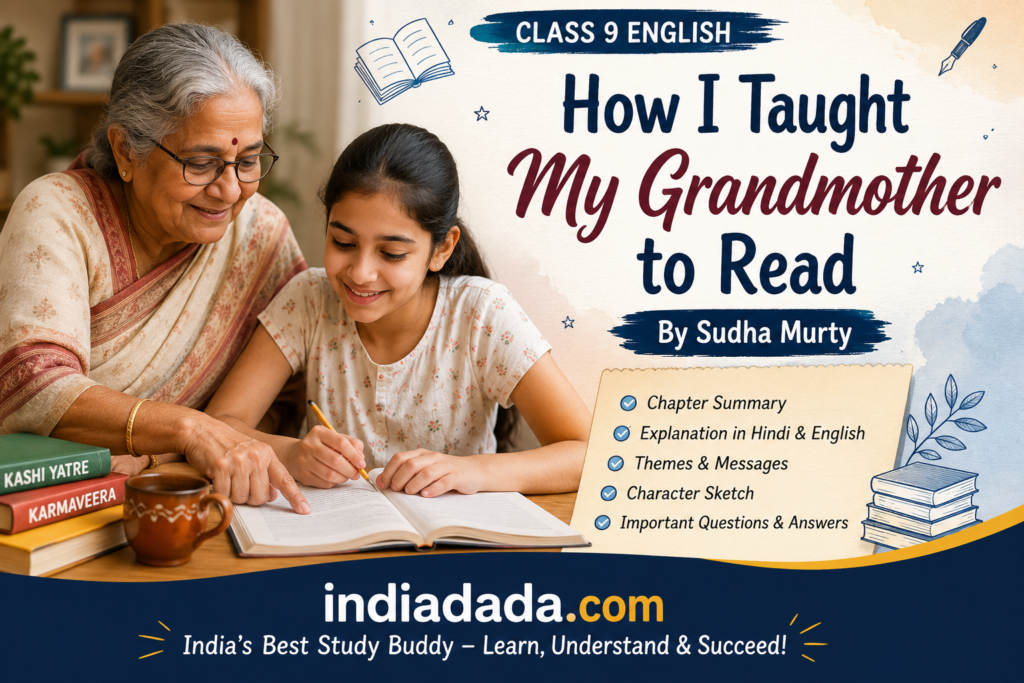
How I Taught My Grandmother to Read – Chapter Introduction
यह अध्याय शिक्षा, आत्मनिर्भरता और सीखने की दृढ़ इच्छा का एक प्रेरणादायक उदाहरण प्रस्तुत करता है। कहानी हमें बताती है कि सीखने की कोई उम्र नहीं होती और यदि व्यक्ति में लगन हो तो वह किसी भी आयु में नई शुरुआत कर सकता है।
📖 अध्याय का परिचय
“How I Taught My Grandmother to Read” कक्षा 9 की अंग्रेज़ी पुस्तक Kaveri का पहला अध्याय है। यह एक भावनात्मक और प्रेरणादायक कहानी है, जिसमें एक पोती और उसकी दादी के बीच के विशेष संबंध को दर्शाया गया है।
कहानी की मुख्य पात्र एक छोटी लड़की है जो अपने दादा-दादी के साथ उत्तर कर्नाटक के एक गाँव में रहती है। उसकी दादी पढ़-लिख नहीं सकती थीं, लेकिन उन्हें कहानियाँ सुनने का बहुत शौक था। जब उन्हें अपनी अशिक्षा का एहसास होता है, तब वे स्वयं पढ़ना सीखने का निर्णय लेती हैं।
शिक्षा केवल बच्चों के लिए नहीं होती। सीखने की इच्छा और मेहनत किसी भी उम्र में व्यक्ति को सफल बना सकती है।
🎯 पढ़ना-लिखना क्यों महत्वपूर्ण है?
अध्याय की शुरुआत में विद्यार्थियों से यह सोचने के लिए कहा गया है कि पढ़ना और लिखना सीखना क्यों आवश्यक है। शिक्षा हमारे जीवन को बेहतर बनाने का सबसे शक्तिशाली साधन है।
- ज्ञान और जानकारी प्राप्त करने में सहायता मिलती है।
- दूसरों के साथ बेहतर संवाद स्थापित किया जा सकता है।
- दुनिया को समझने की क्षमता विकसित होती है।
- अच्छे रोजगार और करियर के अवसर प्राप्त होते हैं।
- व्यक्ति आत्मनिर्भर और आत्मविश्वासी बनता है।
- नई तकनीकों और आधुनिक जीवन के साथ जुड़ना आसान हो जाता है।
📚 इस अध्याय से हम क्या सीखेंगे?
- शिक्षा का वास्तविक महत्व।
- दृढ़ संकल्प और मेहनत की शक्ति।
- परिवार में प्रेम और सहयोग का महत्व।
- बुजुर्गों के प्रति सम्मान और संवेदनशीलता।
- यह समझ कि सीखने की कोई आयु सीमा नहीं होती।
इस अध्याय का मुख्य विषय Education, Determination, Self-Reliance और Lifelong Learning है। परीक्षा में अक्सर इन्हीं विषयों से प्रश्न पूछे जाते हैं।
🏡 Life in North Karnataka (उत्तर कर्नाटक का जीवन)
The narrator begins the story by sharing her childhood memories. When she was about twelve years old, she lived in a small village in North Karnataka with her grandparents.
कहानी की शुरुआत कथावाचक अपने बचपन की यादों से करती है। जब वह लगभग 12 वर्ष की थी, तब वह अपने दादा-दादी के साथ उत्तर कर्नाटक के एक छोटे से गाँव में रहती थी।
Village life was simple, peaceful and closely connected with nature. People lived together like a large family and shared happiness as well as difficulties.
गाँव का जीवन सरल, शांत और प्रकृति के करीब था। लोग एक बड़े परिवार की तरह रहते थे और सुख-दुख एक-दूसरे के साथ साझा करते थे।
🚌 Transportation System and Daily Life (परिवहन व्यवस्था और दैनिक जीवन)
In those days, transportation facilities were not very good. Roads and communication systems were limited. Because of this, newspapers and magazines reached the village much later than expected.
उस समय परिवहन सुविधाएँ अच्छी नहीं थीं। सड़कें और संचार व्यवस्था सीमित थी। इसी कारण अखबार और पत्रिकाएँ गाँव में देर से पहुँचती थीं।
The morning newspaper usually arrived in the afternoon, while weekly magazines often came one day late.
सुबह का अखबार अक्सर दोपहर में पहुँचता था और साप्ताहिक पत्रिकाएँ एक दिन देर से आती थीं।
The poor transportation system was the main reason why newspapers and magazines reached the village late.
महत्वपूर्ण बिंदु:
कमज़ोर परिवहन व्यवस्था के कारण अखबार और पत्रिकाएँ गाँव में देर से पहुँचती थीं।
📰 Waiting for the Bus (बस का इंतजार)
Everyone in the village eagerly waited for the bus because it brought newspapers, weekly magazines and letters from different places.
गाँव के सभी लोग बस का उत्सुकता से इंतजार करते थे क्योंकि वही बस अखबार, साप्ताहिक पत्रिकाएँ और डाक लेकर आती थी।
The arrival of the bus was an exciting event for the villagers. It connected them with the outside world and provided new information every week.
बस का आगमन गाँव वालों के लिए एक उत्साहपूर्ण घटना होती थी। इसके माध्यम से उन्हें बाहरी दुनिया की खबरें और नई जानकारी मिलती थी।
-
Newspapers: Provided daily news and current events.
अखबार: दैनिक समाचार और वर्तमान घटनाओं की जानकारी देते थे। -
Weekly Magazines: Offered stories, articles and entertainment.
साप्ताहिक पत्रिकाएँ: कहानियाँ, लेख और मनोरंजन प्रदान करती थीं। -
Letters: Helped people stay connected with relatives and friends.
पत्र: रिश्तेदारों और मित्रों से संपर्क बनाए रखते थे।
✍️ Triveni – A Famous Kannada Writer (प्रसिद्ध कन्नड़ लेखिका त्रिवेणी)
At that time, Triveni was one of the most popular writers in Kannada literature. Her stories were loved by readers because they were simple, emotional and realistic.
उस समय त्रिवेणी कन्नड़ साहित्य की सबसे लोकप्रिय लेखिकाओं में से एक थीं। उनकी कहानियाँ सरल, भावनात्मक और यथार्थवादी होने के कारण पाठकों को बहुत पसंद आती थीं।
Her writing style was easy to understand and highly convincing. Most of her stories focused on the struggles, emotions and psychological problems of ordinary people.
उनकी लेखन शैली सरल और प्रभावशाली थी। उनकी अधिकांश कहानियाँ सामान्य लोगों के संघर्षों, भावनाओं और मानसिक समस्याओं पर आधारित होती थीं।
Triveni's stories dealt with real-life situations and emotions, which made them highly popular among readers.
परीक्षा हेतु महत्वपूर्ण:
त्रिवेणी की कहानियाँ वास्तविक जीवन की परिस्थितियों और भावनाओं पर आधारित थीं, इसलिए वे पाठकों के बीच अत्यंत लोकप्रिय थीं।
📖 Introduction to Kashi Yatre (काशी यात्रा उपन्यास का परिचय)
One of Triveni's most famous novels was “Kashi Yatre”. It was being published as a serial in a Kannada weekly magazine called Karmaveera.
त्रिवेणी का एक प्रसिद्ध उपन्यास “काशी यात्रा” था। यह कर्मवीरा नामक कन्नड़ साप्ताहिक पत्रिका में धारावाहिक रूप में प्रकाशित हो रहा था।
Every week, readers received a new episode of the novel. People eagerly waited to know what would happen next in the story.
हर सप्ताह उपन्यास का नया भाग प्रकाशित होता था। पाठक यह जानने के लिए उत्सुक रहते थे कि कहानी में आगे क्या होगा।
| Novel Detail | Information |
|---|---|
| Name of Novel | Kashi Yatre |
| Author | Triveni |
| Language | Kannada |
| Published In | Karmaveera Weekly Magazine |
| Format | Serial Story (Episode-wise Publication) |
📚 Summary of Section 2 (सारांश)
This section introduces the narrator's village life in North Karnataka, the poor transportation system, the importance of newspapers and magazines, and the popularity of the famous Kannada writer Triveni.
इस भाग में कथावाचक के उत्तर कर्नाटक के ग्रामीण जीवन, परिवहन व्यवस्था की समस्याओं, अखबारों और पत्रिकाओं के महत्व तथा प्रसिद्ध कन्नड़ लेखिका त्रिवेणी की लोकप्रियता का परिचय दिया गया है।
It also introduces the novel Kashi Yatre, which later becomes the central reason behind the grandmother's desire to learn reading.
इसी भाग में काशी यात्रा उपन्यास का परिचय भी दिया गया है, जो आगे चलकर दादी के पढ़ना सीखने की प्रेरणा बनता है।
📖 Story of Kashi Yatre (काशी यात्रा की कहानी)
The novel Kashi Yatre was one of the most popular works written by Triveni. It was published as a serial story, and readers eagerly waited for every new episode.
काशी यात्रा त्रिवेणी द्वारा लिखी गई सबसे लोकप्रिय कहानियों में से एक थी। यह धारावाहिक रूप में प्रकाशित होती थी और पाठक इसके प्रत्येक नए भाग का उत्सुकता से इंतजार करते थे।
The novel tells the story of an old woman whose greatest dream is to visit Kashi (Varanasi), one of the holiest places for Hindus.
यह उपन्यास एक वृद्ध महिला की कहानी है जिसकी सबसे बड़ी इच्छा काशी (वाराणसी) जाने की होती है, जिसे हिंदुओं का एक अत्यंत पवित्र तीर्थस्थान माना जाता है।
🕉️ The Old Woman's Dream to Visit Kashi (काशी जाने का सपना)
The old woman strongly believed that visiting Kashi and worshipping Lord Vishweshwara would bring great spiritual merit and happiness.
वृद्ध महिला का विश्वास था कि काशी जाकर भगवान विश्वेश्वर की पूजा करने से उसे महान पुण्य और आध्यात्मिक संतोष प्राप्त होगा।
For many years, she saved money and patiently waited for the opportunity to fulfill this dream.
कई वर्षों तक उसने पैसे बचाए और अपने इस सपने को पूरा करने का इंतजार किया।
The old woman's dream shows faith, patience and dedication.
महत्वपूर्ण मूल्य:
वृद्ध महिला का सपना उसकी आस्था, धैर्य और समर्पण को दर्शाता है।
👧 The Orphan Girl (अनाथ लड़की)
The novel also introduces a young orphan girl who falls in love and wishes to get married. However, she does not have enough money for her wedding.
उपन्यास में एक अनाथ लड़की का भी उल्लेख है जिसे प्रेम हो जाता है और वह विवाह करना चाहती है, लेकिन उसके पास शादी के लिए पर्याप्त धन नहीं होता।
Her difficult situation creates an emotional conflict in the story and becomes a turning point in the old woman's life.
उसकी कठिन परिस्थिति कहानी में भावनात्मक मोड़ लाती है और वृद्ध महिला के जीवन में एक महत्वपूर्ण निर्णय का कारण बनती है।
💖 A Great Sacrifice (महान त्याग)
At the end of the story, the old woman makes a remarkable sacrifice. Instead of using her savings for her own journey to Kashi, she gives all her money to the orphan girl.
कहानी के अंत में वृद्ध महिला एक महान त्याग करती है। वह काशी यात्रा के लिए बचाए गए अपने सभी पैसे उस अनाथ लड़की को दे देती है।
She believes that helping the orphan girl is more important than fulfilling her personal wish.
वह मानती है कि उस अनाथ लड़की की सहायता करना उसकी व्यक्तिगत इच्छा पूरी करने से अधिक महत्वपूर्ण है।
"The happiness of the orphan girl is more important than my visit to Kashi."
प्रमुख विचार:
"अनाथ लड़की की खुशी मेरी काशी यात्रा से अधिक महत्वपूर्ण है।"
🌟 Moral Values in Kashi Yatre (कहानी में निहित मूल्य)
The novel teaches several important moral values that deeply influenced the narrator's grandmother.
यह उपन्यास अनेक नैतिक मूल्यों की शिक्षा देता है, जिन्होंने कथावाचक की दादी को गहराई से प्रभावित किया।
| Value | Explanation |
|---|---|
| Compassion (करुणा) | Helping others in difficult situations. |
| Kindness (दयालुता) | Thinking about others before oneself. |
| Sacrifice (त्याग) | Giving up personal desires for someone else's happiness. |
| Humanity (मानवता) | Showing love and care towards others. |
👵 Grandmother's Connection with the Protagonist (दादी का मुख्य पात्र से जुड़ाव)
The narrator's grandmother had never visited Kashi, just like the old woman in the novel. Because of this similarity, she felt emotionally connected to the protagonist of the story.
कथावाचक की दादी भी कभी काशी नहीं गई थीं। इसी कारण वे कहानी की वृद्ध महिला से स्वयं को जोड़ पाती थीं।
Every new episode increased her curiosity and emotional attachment towards the story.
कहानी का प्रत्येक नया भाग उनकी उत्सुकता और भावनात्मक लगाव को और बढ़ा देता था।
📚 Weekly Reading Sessions (साप्ताहिक कहानी सुनने का समय)
Since the grandmother could not read, the narrator used to read every new episode aloud to her. She listened with complete attention and interest.
चूँकि दादी पढ़ नहीं सकती थीं, इसलिए कथावाचक उन्हें हर सप्ताह कहानी का नया भाग पढ़कर सुनाती थी। दादी उसे पूरे ध्यान और रुचि के साथ सुनती थीं।
These reading sessions became one of the most enjoyable moments of their lives and strengthened their bond.
यह साप्ताहिक कहानी सुनने का समय उनके जीवन का सबसे प्रिय हिस्सा बन गया और उनके रिश्ते को और मजबूत करता गया।
The grandmother's deep interest in Kashi Yatre later becomes the main reason behind her decision to learn reading.
अध्याय से संबंध:
काशी यात्रा के प्रति दादी की गहरी रुचि ही आगे चलकर उन्हें पढ़ना सीखने के लिए प्रेरित करती है।
📝 Summary of Section 3 (सारांश)
This section explains the story of Kashi Yatre, the old woman's dream of visiting Kashi, her sacrifice for an orphan girl, and the moral values presented in the novel.
इस भाग में काशी यात्रा की कहानी, वृद्ध महिला की काशी जाने की इच्छा, उसके त्याग और कहानी में निहित नैतिक मूल्यों का वर्णन किया गया है।
It also shows why the narrator's grandmother became emotionally attached to the novel and eagerly waited for every new episode.
यह भाग यह भी बताता है कि दादी इस कहानी से इतना जुड़ाव क्यों महसूस करती थीं और हर नए भाग का बेसब्री से इंतजार क्यों करती थीं।
👵 Grandmother Could Not Read (दादी पढ़ नहीं सकती थीं)
The narrator's grandmother, Krishnakka, had never attended school. As a result, she could not read or write.
कथावाचक की दादी कृष्णक्का कभी स्कूल नहीं गई थीं। इसलिए उन्हें पढ़ना और लिखना नहीं आता था।
Although she was unable to read books and magazines herself, she had a great love for stories and learning new things.
हालाँकि वे स्वयं किताबें और पत्रिकाएँ नहीं पढ़ सकती थीं, लेकिन उन्हें कहानियाँ सुनना और नई बातें जानना बहुत पसंद था।
Illiteracy did not reduce her curiosity for knowledge.
महत्वपूर्ण बिंदु:
अशिक्षित होने के बावजूद उनकी सीखने और जानने की उत्सुकता कभी कम नहीं हुई।
📖 Weekly Story Reading Sessions (साप्ताहिक कहानी सुनने का समय)
Every Wednesday, the Kannada magazine arrived with a new episode of the novel Kashi Yatre. The narrator would read the latest episode aloud to her grandmother.
हर बुधवार को कन्नड़ पत्रिका का नया अंक आता था, जिसमें काशी यात्रा का नया भाग प्रकाशित होता था। कथावाचक उसे अपनी दादी को पढ़कर सुनाती थी।
These reading sessions became a special routine in their lives. The grandmother eagerly waited for every new episode.
यह साप्ताहिक कहानी सुनना उनके जीवन की एक विशेष दिनचर्या बन गया था। दादी हर नए भाग का बेसब्री से इंतजार करती थीं।
🎯 Grandmother's Concentration and Memory (दादी का ध्यान और स्मरण शक्ति)
Whenever the narrator read the story, the grandmother completely forgot all her household work and listened with full concentration.
जब कथावाचक कहानी पढ़ती थी, तब दादी अपने सारे काम भूल जाती थीं और पूरे ध्यान से कहानी सुनती थीं।
She listened so carefully that later she could repeat most of the story from memory.
वे कहानी को इतनी ध्यानपूर्वक सुनती थीं कि बाद में उसका अधिकांश भाग याद करके दोहरा भी सकती थीं।
| Quality | Evidence from Story |
|---|---|
| Concentration | Listened carefully to every episode. |
| Memory Power | Could repeat the story after listening. |
| Interest in Learning | Never missed a single episode. |
❤️ Emotional Attachment to the Story (कहानी से भावनात्मक जुड़ाव)
The grandmother felt closely connected to the protagonist of the novel because both had never visited Kashi.
दादी स्वयं को उपन्यास की मुख्य पात्र से जोड़कर देखती थीं क्योंकि दोनों ही कभी काशी नहीं गई थीं।
This similarity created a strong emotional bond between the grandmother and the story.
यही समानता दादी और कहानी के बीच एक गहरा भावनात्मक संबंध बना देती थी।
The grandmother identified herself with the protagonist because both shared similar dreams and experiences.
परीक्षा हेतु महत्वपूर्ण:
दादी स्वयं को कहानी की मुख्य पात्र से जोड़ती थीं क्योंकि दोनों के सपने और अनुभव काफी मिलते-जुलते थे।
🗣️ Discussion with Friends (सहेलियों के साथ चर्चा)
After listening to the latest episode, the grandmother often went to the temple courtyard where she met her friends.
कहानी सुनने के बाद दादी अक्सर मंदिर के आँगन में जाती थीं, जहाँ उनकी सहेलियाँ उनसे मिलती थीं।
There they discussed the latest developments in the story and shared their opinions about the characters and events.
वहाँ वे कहानी के नए भाग पर चर्चा करती थीं और पात्रों तथा घटनाओं के बारे में अपने विचार साझा करती थीं।
-
Story Discussions: Increased excitement among readers.
कहानी पर चर्चा: पाठकों के उत्साह को बढ़ाती थी। -
Sharing Opinions: Everyone expressed their views.
विचार साझा करना: सभी लोग अपने विचार व्यक्त करते थे। -
Community Reading Culture: Stories connected people together.
सामुदायिक पठन संस्कृति: कहानियाँ लोगों को आपस में जोड़ती थीं।
🤔 Narrator's Curiosity (कथावाचक की जिज्ञासा)
At that age, the narrator could not understand why the elderly women spent so much time discussing the story.
उस समय कथावाचक यह नहीं समझ पाती थी कि बड़ी उम्र की महिलाएँ इस कहानी पर इतनी चर्चा क्यों करती हैं।
Later she realized that stories can deeply influence people's emotions and connect them with their own life experiences.
बाद में उसे समझ आया कि कहानियाँ लोगों की भावनाओं को गहराई से प्रभावित करती हैं और उन्हें अपने जीवन से जोड़ देती हैं।
📚 Importance of Storytelling (कहानी सुनाने का महत्व)
This part of the chapter highlights the importance of storytelling in family life. Stories not only entertain people but also teach values, emotions and life lessons.
अध्याय का यह भाग पारिवारिक जीवन में कहानी सुनाने के महत्व को दर्शाता है। कहानियाँ केवल मनोरंजन ही नहीं करतीं बल्कि जीवन के मूल्य और अनुभव भी सिखाती हैं।
The bond between the narrator and her grandmother became stronger through these weekly reading sessions.
कथावाचक और उसकी दादी के बीच का रिश्ता इन साप्ताहिक कहानी सत्रों के माध्यम से और अधिक मजबूत हो गया।
Stories have the power to educate, inspire and emotionally connect people of different generations.
जीवन संदेश:
कहानियाँ विभिन्न पीढ़ियों के लोगों को शिक्षित करने, प्रेरित करने और भावनात्मक रूप से जोड़ने की शक्ति रखती हैं।
📝 Summary of Section 4 (सारांश)
This section explains the grandmother's inability to read, her deep interest in Kashi Yatre, her remarkable concentration and memory, and her habit of discussing the story with friends.
इस भाग में दादी की अशिक्षा, काशी यात्रा के प्रति उनका गहरा लगाव, उनकी अद्भुत स्मरण शक्ति तथा सहेलियों के साथ कहानी पर चर्चा करने की आदत का वर्णन किया गया है।
It also shows how storytelling strengthened family relationships and created a strong desire for learning.
यह भाग यह भी बताता है कि कहानी सुनना परिवार के रिश्तों को मजबूत बनाता है और सीखने की इच्छा को बढ़ाता है।
💒 A Visit to a Wedding (शादी में जाना)
One day, the narrator went to a nearby village to attend a wedding with her cousin. In those days, weddings were considered very important social events.
एक दिन कथावाचक अपनी चचेरी बहन के साथ पास के गाँव में एक शादी में शामिल होने गई। उस समय शादियाँ बहुत बड़े सामाजिक आयोजन मानी जाती थीं।
Children especially enjoyed weddings because they got an opportunity to meet relatives, play games and enjoy delicious food.
बच्चों को विशेष रूप से शादियाँ बहुत पसंद थीं क्योंकि उन्हें रिश्तेदारों से मिलने, खेल खेलने और स्वादिष्ट भोजन खाने का अवसर मिलता था।
🎉 Enjoying Complete Freedom (पूरी आज़ादी का आनंद)
The narrator and other children enjoyed themselves thoroughly during the wedding celebrations.
शादी के दौरान कथावाचक और अन्य बच्चों ने खूब आनंद लिया।
Since all the elders were busy with wedding arrangements, the children were free to eat, play and spend their time happily.
चूँकि सभी बड़े लोग शादी की तैयारियों में व्यस्त थे, इसलिए बच्चों को खाने, खेलने और मस्ती करने की पूरी स्वतंत्रता मिल गई थी।
-
Playing Games: Children spent hours playing together.
खेल-कूद: बच्चे घंटों तक मिलकर खेलते थे। -
Delicious Food: They enjoyed special wedding meals.
स्वादिष्ट भोजन: वे शादी के विशेष व्यंजनों का आनंद लेते थे। -
Freedom: No one interrupted their fun activities.
आज़ादी: उनकी मस्ती में कोई बाधा नहीं डालता था।
📅 A Longer Stay Than Expected (अपेक्षा से अधिक समय तक रुकना)
The narrator originally planned to stay at the wedding for only a couple of days. However, she enjoyed the celebrations so much that she remained there for an entire week.
कथावाचक ने शुरू में केवल दो दिन रुकने की योजना बनाई थी, लेकिन शादी का आनंद इतना अधिक था कि वह पूरे एक सप्ताह तक वहीं रुक गई।
During this period, she completely forgot about the weekly episode of Kashi Yatre that she usually read to her grandmother.
इस दौरान वह यह भूल गई कि हर सप्ताह वह अपनी दादी को काशी यात्रा का नया भाग पढ़कर सुनाती थी।
Effect: The grandmother could not listen to the next episode of the story.
कारण: कथावाचक एक सप्ताह तक घर से दूर रही।
परिणाम: दादी कहानी का अगला भाग नहीं सुन सकीं।
😢 Grandmother in Tears (दादी की आँखों में आँसू)
When the narrator returned home after a week, she saw something unexpected. Her grandmother was sitting with tears in her eyes.
जब कथावाचक एक सप्ताह बाद घर लौटी, तो उसने एक अप्रत्याशित दृश्य देखा। उसकी दादी की आँखों में आँसू थे।
The narrator was shocked because she had never seen her grandmother cry, even during difficult situations.
कथावाचक बहुत आश्चर्यचकित हुई क्योंकि उसने अपनी दादी को कठिन परिस्थितियों में भी कभी रोते हुए नहीं देखा था।
The narrator was surprised because her grandmother was usually strong and emotionally stable.
परीक्षा हेतु महत्वपूर्ण:
कथावाचक इसलिए हैरान हुई क्योंकि उसकी दादी सामान्यतः बहुत मजबूत और धैर्यवान थीं।
❓ The Narrator's Concern (कथावाचक की चिंता)
Seeing her grandmother crying, the narrator became worried and immediately asked if everything was alright.
दादी को रोते हुए देखकर कथावाचक चिंतित हो गई और उसने तुरंत पूछा कि क्या सब कुछ ठीक है।
She lovingly called her grandmother “Avva”, which means “Mother” in the Kannada language spoken in North Karnataka.
वह अपनी दादी को प्यार से “अव्वा” कहकर बुलाती थी, जिसका अर्थ उत्तर कर्नाटक की कन्नड़ भाषा में “माँ” होता है।
| Word | Meaning |
|---|---|
| Avva | Mother (माँ) |
| Narrator | Story Teller (कथावाचक) |
| Concern | Worry or Care (चिंता) |
🤐 Grandmother Remained Silent (दादी चुप रहीं)
Although the grandmother nodded her head, she did not explain the reason for her sadness immediately.
हालाँकि दादी ने सिर हिलाकर संकेत दिया कि सब ठीक है, लेकिन उन्होंने अपनी उदासी का कारण तुरंत नहीं बताया।
The narrator could not understand what had happened and soon forgot about it.
कथावाचक समझ नहीं पाई कि क्या हुआ है और कुछ समय बाद वह इस बात को भूल गई।
However, later that night, the grandmother revealed the real reason behind her tears.
लेकिन उसी रात दादी ने अपने आँसुओं का वास्तविक कारण बताया।
📚 Emotional Impact of Illiteracy (अशिक्षा का भावनात्मक प्रभाव)
The grandmother's sadness was not caused by illness, loss or any family problem. It was caused by her inability to read.
दादी की उदासी किसी बीमारी, नुकसान या पारिवारिक समस्या के कारण नहीं थी। उसका कारण था उनका पढ़ न पाना।
For the first time, she deeply felt the pain of being dependent on someone else for reading.
पहली बार उन्होंने गहराई से महसूस किया कि पढ़ने के लिए किसी दूसरे पर निर्भर रहना कितना दुखद हो सकता है।
Illiteracy can create emotional dependence and limit personal freedom.
जीवन संदेश:
अशिक्षा व्यक्ति को भावनात्मक रूप से निर्भर बना सकती है और उसकी स्वतंत्रता को सीमित कर सकती है।
📝 Summary of Section 5 (सारांश)
This section describes the narrator's visit to a wedding, her extended stay away from home, and the grandmother's emotional reaction when she missed an important episode of Kashi Yatre.
इस भाग में कथावाचक की शादी में यात्रा, घर से दूर अधिक समय तक रुकना और काशी यात्रा के अगले भाग को न सुन पाने के कारण दादी की भावनात्मक प्रतिक्रिया का वर्णन किया गया है।
The incident becomes a turning point in the story because it makes the grandmother realize the importance of education and reading.
यह घटना कहानी का महत्वपूर्ण मोड़ बन जाती है क्योंकि इसी से दादी को शिक्षा और पढ़ने के महत्व का गहरा एहसास होता है।
🌙 A Heart-to-Heart Conversation (दिल से दिल की बात)
That night, after dinner, the narrator and her grandmother were sleeping on the open terrace under the bright moonlight.
उस रात भोजन के बाद कथावाचक और उसकी दादी खुले आकाश के नीचे छत पर सो रहे थे। चारों ओर चाँदनी फैली हुई थी।
The grandmother came and sat beside her granddaughter. Gently touching her forehead, she began to share the story of her own life.
दादी अपनी पोती के पास आकर बैठ गईं। उन्होंने प्यार से उसके माथे को छुआ और अपने जीवन की कहानी सुनानी शुरू की।
👧 Grandmother's Difficult Childhood (दादी का कठिन बचपन)
The grandmother explained that she had lost her mother when she was very young. There was nobody to guide her or take proper care of her.
दादी ने बताया कि उन्होंने बहुत छोटी उम्र में अपनी माँ को खो दिया था। उनकी देखभाल करने और सही मार्गदर्शन देने वाला कोई नहीं था।
Her father was busy with his own responsibilities and later got married again.
उनके पिता अपने कामों में व्यस्त रहते थे और बाद में उन्होंने दूसरी शादी कर ली।
The grandmother's childhood lacked parental guidance and educational opportunities.
महत्वपूर्ण बिंदु:
दादी का बचपन उचित मार्गदर्शन और शिक्षा के अवसरों से वंचित रहा।
📚 Why She Never Went to School (वे स्कूल क्यों नहीं गईं?)
The grandmother explained that during her childhood, society did not consider education important for girls.
दादी ने बताया कि उनके बचपन के समय समाज में लड़कियों की शिक्षा को महत्वपूर्ण नहीं माना जाता था।
People believed that girls only needed to learn household work and prepare for marriage.
लोगों का मानना था कि लड़कियों को केवल घर का काम सीखना चाहिए और विवाह के लिए तैयार होना चाहिए।
As a result, she never got the opportunity to attend school.
इसी कारण उन्हें कभी स्कूल जाने का अवसर नहीं मिला।
| Past Situation | Result |
|---|---|
| Girls' education not valued | Grandmother never attended school |
| Early social responsibilities | No chance for formal education |
| Lack of awareness | Illiteracy in adulthood |
💍 Early Marriage and Responsibilities (कम उम्र में विवाह और जिम्मेदारियाँ)
At a very young age, the grandmother got married and soon became busy raising children and managing family responsibilities.
बहुत कम उम्र में उनकी शादी हो गई और जल्द ही वे बच्चों की परवरिश तथा पारिवारिक जिम्मेदारियों में व्यस्त हो गईं।
Years passed, and later she became a grandmother herself. Her life revolved around caring for her family.
समय बीतता गया और बाद में वे स्वयं दादी बन गईं। उनका जीवन परिवार की देखभाल में ही बीतने लगा।
- Marriage at Young Age: Limited educational opportunities.
- Family Duties: Most of her time was spent caring for others.
- Sacrifice: Personal dreams remained incomplete.
😔 Regret of Being Illiterate (अशिक्षित होने का पछतावा)
Although she lived a happy family life, the grandmother admitted that she often regretted not going to school.
हालाँकि उनका पारिवारिक जीवन सुखद था, फिर भी उन्हें अक्सर इस बात का पछतावा होता था कि वे स्कूल नहीं जा सकीं।
Whenever she saw educated people reading books and newspapers independently, she felt the importance of education.
जब भी वे शिक्षित लोगों को स्वतंत्र रूप से किताबें और अखबार पढ़ते देखती थीं, तब उन्हें शिक्षा का महत्व महसूस होता था।
The grandmother's regret highlights the lifelong value of education.
परीक्षा हेतु महत्वपूर्ण:
दादी का पछतावा यह दर्शाता है कि शिक्षा का महत्व जीवन भर बना रहता है।
😭 The Real Reason Behind Her Tears (आँसुओं का असली कारण)
The grandmother revealed that she had cried because she could not read the latest episode of Kashi Yatre on her own.
दादी ने बताया कि वे इसलिए रोई थीं क्योंकि वे स्वयं काशी यात्रा का नया भाग नहीं पढ़ सकती थीं।
For the first time, she felt completely dependent on someone else for something she loved deeply.
पहली बार उन्हें महसूस हुआ कि जिस कहानी से वे इतना प्रेम करती हैं, उसे पढ़ने के लिए उन्हें किसी दूसरे पर निर्भर रहना पड़ता है।
This realization deeply affected her and changed her thinking forever.
इस एहसास ने उन्हें अंदर तक झकझोर दिया और उनकी सोच को हमेशा के लिए बदल दिया।
🎯 A Powerful Decision to Learn (सीखने का दृढ़ संकल्प)
The grandmother made a life-changing decision. She decided that she would learn to read and write, no matter how old she was.
दादी ने एक जीवन बदल देने वाला निर्णय लिया। उन्होंने ठान लिया कि उम्र चाहे कितनी भी हो, वे पढ़ना और लिखना सीखेंगी।
At the age of sixty-two, she chose to become a student and start a new educational journey.
बासठ वर्ष की आयु में उन्होंने एक छात्रा बनने और नई शैक्षिक यात्रा शुरू करने का निर्णय लिया।
Learning has no age limit. Determination can overcome any obstacle.
जीवन संदेश:
सीखने की कोई उम्र नहीं होती। दृढ़ संकल्प हर बाधा को पार कर सकता है।
📝 Summary of Section 6 (सारांश)
This section reveals the grandmother's difficult childhood, lack of education, early marriage, lifelong regret and the emotional realization that inspired her to learn reading and writing.
इस भाग में दादी के कठिन बचपन, शिक्षा से वंचित रहने, कम उम्र में विवाह, जीवनभर के पछतावे और उस भावनात्मक अनुभव का वर्णन किया गया है जिसने उन्हें पढ़ना-लिखना सीखने के लिए प्रेरित किया।
The decision she makes at the age of sixty-two becomes the turning point of the entire chapter.
बासठ वर्ष की आयु में लिया गया उनका निर्णय पूरे अध्याय का सबसे महत्वपूर्ण मोड़ बन जाता है।
📚 Beginning of a New Learning Journey (नई सीखने की यात्रा की शुरुआत)
After realizing the pain of being unable to read, the grandmother made a firm decision. She wanted to become independent and read books on her own.
खुद पढ़ न पाने की पीड़ा महसूस करने के बाद दादी ने एक दृढ़ निर्णय लिया। वे आत्मनिर्भर बनना चाहती थीं और स्वयं किताबें पढ़ना चाहती थीं।
She requested her granddaughter to become her teacher and help her learn the Kannada alphabet.
उन्होंने अपनी पोती से अनुरोध किया कि वह उनकी शिक्षिका बने और उन्हें कन्नड़ भाषा पढ़ना सिखाए।
The grandmother was 62 years old when she decided to become a student.
महत्वपूर्ण बिंदु:
दादी 62 वर्ष की आयु में छात्रा बनने का निर्णय लेती हैं।
👩🏫 Granddaughter Becomes the Teacher (पोती बनी शिक्षिका)
The narrator gladly accepted the responsibility of teaching her grandmother. Every day, she spent time helping her learn letters, words and simple sentences.
कथावाचक ने खुशी-खुशी अपनी दादी को पढ़ाने की जिम्मेदारी स्वीकार कर ली। वह प्रतिदिन उन्हें अक्षर, शब्द और सरल वाक्य पढ़ाना शुरू करती है।
This unusual teacher-student relationship became one of the most beautiful parts of the story.
यह अनोखा शिक्षक-विद्यार्थी संबंध कहानी का सबसे सुंदर भाग बन जाता है।
| Teacher | Student |
|---|---|
| Granddaughter (पोती) | Grandmother (दादी) |
| Young and Educated | Elderly but Determined |
| Guide and Instructor | Eager Learner |
✍️ Daily Practice and Hard Work (दैनिक अभ्यास और मेहनत)
Learning was not easy for the grandmother. At her age, remembering letters and words required patience and continuous practice.
सीखना दादी के लिए आसान नहीं था। इस उम्र में अक्षरों और शब्दों को याद रखने के लिए धैर्य और निरंतर अभ्यास की आवश्यकता थी।
However, she never gave up. She practiced reading and writing every day with complete dedication.
फिर भी उन्होंने कभी हार नहीं मानी। वे पूरी लगन और समर्पण के साथ प्रतिदिन पढ़ने और लिखने का अभ्यास करती रहीं।
- Regular Practice: Daily reading and writing exercises.
- Determination: Never lost confidence despite difficulties.
- Patience: Continued learning step by step.
- Hard Work: Practiced until she achieved success.
🏆 Preparing for Vijayadashami (विजयदशमी की तैयारी)
The grandmother set a personal goal. She wanted to read a book independently by the festival of Vijayadashami.
दादी ने अपने लिए एक लक्ष्य निर्धारित किया। वे विजयदशमी के पर्व तक स्वयं पुस्तक पढ़ने योग्य बनना चाहती थीं।
Vijayadashami is traditionally considered an auspicious day for learning and acquiring knowledge.
विजयदशमी को परंपरागत रूप से शिक्षा और ज्ञान प्राप्ति के लिए शुभ दिन माना जाता है।
The grandmother chose Vijayadashami because it symbolizes knowledge, learning and new beginnings.
परीक्षा हेतु महत्वपूर्ण:
दादी ने विजयदशमी इसलिए चुनी क्योंकि यह ज्ञान, शिक्षा और नई शुरुआत का प्रतीक माना जाता है।
📖 Reading Independently for the First Time (पहली बार स्वयं पढ़ना)
When Vijayadashami arrived, the grandmother successfully read a portion of the novel on her own without anyone's help.
जब विजयदशमी का दिन आया, तो दादी ने बिना किसी सहायता के स्वयं उपन्यास का एक भाग पढ़ लिया।
This moment filled her with happiness, confidence and pride. Her dream had finally come true.
यह क्षण उनके लिए अत्यंत खुशी, आत्मविश्वास और गर्व का था। उनका सपना आखिरकार पूरा हो गया था।
The grandmother became independent and no longer depended on others for reading.
उपलब्धि:
दादी आत्मनिर्भर बन गईं और अब पढ़ने के लिए किसी दूसरे पर निर्भर नहीं रहीं।
🙏 A Touching Teacher–Student Moment (भावुक गुरु-शिष्य क्षण)
After successfully reading the book, the grandmother did something unexpected. She touched her granddaughter's feet as a mark of respect.
पुस्तक पढ़ने में सफलता प्राप्त करने के बाद दादी ने एक ऐसा कार्य किया जिसने सभी को भावुक कर दिया। उन्होंने सम्मान के रूप में अपनी पोती के पैर छुए।
The granddaughter felt embarrassed and emotional because elders are usually respected by younger family members.
पोती भावुक हो गई क्योंकि सामान्यतः छोटे लोग बड़ों के पैर छूते हैं, लेकिन यहाँ स्थिति बिल्कुल अलग थी।
The grandmother explained that a teacher deserves respect regardless of age.
दादी ने समझाया कि गुरु का सम्मान उसकी आयु नहीं बल्कि उसके ज्ञान के आधार पर किया जाता है।
🌟 Lessons from the Grandmother's Success (दादी की सफलता से सीख)
The grandmother's achievement teaches us that age is never a barrier to learning. Determination, hard work and self-confidence can help us achieve any goal.
दादी की सफलता हमें सिखाती है कि सीखने में उम्र कभी बाधा नहीं बनती। दृढ़ संकल्प, मेहनत और आत्मविश्वास किसी भी लक्ष्य को प्राप्त करने में सहायता करते हैं।
| Life Value | What We Learn |
|---|---|
| Determination | Never give up on your goals. |
| Hard Work | Success comes through practice. |
| Respect for Teachers | Knowledge deserves honor. |
| Self-Reliance | Education makes us independent. |
📝 Summary of Section 7 (सारांश)
This section describes the grandmother's learning journey, the granddaughter's role as a teacher, daily practice, Vijayadashami achievement and the emotional teacher-student relationship.
इस भाग में दादी की शिक्षा यात्रा, पोती की शिक्षिका के रूप में भूमिका, नियमित अभ्यास, विजयदशमी पर मिली सफलता और गुरु-शिष्य के भावनात्मक संबंध का वर्णन किया गया है।
The chapter beautifully proves that learning has no age limit and education brings independence and confidence.
यह अध्याय सुंदर ढंग से सिद्ध करता है कि सीखने की कोई आयु सीमा नहीं होती और शिक्षा व्यक्ति को आत्मनिर्भर तथा आत्मविश्वासी बनाती है।
📖 Conclusion (निष्कर्ष)
How I Taught My Grandmother to Read is a beautiful and inspiring story that highlights the importance of education, determination and self-reliance.
“How I Taught My Grandmother to Read” एक प्रेरणादायक कहानी है जो शिक्षा, दृढ़ संकल्प और आत्मनिर्भरता के महत्व को दर्शाती है।
The grandmother's desire to read independently transformed her life. Despite being 62 years old, she accepted the challenge of learning and successfully achieved her goal.
दादी की स्वयं पढ़ने की इच्छा ने उनके जीवन को बदल दिया। 62 वर्ष की आयु में भी उन्होंने सीखने की चुनौती स्वीकार की और सफलता प्राप्त की।
Learning has no age limit. With dedication and determination, anyone can achieve knowledge and success.
मुख्य संदेश:
सीखने की कोई उम्र नहीं होती। लगन और मेहनत से कोई भी व्यक्ति ज्ञान प्राप्त कर सकता है।
⭐ Key Takeaways (मुख्य सीख)
| Key Learning | Explanation |
|---|---|
| Importance of Education | Education makes people independent and confident. |
| Never Stop Learning | Learning can begin at any stage of life. |
| Determination | Strong willpower helps overcome difficulties. |
| Respect for Teachers | Teachers deserve respect regardless of age. |
| Self-Reliance | Literacy helps people become self-dependent. |
📝 Chapter Revision Points (त्वरित पुनरावृत्ति)
- Triveni was a famous Kannada writer.
- त्रिवेणी एक प्रसिद्ध कन्नड़ लेखिका थीं।
- Kashi Yatre was published in the weekly magazine Karmaveera.
- काशी यात्रा कर्मवीरा साप्ताहिक पत्रिका में प्रकाशित होती थी।
- The grandmother could not read because she never attended school.
- दादी पढ़ नहीं सकती थीं क्योंकि वे कभी स्कूल नहीं गई थीं।
- The narrator used to read Kashi Yatre to her grandmother.
- कथावाचक अपनी दादी को काशी यात्रा पढ़कर सुनाती थी।
- The grandmother decided to learn reading at the age of 62.
- दादी ने 62 वर्ष की आयु में पढ़ना सीखने का निर्णय लिया।
- The granddaughter became her teacher.
- पोती उनकी शिक्षिका बनी।
- The grandmother learned to read by Vijayadashami.
- दादी विजयदशमी तक पढ़ना सीख गईं।
🎯 Important Exam Points (परीक्षा हेतु महत्वपूर्ण बिंदु)
| Question Area | Important Point |
|---|---|
| Author | Sudha Murty |
| Writer Mentioned in Story | Triveni |
| Novel Name | Kashi Yatre |
| Magazine Name | Karmaveera |
| Grandmother's Age | 62 Years |
| Festival Mentioned | Vijayadashami |
| Main Theme | Education and Lifelong Learning |
❓ Frequently Asked Questions (FAQs)
1. Why was the grandmother unable to read?
She never attended school because, in those days, girls' education was not considered important.
वह कभी स्कूल नहीं गई थीं क्योंकि उस समय लड़कियों की शिक्षा को महत्व नहीं दिया जाता था।
2. Which novel was the grandmother interested in?
She was deeply interested in the novel Kashi Yatre.
उन्हें काशी यात्रा उपन्यास में गहरी रुचि थी।
3. Why did the grandmother cry?
She cried because she could not read the next episode of Kashi Yatre herself.
वे इसलिए रोईं क्योंकि वे स्वयं काशी यात्रा का अगला भाग नहीं पढ़ सकती थीं।
4. Who taught the grandmother to read?
Her granddaughter taught her to read and write.
उनकी पोती ने उन्हें पढ़ना और लिखना सिखाया।
5. What lesson does the chapter teach?
The chapter teaches that learning has no age limit and education brings independence.
यह अध्याय सिखाता है कि सीखने की कोई आयु सीमा नहीं होती और शिक्षा आत्मनिर्भरता प्रदान करती है।
🏆 Final Summary (अंतिम सारांश)
The chapter tells the inspiring story of a grandmother who overcomes age and social limitations to become literate. Through hard work, determination and the support of her granddaughter, she achieves her dream of reading independently.
यह अध्याय एक ऐसी दादी की प्रेरणादायक कहानी प्रस्तुत करता है जो उम्र और सामाजिक सीमाओं को पार करके साक्षर बनती हैं। अपनी मेहनत, दृढ़ निश्चय और पोती के सहयोग से वे स्वयं पढ़ने का सपना पूरा करती हैं।
Education • Determination • Self-Reliance • Respect for Teachers • Lifelong Learning
अध्याय का मूल विषय:
शिक्षा • दृढ़ संकल्प • आत्मनिर्भरता • गुरु सम्मान • जीवनभर सीखना
Continue Learning With IndiaDada
UPSC, SSC CGL, UPTET, Current Affairs, Government Jobs, School Education, Higher Education, Notes, PDF, MCQ, PYQ, Mock Tests और Exam Preparation की सम्पूर्ण सामग्री अब एक ही प्लेटफॉर्म पर।
Daily Current Affairs
Daily Current Affairs Notes, PDF & Analysis
🎯Current Affairs MCQ
Daily Quiz, Practice Sets & Mock Questions
🇮🇳UPSC Preparation
Prelims, CSAT, Mains Notes & PYQs
📑SSC CGL
Notes, Previous Papers & Mock Tests
🧠UPTET Preparation
Latest Notes, MCQ & Practice Sets
💼Government Jobs
Latest Sarkari Naukri & Recruitment Updates
🔥 Important Study Resources
🌐 Important Official Resources
🎯 Popular Exam Categories
🚀 Stay Connected With IndiaDada.com
Daily Current Affairs, UPSC, SSC CGL, UPTET, Government Jobs, Previous Year Papers, Notes, MCQ, Mock Tests तथा Latest Exam Updates प्राप्त करने के लिए IndiaDada.com के साथ जुड़े रहें।
Visit IndiaDada.com