
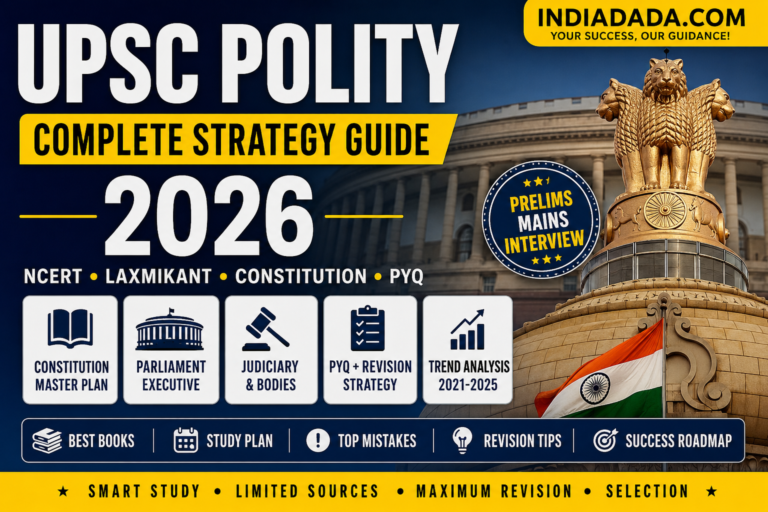
🏛 UPSC Polity Strategy 2026: Complete Prelims Roadmap
UPSC Prelims में Polity सबसे Scoring Subjects में से एक माना जाता है। पिछले कई वर्षों के ट्रेंड को देखें तो हर वर्ष लगभग 15 से 20 प्रश्न सीधे Polity से पूछे जाते हैं।यही कारण है कि Polity एक ऐसा विषय है जिसे मजबूत करके आप Prelims में अपनी सफलता की संभावना काफी बढ़ा सकते हैं।इस गाइड में हम UPSC Polity Syllabus, Weightage, Sources, NCERT Strategy, Laxmikant Strategy और Smart Preparation Approach को आसान भाषा में समझेंगे।
📊 UPSC Polity इतना महत्वपूर्ण क्यों है?
UPSC Prelims में Polity से औसतन 15+ Questions पूछे जाते हैं।इनमें से अधिकांश Questions Constitution, Parliament, Fundamental Rights, Judiciary, Constitutional Bodies और Governance से आते हैं।सबसे अच्छी बात यह है कि Polity के Questions Concept Based होते हैं और यदि आपकी तैयारी मजबूत है तो इन Questions को आसानी से Solve किया जा सकता है।
📚 UPSC Polity Syllabus Explained
UPSC ने Polity को केवल Constitution तक सीमित नहीं रखा है।Syllabus में Governance, Political System, Panchayati Raj, Public Policy, Rights Issues और Constitutional Framework भी शामिल हैं।इसलिए तैयारी केवल Book Based नहीं बल्कि Concept Based होनी चाहिए।
Constitution
भारतीय संविधान की मूल संरचना
Parliament
लोकसभा, राज्यसभा, विधायी प्रक्रिया
Fundamental Rights
Article 12-35
Judiciary
Supreme Court एवं Judicial Review
Panchayati Raj
73rd & 74th Amendment
Governance
Public Policy एवं Administration
🎯 UPSC Polity Preparation के 4 Pillars
UPSC Polity Preparation को आसान बनाने के लिए इसे चार भागों में विभाजित किया जा सकता है।
NCERT
Foundation Building
Constitution
Original Articles Understanding
Laxmikant
Concept + Facts
PYQ
UPSC Pattern Analysis
🚀 Section 1 Quick Takeaways
- Polity से हर वर्ष 15-20 Questions आने की संभावना रहती है।
- Constitution, Parliament और Fundamental Rights सबसे महत्वपूर्ण Topics हैं।
- NCERT + Constitution + Laxmikant + PYQ = Best Strategy
- Concept समझे बिना केवल Facts याद करना पर्याप्त नहीं है।
- Polity UPSC Prelims का सबसे Scoring Subject बन सकता है।
याद रखें: Consistency + Revision + PYQ Analysis = Polity Success
📚 NCERT + Laxmikant Strategy 2026
UPSC Polity की तैयारी में सबसे बड़ी गलती होती है बहुत सारी किताबें इकट्ठा कर लेना।टॉपर और सफल उम्मीदवार हमेशा Limited Sources रखते हैं और उन्हीं Sources को बार-बार Revision करते हैं।यदि आप Polity में मजबूत पकड़ बनाना चाहते हैं तो NCERT, Constitution और Laxmikant आपके Primary Sources होने चाहिए।
📖 Polity के लिए कौन-कौन सी NCERT पढ़ें?
UPSC Polity की शुरुआत हमेशा NCERT से होनी चाहिए।NCERT आपको Constitution, Democracy, Rights, Governance और Political Theory की Foundation देती है।
Class 9
Democratic Politics
Class 10
Democratic Politics II
Class 11
Indian Constitution at Work
Class 11
Political Theory
🏛 संविधान की मूल प्रति क्यों पढ़नी चाहिए?
हाल के वर्षों में UPSC सीधे संविधान के Articles और उनके शब्दों से Questions पूछ रहा है।इसलिए केवल Summary पढ़ना पर्याप्त नहीं है।आपको समय निकालकर संविधान की मूल प्रति (Bare Constitution) भी पढ़नी चाहिए।
विशेष रूप से Article 12 से Article 35, DPSP, Fundamental Duties, Parliament और Constitutional Bodies पर ध्यान दें।
📘 Laxmikant कैसे पढ़ें?
Laxmikant UPSC Polity की सबसे लोकप्रिय Book है।लेकिन पूरी Book को एक साथ पढ़ना कई विद्यार्थियों के लिए कठिन हो जाता है।इसलिए Priority Based Approach अपनाएं।
Priority 1
Preamble, FR, DPSP
Priority 2
President, PM, Parliament
Priority 3
Judiciary, Federalism
Priority 4
Constitutional Bodies
📝 Polity Notes कैसे बनाएं?
बहुत से विद्यार्थी Laxmikant की पूरी कॉपी बनाना शुरू कर देते हैं।यह समय की बर्बादी है।
केवल Important Articles, Amendments, Committees, Constitutional Bodies और Landmark Judgements के Short Notes बनाइए।
📊 PYQ को कब शुरू करें?
Polity में PYQ सबसे महत्वपूर्ण Resources में से एक है।जैसे ही NCERT और Laxmikant का पहला Reading Complete हो जाए, तुरंत PYQ शुरू कर दीजिए।
पिछले 10 वर्षों के Questions आपको UPSC का Pattern समझने में मदद करेंगे।
🎯 Section 2 Quick Takeaways
- NCERT से Foundation बनाएं।
- Indian Constitution at Work अवश्य पढ़ें।
- Bare Constitution पढ़ना शुरू करें।
- Laxmikant को Priority Wise पढ़ें।
- Short Notes बनाएं, पूरी Book नहीं।
- PYQ को जल्दी शुरू करें।
- Limited Sources + Multiple Revision = Success
⚖️ Constitution Master Strategy 2026
यदि UPSC Polity का दिल किसी एक Topic को कहा जाए तो वह भारतीय संविधान है।पिछले कई वर्षों के प्रश्नों का विश्लेषण बताता है कि Constitution, Fundamental Rights, DPSP, Preamble और Constitutional Amendments से लगातार Questions पूछे जा रहे हैं।यही कारण है कि संविधान को मजबूत किए बिना Polity में अच्छे अंक लाना कठिन हो जाता है।
📜 Preamble (प्रस्तावना) को कैसे पढ़ें?
प्रस्तावना भारतीय संविधान की आत्मा मानी जाती है।UPSC कई बार Preamble के Keywords, Constitutional Philosophy और Amendments से प्रश्न पूछता है।
Sovereign
पूर्ण प्रभुत्व संपन्न
Socialist
समाजवादी
Secular
धर्मनिरपेक्ष
Democratic
लोकतांत्रिक
Republic
गणराज्य
🛡️ Fundamental Rights (Article 12-35)
Fundamental Rights UPSC का Favourite Topic है।हर Aspirant को Article 12 से Article 35 तक कम से कम एक बार Bare Constitution से अवश्य पढ़ना चाहिए।
Article 14
Right to Equality
Article 15
No Discrimination
Article 16
Public Employment
Article 17
Abolition of Untouchability
Article 19
Freedom Rights
Article 21
Right to Life
📖 Directive Principles of State Policy (DPSP)
DPSP संविधान के Part IV में दिए गए हैं।UPSC कई बार DPSP और Fundamental Rights के संबंध पर आधारित Questions पूछता है।
विशेष रूप से Social Justice, Welfare State और Gandhian Principles से जुड़े Concepts को समझना आवश्यक है।
🏛️ Fundamental Duties
Fundamental Duties Part IVA में दिए गए हैं।इनसे सीधे प्रश्न कम आते हैं लेकिन Statements Based Questions में इनका उपयोग किया जाता है।
42nd Constitutional Amendment और 86th Constitutional Amendment विशेष रूप से महत्वपूर्ण हैं।
📚 Constitutional Amendments
UPSC बार-बार Important Amendments पर Questions पूछता है।इसलिए सभी Amendments रटने की आवश्यकता नहीं है, लेकिन महत्वपूर्ण Amendments अवश्य याद रखें।
42nd Amendment
Mini Constitution
44th Amendment
Emergency Changes
52nd Amendment
Anti Defection
61st Amendment
Voting Age 18 Years
73rd Amendment
Panchayati Raj
74th Amendment
Urban Local Bodies
🎯 Constitution से UPSC Questions कैसे आते हैं?
अब UPSC केवल Article Number नहीं पूछता।आजकल Questions Concept Based, Statement Based और Application Based होते हैं।
यही कारण है कि केवल Laxmikant पढ़ना पर्याप्त नहीं है।आपको Article का Meaning और उसका Practical Application भी समझना होगा।
🚀 Section 3 Quick Takeaways
- Preamble संविधान की आत्मा है।
- Article 12-35 सबसे महत्वपूर्ण हैं।
- Article 14, 19 और 21 पर विशेष ध्यान दें।
- DPSP और Fundamental Rights का संबंध समझें।
- Important Constitutional Amendments अवश्य पढ़ें।
- Bare Constitution पढ़ना शुरू करें।
- Concept + Article + PYQ = Polity Success
🏛 Parliament, Executive & Judiciary Strategy
UPSC Polity में यदि किसी एक Segment से सबसे अधिक Questions पूछे जाते हैं, तो वह Parliament, Executive और Judiciary है।पिछले वर्षों के Trend Analysis के अनुसार Union Executive और Legislature सबसे अधिक महत्वपूर्ण क्षेत्र हैं। :contentReference[oaicite:0]{index=0}यदि आपने Parliament, President, Prime Minister, Judiciary और Constitutional Bodies को अच्छी तरह पढ़ लिया, तो Polity के अधिकांश Questions आसानी से Solve किए जा सकते हैं।
🏛 Indian Parliament
भारतीय संसद UPSC का Favourite Topic है।लोकसभा, राज्यसभा, विधेयक, Joint Sitting, Parliamentary Committees और Parliamentary Privileges से बार-बार Questions पूछे जाते हैं।
Lok Sabha
Directly Elected House
Rajya Sabha
Permanent House
Joint Sitting
Deadlock Resolution
Committees
Parliament Efficiency
👑 President & Vice President
President भारत का Constitutional Head होता है जबकि Prime Minister वास्तविक Executive Head होता है।UPSC अक्सर President के Powers, Election Process, Veto Powers और Emergency Powers से Questions पूछता है।
Election
Electoral College
Veto Power
Important UPSC Topic
Emergency
Constitutional Provision
Removal
Impeachment Process
👨💼 Prime Minister & Council of Ministers
Prime Minister भारतीय शासन प्रणाली का सबसे शक्तिशाली पद माना जाता है।UPSC PM की Powers, Council of Ministers, Cabinet और Collective Responsibility पर Questions पूछता है।
Cabinet और Council of Ministers के अंतर को अच्छी तरह समझना अत्यंत आवश्यक है।
⚖️ Supreme Court & Judiciary
Judiciary Polity का सबसे Dynamic Segment है।Judicial Review, Judicial Activism, PIL, Basic Structure Doctrine और Constitutional Interpretation से जुड़े Questions लगातार पूछे जा रहे हैं।
Judicial Review
Constitution Protection
PIL
Public Interest Litigation
Basic Structure
Landmark Doctrine
Writs
Very Important Topic
🏘 Panchayati Raj & Local Government
73rd और 74th Constitutional Amendments UPSC के लिए अत्यंत महत्वपूर्ण हैं।ग्राम पंचायत, पंचायत समिति, जिला परिषद और Urban Local Bodies की Structure एवं Functions को अवश्य पढ़ें।
🏢 Constitutional & Non-Constitutional Bodies
UPSC अक्सर Constitutional Bodies और Statutory Bodies की तुलना पर Questions पूछता है।
Election Commission
Constitutional Body
Finance Commission
Article 280
NITI Aayog
Non-Constitutional Body
CVC
Statutory Body
🚀 Section 4 Quick Takeaways
- Parliament UPSC का सबसे महत्वपूर्ण Polity Topic है।
- Lok Sabha, Rajya Sabha और Joint Sitting को अच्छी तरह तैयार करें।
- President, PM और Cabinet से Questions लगातार आते हैं।
- Judicial Review, PIL और Basic Structure Doctrine अत्यंत महत्वपूर्ण हैं।
- 73rd और 74th Constitutional Amendments अवश्य पढ़ें।
- Constitutional Bodies एवं Non-Constitutional Bodies की तुलना करें।
- Parliament + Executive + Judiciary = 50%+ Polity Coverage
📈 PYQ, Notes & Revision Strategy 2026
अधिकांश Aspirants Polity पढ़ते तो हैं, लेकिन Revision और PYQ Analysis नहीं करते।यही कारण है कि परीक्षा हॉल में उन्हें Concepts याद नहीं रहते।UPSC Polity में सफलता केवल पढ़ने से नहीं बल्कि बार-बार Revision करने और PYQ समझने से मिलती है।
📊 Previous Year Questions (PYQ) क्यों जरूरी हैं?
PYQ UPSC की सोच को समझने का सबसे अच्छा तरीका है।पिछले 10 वर्षों के प्रश्नों का विश्लेषण करने पर पता चलता है कि UPSC बार-बार कुछ Topics से Questions पूछता है।
Fundamental Rights
High Frequency Topic
Parliament
Repeated Questions
Judiciary
Concept Based
Constitutional Bodies
UPSC Favourite
📝 Notes Making Strategy
UPSC Polity के लिए पूरी Laxmikant की Notes बनाना समय की बर्बादी है।Smart Aspirants केवल Important Points, Articles, Amendments, Committees और Landmark Judgements के Short Notes बनाते हैं।
Articles
Important Numbers
Amendments
Frequently Asked
Bodies
Constitutional & Statutory
Judgements
Landmark Cases
📚 Most Important Laxmikant Chapters
हर Chapter समान महत्व का नहीं होता।कुछ Chapters UPSC बार-बार पूछता है जबकि कुछ से Questions बहुत कम आते हैं।
Top Priority
Preamble, FR, DPSP
High Priority
Parliament & Executive
Medium Priority
Federalism & Local Govt.
Special Focus
Constitutional Bodies
🚫 Top 10 Mistakes in Polity Preparation
- केवल Laxmikant पर निर्भर रहना
- NCERT Skip करना
- PYQ Ignore करना
- Revision न करना
- बहुत अधिक Sources पढ़ना
- Articles याद न करना
- Current Affairs से Link न बनाना
- Constitution नहीं पढ़ना
- Notes बहुत बड़े बनाना
- Mock Tests Avoid करना
🗓 30 Days Polity Revision Plan
Week 1
Constitution Basics
Week 2
Parliament & Executive
Week 3
Judiciary & Bodies
Week 4
PYQ + Mock Tests
❓ Frequently Asked Questions
Q. क्या केवल Laxmikant से Polity हो जाएगी?
नहीं, NCERT, Constitution और PYQ भी आवश्यक हैं।
Q. कितने वर्षों के PYQ करने चाहिए?
कम से कम पिछले 10 वर्षों के PYQ अवश्य करें।
Q. Polity Revision कितनी बार करनी चाहिए?
कम से कम 3-4 बार Revision आवश्यक है।
Q. Bare Constitution पढ़ना जरूरी है?
हाँ, हाल के वर्षों में इसकी उपयोगिता बढ़ी है।
🎯 Final Conclusion
UPSC Polity को कठिन बनाने वाली चीज़ उसका Syllabus नहीं बल्कि गलत Strategy है।यदि आप NCERT, Constitution, Laxmikant, PYQ और Revision को सही क्रम में Follow करते हैं, तो Polity आपका सबसे Scoring Subject बन सकता है।
NCERT ➜ Constitution ➜ Laxmikant ➜ PYQ ➜ Revision ➜ Selection
IndiaDada.com की सलाह है कि Limited Sources रखें, बार-बार Revision करें और PYQ Analysis को कभी Ignore न करें।
📊 UPSC Polity Trend Analysis 2021-2025
UPSC Polity की तैयारी करते समय केवल किताबें पढ़ना पर्याप्त नहीं है।यह समझना भी जरूरी है कि UPSC पिछले वर्षों में किस प्रकार के Questions पूछ रहा है और किन Topics पर सबसे ज्यादा फोकस कर रहा है।
🔥 Last 5 Years Most Asked Topics
| Topic | Priority |
|---|---|
| Fundamental Rights | ⭐⭐⭐⭐⭐ |
| Parliament | ⭐⭐⭐⭐⭐ |
| Judiciary | ⭐⭐⭐⭐⭐ |
| Constitutional Bodies | ⭐⭐⭐⭐ |
| Federalism | ⭐⭐⭐⭐ |
| Local Government | ⭐⭐⭐ |
| Political Parties | ⭐⭐⭐ |
📚 Laxmikant High Priority Chapters
- Preamble
- Fundamental Rights
- DPSP
- Fundamental Duties
- President
- Prime Minister
- Parliament
- Judiciary
- Constitutional Bodies
- Local Government
📰 Current Affairs + Polity Integration
आज UPSC Static Polity को Current Affairs के साथ जोड़कर Questions पूछता है।इसलिए निम्न क्षेत्रों पर विशेष ध्यान दें:
- Election Commission
- Supreme Court Judgements
- New Bills & Acts
- Constitutional Amendments
- Parliament Sessions
- Governor vs State Government Issues
- Federalism Related Disputes
🎯 Final UPSC Polity Formula
NCERT + Constitution + Laxmikant + Current Affairs + PYQ + Revision
यही Strategy पिछले कई वर्षों से सफल उम्मीदवार अपनाते आए हैं।
🚀 UPSC Polity 2026 Final Resource Hub
अब आपके पास Polity Preparation की Complete Strategy है।इस Section में हम Best Resources, Internal Linking Ideas और Final Success Roadmap देखेंगे।
📚 Best Resources for UPSC Polity
NCERT
Political Theory & Constitution
Laxmikant
Main Reference Book
Bare Constitution
Article Understanding
PYQ
UPSC Pattern Analysis
🔗 Related Articles (Internal Linking)
- UPSC History Strategy 2026
- UPSC Geography Strategy 2026
- UPSC Economy Strategy 2026
- UPSC Environment Strategy 2026
- UPSC Current Affairs Strategy 2026
- UPSC Prelims Booklist 2026
🏆 Success Checklist
- ✔ NCERT Completed
- ✔ Laxmikant Completed
- ✔ Bare Constitution Read
- ✔ 10 Years PYQ Solved
- ✔ 3 Revision Completed
- ✔ Mock Tests Attempted
📢 Why IndiaDada?
IndiaDada.com का उद्देश्य Competitive Exams की तैयारी को आसान और सुलभ बनाना है।यहाँ आपको UPSC, SSC, Banking, Teaching Exams और Current Affairs की Free Study Material, Mock Tests और Strategy Guides उपलब्ध कराई जाती हैं।
🎯 Ready to Crack UPSC 2026?
आज से ही Smart Study शुरू करें।Limited Sources रखें, Daily Revision करें और PYQ Analysis को अपनी Preparation का हिस्सा बनाएं।
NCERT ➜ Laxmikant ➜ Constitution ➜ PYQ ➜ Revision ➜ Success
Visit IndiaDada.comContinue Learning With IndiaDada
UPSC, SSC CGL, UPTET, Current Affairs, Govt Jobs, School Education, Higher Education, Notes, PDF, MCQ, PYQ और Mock Test की सम्पूर्ण तैयारी अब एक ही प्लेटफॉर्म पर।
Daily Current Affairs
Latest Daily Current Affairs Notes
🎯Current Affairs MCQ
Daily Quiz & Practice Sets
🇮🇳UPSC Preparation
Prelims, CSAT & Mains Study Material
📑SSC CGL
Notes, PYQ & Mock Test
🧠UPTET
Notes, MCQ & Practice Questions
💼Govt Jobs
Latest Sarkari Naukri Updates
🔥 Important Study Resources
🌐 Important Official Websites
🚀 Stay Connected With IndiaDada.com
Daily Current Affairs, Govt Jobs, UPSC, SSC CGL, UPTET, Notes, MCQ, Mock Tests, Previous Year Papers और Exam Updates प्राप्त करने के लिए IndiaDada.com के साथ जुड़े रहें।
Visit IndiaDada.comContinue Learning With IndiaDada
UPSC, SSC CGL, UPTET, Current Affairs, Government Jobs, School Education, Higher Education, Notes, PDF, MCQ, PYQ, Mock Tests और Exam Preparation की सम्पूर्ण सामग्री अब एक ही प्लेटफॉर्म पर।
Daily Current Affairs
Daily Current Affairs Notes, PDF & Analysis
🎯Current Affairs MCQ
Daily Quiz, Practice Sets & Mock Questions
🇮🇳UPSC Preparation
Prelims, CSAT, Mains Notes & PYQs
📑SSC CGL
Notes, Previous Papers & Mock Tests
🧠UPTET Preparation
Latest Notes, MCQ & Practice Sets
💼Government Jobs
Latest Sarkari Naukri & Recruitment Updates
🔥 Important Study Resources
🌐 Important Official Resources
🎯 Popular Exam Categories
🚀 Stay Connected With IndiaDada.com
Daily Current Affairs, UPSC, SSC CGL, UPTET, Government Jobs, Previous Year Papers, Notes, MCQ, Mock Tests तथा Latest Exam Updates प्राप्त करने के लिए IndiaDada.com के साथ जुड़े रहें।
Visit IndiaDada.com