
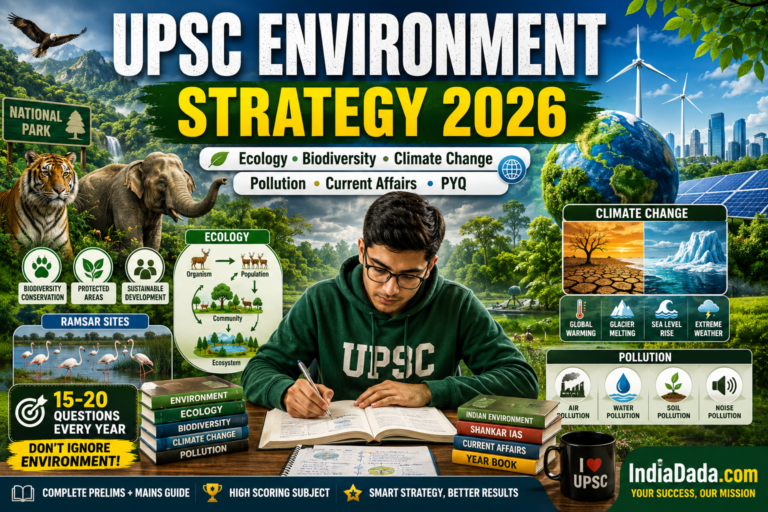
UPSC Environment Preparation 2026: क्यों यह Prelims का सबसे महत्वपूर्ण विषय है?
यदि UPSC Prelims 2026 में कोई ऐसा विषय है जिसे आप बिल्कुल भी Ignore नहीं कर सकते, तो वह है Environment & Ecology।हर वर्ष Environment से लगभग 15 से 20 प्रश्न पूछे जाते हैं। कई वर्षों में यह संख्या 20 से भी अधिक रही है।इसका सीधा अर्थ है कि Prelims Paper का लगभग 20% हिस्सा Environment से आता है। यानी केवल एक विषय आपकी Cut-Off पार कराने में निर्णायक भूमिका निभा सकता है।
🎯 Environment UPSC के लिए इतना महत्वपूर्ण क्यों है?
UPSC Civil Services Preliminary Examination और Indian Forest Service (IFoS) Preliminary Examination एक ही प्रश्नपत्र के माध्यम से आयोजित किए जाते हैं।इसी कारण Environment एवं Ecology का Weightage लगातार अधिक बना रहता है।History, Geography या Economy में प्रश्नों की संख्या हर वर्ष बदल सकती है, लेकिन Environment ऐसा विषय है जहां लगभग हर वर्ष 15+ Questions देखने को मिलते हैं।
📊 Environment का UPSC में Weightage
15-20
Prelims में औसत प्रश्न
50-60
Mains GS-3 में संभावित अंक
20%
Prelims Paper में योगदान
100%
हर वर्ष प्रश्न आने की संभावना
🌎 Environment को Ignore करना सबसे बड़ी गलती क्यों है?
कई अभ्यर्थी Polity, Economy और History पर पूरा ध्यान देते हैं, लेकिन Environment को Current Affairs का विषय समझकर छोड़ देते हैं।यही सबसे बड़ी गलती है।Environment एक ऐसा विषय है जिसमें Static Concepts और Current Affairs दोनों मिलकर प्रश्न बनाते हैं।यदि आपकी Conceptual Understanding मजबूत है, तो आप कठिन प्रश्नों को भी Elimination Technique से हल कर सकते हैं।
🚀 Selection Formula
Environment + Revision + PYQ Analysis=UPSC Prelims में Strong Advantage
📚 UPSC Environment Syllabus Decoded
Environment का Syllabus पहली नजर में छोटा लगता है, लेकिन वास्तव में यह UPSC के सबसे Dynamic Subjects में से एक है।अधिकांश Aspirants की सबसे बड़ी समस्या यह होती है कि उन्हें पता ही नहीं होता कि Environment में क्या पढ़ना है और क्या नहीं पढ़ना है।इसीलिए सबसे पहले Syllabus को सही तरीके से समझना आवश्यक है।
🎯 Environment Preparation की शुरुआत कहाँ से करें?
UPSC Notification में Environment का Syllabus बहुत संक्षेप में दिया गया है।लेकिन यदि पिछले वर्षों के प्रश्नों और Mains Syllabus का विश्लेषण किया जाए, तो पूरा Environment & Ecology Syllabus छह प्रमुख Pillars में विभाजित किया जा सकता है।यदि आप इन छह Pillars को अच्छी तरह तैयार कर लेते हैं, तो Environment का लगभग पूरा Static Portion Cover हो जाता है।
🌿 Environment के 6 Most Important Pillars
1️⃣ Ecology & Ecosystem
Food Chain, Food Web, Ecological Pyramid, Biogeochemical Cycles, Ecosystem Functions, Energy Flow और Ecological Succession।
2️⃣ Environmental Pollution
Air Pollution, Water Pollution, Noise Pollution, Soil Pollution, E-Waste, Plastic Waste एवं Pollution Control Methods।
3️⃣ Renewable Energy & Sustainable Development
Solar Energy, Wind Energy, Hydrogen Fuel, Biofuels, Sustainable Development Goals (SDGs) और Green Economy।
4️⃣ Climate Change
Global Warming, Greenhouse Gases, Carbon Cycle, UNFCCC, Paris Agreement, Kyoto Protocol और COP Meetings।
5️⃣ Biodiversity & Protected Areas
National Parks, Wildlife Sanctuaries, Biosphere Reserves, Ramsar Sites, Endangered Species और Conservation Strategies।
6️⃣ Agriculture & Environment
Organic Farming, Natural Farming, GM Crops, Sustainable Agriculture, Agroforestry और Soil Conservation।
📖 Prelims और Mains की Strategy अलग कैसे रखें?
Prelims में Focus Concept + Facts + Current Affairs पर होना चाहिए।जबकि Mains में Focus Analysis, Interlinkages, Challenges, Government Initiatives और Solutions पर होना चाहिए।यही कारण है कि Environment को शुरू से ही Prelims + Mains Integrated Approach के साथ पढ़ना चाहिए।
🚀 Environment का सही Study Framework
हर Topic को इस Flow में पढ़ें:
Concept Building➡ Notes Making➡ Current Affairs Integration➡ MCQ Practice➡ PYQ Analysis➡ Revision➡ Test Series
यदि आप इस Framework को Follow करते हैं, तो Environment आपकी सबसे Strong Subjects में से एक बन सकता है।
🎯 Section 2 Quick Takeaways
- Environment Syllabus को 6 Major Pillars में Divide करें।
- Ecology और Biodiversity सबसे महत्वपूर्ण Static Areas हैं।
- Climate Change और Pollution सबसे महत्वपूर्ण Dynamic Areas हैं।
- Current Affairs को हमेशा Static Concepts से जोड़ें।
- Prelims और Mains की तैयारी Integrated रखें।
- Concept → Notes → MCQ → PYQ → Revision Strategy अपनाएँ।
- 6 Pillars = 80%+ Environment Coverage
📚 Best Sources for UPSC Environment 2026
Environment ऐसा Subject है जहाँ सबसे बड़ी गलती Aspirants बहुत सारे Sources इकट्ठा करके करते हैं।Selection ज्यादा किताबें पढ़ने से नहीं, बल्कि Limited Sources को Multiple Revision करने से होता है।इस Section में हम जानेंगे कि UPSC Environment के लिए कौन-से Sources पर्याप्त हैं और किन Sources पर फोकस करना चाहिए।
🎯 Environment के लिए कितने Sources होने चाहिए?
UPSC Environment की तैयारी के लिए 2-3 Core Sources पर्याप्त हैं।बहुत सारी Books और Notes Collect करने से Confusion बढ़ता है और Revision प्रभावित होती है।Environment में Success का Formula है:
📖 Core Books for Environment
🌿 Shankar IAS
UPSC Environment की सबसे लोकप्रिय Book। Static Concepts के लिए पर्याप्त।
📘 PMF IAS Notes
Detailed Coverage, Biodiversity और Ecology के लिए उपयोगी।
📗 NCERT Biology
Class 12 Biology के Ecology Chapters विशेष रूप से महत्वपूर्ण हैं।
📚 Class Notes
यदि Coaching Notes अच्छे हैं, तो वही Primary Notes बन सकते हैं।
📰 Current Affairs कैसे पढ़ें?
Environment UPSC का सबसे Dynamic Subject है।Static Concepts के साथ Current Affairs को जोड़ना अत्यंत आवश्यक है।हर महीने Environment Related News को अपने Notes में Add करते रहना चाहिए।
🗞 Newspaper
Environment News Tracking
📑 Monthly Magazine
Current Affairs Compilation
🌍 Government Reports
Authentic Information Source
📢 International Reports
Climate & Biodiversity Updates
❌ क्या नहीं पढ़ना चाहिए?
Environment में सबसे बड़ी समस्या Information Overload है।कई Aspirants हर Website, हर PDF और हर Current Affairs Source पढ़ने लगते हैं।ऐसा करने से Revision का समय समाप्त हो जाता है।
🚀 Ideal Environment Resource Strategy
यदि आप Beginner हैं तो यह Strategy अपनाइए:
NCERT Biology➡ Shankar IAS➡ Current Affairs➡ Topic Wise MCQ➡ PYQ Analysis➡ Revision
यही Strategy अधिकांश Successful Candidates Follow करते हैं।
🎯 Section 3 Quick Takeaways
- Shankar IAS Environment की सबसे लोकप्रिय Book है।
- NCERT Biology Class 12 अवश्य पढ़ें।
- Current Affairs को Static Notes से जोड़ें।
- Limited Sources रखें।
- Multiple Revision करें।
- Environment में Information Overload से बचें।
- NCERT → Shankar → Current Affairs → PYQ = Success
🚀 Environment Preparation Method
अब सबसे महत्वपूर्ण प्रश्न आता है कि Environment को पढ़ना कैसे है?अधिकांश Aspirants Books तो पढ़ लेते हैं लेकिन सही Preparation Process Follow नहीं करते।इस कारण Concepts Clear नहीं होते, Revision नहीं हो पाती और Questions गलत हो जाते हैं।इस Section में हम वही Step-by-Step Framework सीखेंगे जो Environment को आसान बना देता है।
🎯 Step 1 : Topic चुनिए
Environment को Chapter Wise नहीं बल्कि Topic Wise पढ़िए।उदाहरण:Air PollutionWater PollutionClimate ChangeNational ParksWetlandsBiodiversityइनमें से एक Topic चुनकर उसे Complete करना चाहिए।
📚 Step 2 : Concept Building
किसी भी Topic की शुरुआत Concept से होनी चाहिए।यदि Air Pollution पढ़ रहे हैं तो पहले समझिए:Air Pollution क्या है?Sources क्या हैं?Effects क्या हैं?Control Methods क्या हैं?Concept Clear होने के बाद ही Current Affairs जोड़ें।
📝 Step 3 : Notes बनाइए
Concept पढ़ने के बाद Notes बनाना शुरू करें।यही आपके Base Notes होंगे।Environment में बार-बार नई Information आती रहती है, इसलिए Notes ऐसे होने चाहिए जिनमें बाद में Current Affairs जोड़े जा सकें।
📰 Step 4 : Current Affairs जोड़िए
यदि आपने Air Pollution पढ़ लिया है, तो भविष्य में Air Pollution से संबंधित News सीधे उसी Topic के Notes में Add करें।यही UPSC Environment Preparation का सबसे महत्वपूर्ण हिस्सा है।
Newspaper
Daily Updates
Monthly Magazine
Monthly Revision
Government Reports
Authentic Sources
Environment News
Static Linkage
✅ Step 5 : MCQ Practice
Topic पूरा होने के बाद उसी Topic के MCQs लगाइए।MCQ Practice से Concept मजबूत होता है और UPSC की Language समझ आती है।Environment में MCQ Practice अत्यंत आवश्यक है।
📖 Step 6 : Mains Questions Practice
यदि Topic Mains Relevant है, तो उससे जुड़े GS-3 Questions भी लिखिए।यह Answer Writing और Conceptual Understanding दोनों को मजबूत बनाता है।
📊 Step 7 : PYQ Analysis
अब Previous Year Questions Solve कीजिए।Prelims PYQ : 2011 onwardsMains PYQ : 2013 onwardsPYQ Analysis आपको बताता है कि UPSC वास्तव में किस प्रकार सोचता है।
🔄 Step 8 : Revision Cycle
Revision के बिना Environment कभी Complete नहीं होता।एक Topic पढ़ने के बाद:Weekly RevisionMonthly RevisionBefore Test RevisionPrelims Revisionइन सभी Stages पर Revision करनी चाहिए।
1st Revision
Within 7 Days
2nd Revision
After 1 Month
3rd Revision
Before Test
Final Revision
Before Prelims
🎯 Section 4 Quick Takeaways
- Topic Wise Study करें।
- Concept Building से शुरुआत करें।
- Base Notes तैयार करें।
- Current Affairs को Notes में जोड़ें।
- MCQ और Mains Questions Practice करें।
- PYQ Analysis करें।
- Multiple Revision करें।
- Concept → Notes → Current Affairs → MCQ → PYQ → Revision
यही UPSC Environment Preparation का Complete Framework है।
🌍 Biodiversity & Climate Change
यदि UPSC Environment में सबसे अधिक Important Topics की बात की जाए, तो Biodiversity और Climate Change सबसे ऊपर आते हैं।हर वर्ष Prelims और Mains दोनों में इन Topics से Direct या Indirect Questions पूछे जाते हैं।विशेष रूप से National Parks, Ramsar Sites, Endangered Species, Climate Agreements और International Conventions UPSC के Favourite Areas हैं।
🦋 Biodiversity क्या है?
Biodiversity का अर्थ है पृथ्वी पर मौजूद सभी प्रकार के जीव-जंतु, पौधे, सूक्ष्मजीव और उनके Ecosystems की विविधता।जितनी अधिक Biodiversity होगी, उतना ही Ecosystem मजबूत और Sustainable होगा।UPSC Biodiversity Hotspots, Species Conservation और Protected Areas पर नियमित रूप से प्रश्न पूछता है।
🏞 Protected Areas
भारत में Biodiversity संरक्षण के लिए विभिन्न प्रकार के Protected Areas बनाए गए हैं।इनसे जुड़े Questions UPSC में लगभग हर वर्ष आते हैं।
National Park
Highest Protection Level
Wildlife Sanctuary
Wildlife Conservation
Biosphere Reserve
Ecosystem Protection
Conservation Reserve
Community Participation
💧 Ramsar Sites
Wetlands UPSC का एक अत्यंत महत्वपूर्ण Topic है।Ramsar Convention के अंतर्गत International Importance वाले Wetlands को Ramsar Sites घोषित किया जाता है।भारत के Ramsar Sites और उनसे जुड़े Current Affairs नियमित रूप से UPSC में पूछे जाते हैं।
🔥 Climate Change
Climate Change का अर्थ है पृथ्वी के औसत तापमान और मौसम के पैटर्न में दीर्घकालिक परिवर्तन।Global Warming, Greenhouse Effect और Carbon Emissions इसके प्रमुख कारण हैं।Climate Change आज UPSC Environment का सबसे Dynamic Topic बन चुका है।
Global Warming
Rising Earth Temperature
Greenhouse Gases
Heat Trapping Gases
Carbon Emission
Major Climate Driver
Sea Level Rise
Climate Impact
🌎 Important International Conventions
UPSC अक्सर International Environmental Agreements और Conventions से Questions पूछता है।इनका उद्देश्य Climate Change, Biodiversity Conservation और Sustainable Development को बढ़ावा देना है।
UNFCCC
Climate Framework Convention
Paris Agreement
Global Climate Action
Kyoto Protocol
Emission Reduction
Montreal Protocol
Ozone Layer Protection
CBD
Biodiversity Conservation
Ramsar Convention
Wetland Conservation
📌 COP Meetings क्यों महत्वपूर्ण हैं?
Conference of Parties (COP) Meetings Climate Change से संबंधित सबसे महत्वपूर्ण Global Meetings होती हैं।हर वर्ष COP Summit Current Affairs का हिस्सा बनती है और UPSC इससे Questions पूछ सकता है।इसलिए COP Outcomes, Climate Targets और Global Commitments पर ध्यान देना आवश्यक है।
🎯 Section 5 Quick Takeaways
- Biodiversity UPSC Environment का सबसे महत्वपूर्ण Static Topic है।
- National Parks, Wildlife Sanctuaries और Ramsar Sites अवश्य तैयार करें।
- Climate Change सबसे महत्वपूर्ण Dynamic Topic है।
- UNFCCC, Paris Agreement और Montreal Protocol पर विशेष ध्यान दें।
- COP Meetings को Current Affairs के साथ जोड़कर पढ़ें।
- Protected Areas + Biodiversity + Climate Change = High Scoring Area
- हर वर्ष 4-8 Questions इसी क्षेत्र से आने की संभावना रहती है।
Biodiversity + Climate Change + International Conventions= UPSC Environment का सबसे Powerful Combination
🌫 Pollution & Current Affairs Based Environment
UPSC Environment में Pollution एक ऐसा Topic है जो Static और Current Affairs दोनों को जोड़ता है।पिछले कुछ वर्षों में UPSC ने केवल Traditional Pollution पर नहीं, बल्कि नई Environmental Technologies, Emerging Pollutants और Innovative Solutions पर भी प्रश्न पूछे हैं।इसी कारण Pollution Topic UPSC 2026 के लिए अत्यंत महत्वपूर्ण बन जाता है।
🌬 Air Pollution
Air Pollution UPSC Environment का सबसे महत्वपूर्ण Pollution Topic माना जाता है।प्रदूषक तत्वों के कारण वायु की गुणवत्ता खराब हो जाती है, जिसका प्रभाव मानव स्वास्थ्य, कृषि, जलवायु और Biodiversity पर पड़ता है।
PM 2.5
Fine Particulate Matter
PM 10
Coarse Particles
SO₂
Sulphur Dioxide
NOx
Nitrogen Oxides
💧 Water Pollution
Industrial Waste, Sewage Discharge, Agricultural Runoff और Chemical Contamination जल प्रदूषण के प्रमुख कारण हैं।UPSC Water Quality Management और Wastewater Treatment Technologies से Questions पूछ सकता है।
🌱 Soil Pollution
Chemical Fertilizers, Pesticides, Heavy Metals और Industrial Waste Soil Pollution के प्रमुख कारण हैं।Sustainable Agriculture और Organic Farming इस समस्या के समाधान के महत्वपूर्ण उपाय हैं।
🔊 Noise Pollution
Noise Pollution शहरी क्षेत्रों में तेजी से बढ़ती हुई Environmental Challenge है।UPSC कभी-कभी Environmental Standards और Noise Control Measures से जुड़े प्रश्न पूछ सकता है।
🧪 Emerging Environmental Issues
हाल के वर्षों में UPSC ने नए Environmental Topics पर विशेष ध्यान देना शुरू किया है।Current Affairs के माध्यम से इन Topics की तैयारी करना आवश्यक है।
Microplastics
Tiny Plastic Particles
E-Waste
Electronic Waste
PFAS Chemicals
Forever Chemicals
Black Plastic
Recycling Challenge
🚀 Environmental Technologies
UPSC Technology Based Environmental Solutions पर भी प्रश्न पूछ सकता है।विशेष रूप से Current Affairs में चर्चित Technologies को अवश्य पढ़ें।
Vermifiltration
Earthworm Based Filtration
Nano Bubble Technology
Water Purification
Bio Remediation
Biological Treatment
Carbon Capture
Climate Solution
📌 Current Affairs Integration
Environment की तैयारी करते समय Current Affairs को हमेशा Static Concepts के साथ जोड़ना चाहिए।यदि किसी News में Wetland, Plastic Waste, E-Waste, Biodiversity Loss या Climate Change की चर्चा हो रही है, तो उसे सीधे अपने Notes में संबंधित Topic के अंतर्गत जोड़ें।यही UPSC Environment Preparation का Smart Approach है।
🎯 Section 6 Quick Takeaways
- Air Pollution UPSC का सबसे महत्वपूर्ण Pollution Topic है।
- Water, Soil और Noise Pollution भी तैयार करें।
- Microplastics, PFAS और E-Waste Current Affairs के Hot Topics हैं।
- Environmental Technologies पर विशेष ध्यान दें।
- Static + Current Affairs Integration सबसे जरूरी है।
- Pollution Control Measures को Conceptually समझें।
- Pollution + Current Affairs = UPSC Environment Advantage
Pollution Concepts + Current Affairs + Environmental Technology= UPSC Environment में Extra Edge
📝 Notes Making, Revision & PYQ Strategy
UPSC Environment में सफलता केवल पढ़ने से नहीं मिलती।Selection का वास्तविक Secret है — Smart Notes Making, Multiple Revision और Previous Year Question Analysis।अधिकांश Aspirants पढ़ते तो बहुत हैं, लेकिन Revision की कमी के कारण Exam Hall में Concepts भूल जाते हैं।
📚 Primary Notes कैसे बनाएं?
जब आप पहली बार कोई Topic पढ़ते हैं, तो उसी समय अपने Base Notes तैयार करें।ये Notes आपके पूरे Preparation Cycle का Foundation बनेंगे।इन Notes में Static Concepts, Examples और Current Affairs Add करने की जगह होनी चाहिए।
✍ Short Notes क्यों जरूरी हैं?
Prelims के नज़दीक आपके पास पूरी Book पढ़ने का समय नहीं होगा।इसलिए Short Notes बनाना आवश्यक है।Short Notes का उद्देश्य Information कम करना नहीं, बल्कि Revision Time कम करना है।
Primary Notes
Detailed Content
Short Notes
Fast Revision
Micro Notes
Last Minute Facts
Mind Maps
Quick Recall
📄 One Page Notes for Mains
Mains Preparation के दौरान हर Important Topic को एक A4 Sheet में Summarize करने की कोशिश करें।उदाहरण:Climate ChangeAir PollutionBiodiversityWetlandsSustainable Developmentइन सभी Topics के One Page Notes Answer Writing में बहुत मदद करते हैं।
📊 PYQ Analysis Strategy
Previous Year Questions UPSC की सोच समझने का सबसे अच्छा तरीका हैं।Environment के PYQs Solve करने से Pattern और Important Areas दोनों समझ आते हैं।
Prelims PYQ
2011 Onwards
Mains PYQ
2013 Onwards
Topic Wise PYQ
Better Analysis
Trend Analysis
Future Prediction
🔄 Revision Cycle Strategy
Environment एक ऐसा Subject है जिसमें बार-बार Revision करना जरूरी है।एक Topic पढ़कर छोड़ देना सबसे बड़ी गलती है।
Revision 1
Within 7 Days
Revision 2
After 30 Days
Revision 3
Before Test
Revision 4
Before Prelims
🧪 Mock Test Strategy
Environment की तैयारी में Topic Wise Test और Full Length Mock Test दोनों जरूरी हैं।Tests आपको Weak Areas पहचानने में मदद करते हैं।हर Test के बाद Error Analysis अवश्य करें।
🎯 Section 7 Quick Takeaways
- Primary Notes आपकी Foundation हैं।
- Short Notes Revision Speed बढ़ाते हैं।
- Mains के लिए One Page Notes बनाएं।
- Prelims PYQ 2011 से और Mains PYQ 2013 से करें।
- Multiple Revision ही Success की Key है।
- Mock Tests के बाद Error Analysis करें।
- Notes + PYQ + Revision = UPSC Environment Mastery
Read → Notes → PYQ → Revision → Test → Selection
🎯 UPSC Environment 2026 Final Roadmap
अब तक आपने Environment का पूरा Framework समझ लिया है।Syllabus, Sources, Notes Making, Current Affairs, Biodiversity, Climate Change, Pollution और Revision Strategy सब Cover हो चुका है।अब समय है Final Execution Plan का।क्योंकि UPSC में Strategy तभी काम करती है जब उसे Action Plan में बदला जाए।
📅 90 Days Environment Preparation Plan
यदि आपके पास Prelims से पहले 90 दिन का समय है, तो Environment को इस प्रकार तैयार किया जा सकता है।
Days 1-30
EcologyEcosystemPollutionClimate ChangeBiodiversityStatic Foundation
Days 31-60
Current Affairs IntegrationEnvironment ReportsGovernment InitiativesProtected Areas Update
Days 61-75
Topic Wise MCQPYQ AnalysisWeak Area Improvement
Days 76-90
RevisionMock TestsShort NotesFinal Preparation
❓ Frequently Asked Questions (FAQ)
Q1. Environment से UPSC Prelims में कितने प्रश्न आते हैं?
आमतौर पर 15-20 प्रश्न आते हैं। कुछ वर्षों में यह संख्या 20 से अधिक भी रही है।
Q2. क्या Shankar IAS Environment Book पर्याप्त है?
हाँ, अधिकांश Aspirants के लिए Shankar IAS + Current Affairs पर्याप्त है।
Q3. क्या NCERT पढ़नी चाहिए?
हाँ, विशेष रूप से Class 12 Biology के Ecology Chapters अवश्य पढ़ें।
Q4. Environment के लिए Current Affairs कितने महत्वपूर्ण हैं?
Environment UPSC का सबसे Dynamic Subject है। इसलिए Current Affairs अत्यंत महत्वपूर्ण हैं।
Q5. Environment की Revision कितनी बार करनी चाहिए?
कम से कम 3-4 बार Revision आवश्यक है।
Q6. सबसे महत्वपूर्ण Topics कौन-से हैं?
Biodiversity, Climate Change, Pollution, Protected Areas, Ramsar Sites और International Conventions।
🏆 Final Conclusion
UPSC Environment कोई ऐसा Subject नहीं है जिसे केवल रटकर तैयार किया जा सके।यह Concept + Current Affairs + Revision का Subject है।यदि आप Environment को छह Pillars में Divide करके पढ़ते हैं, Current Affairs को Notes में जोड़ते हैं, PYQ Analysis करते हैं और Multiple Revision करते हैं, तो यह आपका सबसे Scoring Subject बन सकता है।
Syllabus Decoding➡ Standard Sources➡ Notes Making➡ Current Affairs➡ MCQ Practice➡ PYQ Analysis➡ Revision➡ Mock Tests➡ Prelims Success
🌿 Crack UPSC Environment 2026
Environment को कभी Ignore मत कीजिए।यह UPSC Prelims का सबसे Reliable और High Scoring Subject है।सही Strategy, सही Sources और Multiple Revision के साथ Environment आपकी Selection Journey को मजबूत बना सकता है।
Learn Concepts • Revise Multiple Times • Solve PYQs • Clear UPSC
🌐 IndiaDada.com
Free UPSC Notes • Mock Tests • PYQ • Current Affairs
Continue Learning With IndiaDada
UPSC, SSC CGL, UPTET, Current Affairs, Govt Jobs, School Education, Higher Education, Notes, PDF, MCQ, PYQ और Mock Test की सम्पूर्ण तैयारी अब एक ही प्लेटफॉर्म पर।
Daily Current Affairs
Latest Daily Current Affairs Notes
🎯Current Affairs MCQ
Daily Quiz & Practice Sets
🇮🇳UPSC Preparation
Prelims, CSAT & Mains Study Material
📑SSC CGL
Notes, PYQ & Mock Test
🧠UPTET
Notes, MCQ & Practice Questions
💼Govt Jobs
Latest Sarkari Naukri Updates
🔥 Important Study Resources
🌐 Important Official Websites
🚀 Stay Connected With IndiaDada.com
Daily Current Affairs, Govt Jobs, UPSC, SSC CGL, UPTET, Notes, MCQ, Mock Tests, Previous Year Papers और Exam Updates प्राप्त करने के लिए IndiaDada.com के साथ जुड़े रहें।
Visit IndiaDada.comContinue Learning With IndiaDada
UPSC, SSC CGL, UPTET, Current Affairs, Government Jobs, School Education, Higher Education, Notes, PDF, MCQ, PYQ, Mock Tests और Exam Preparation की सम्पूर्ण सामग्री अब एक ही प्लेटफॉर्म पर।
Daily Current Affairs
Daily Current Affairs Notes, PDF & Analysis
🎯Current Affairs MCQ
Daily Quiz, Practice Sets & Mock Questions
🇮🇳UPSC Preparation
Prelims, CSAT, Mains Notes & PYQs
📑SSC CGL
Notes, Previous Papers & Mock Tests
🧠UPTET Preparation
Latest Notes, MCQ & Practice Sets
💼Government Jobs
Latest Sarkari Naukri & Recruitment Updates
🔥 Important Study Resources
🌐 Important Official Resources
🎯 Popular Exam Categories
🚀 Stay Connected With IndiaDada.com
Daily Current Affairs, UPSC, SSC CGL, UPTET, Government Jobs, Previous Year Papers, Notes, MCQ, Mock Tests तथा Latest Exam Updates प्राप्त करने के लिए IndiaDada.com के साथ जुड़े रहें।
Visit IndiaDada.comContinue Learning With IndiaDada
UPSC, SSC CGL, UPTET, Current Affairs, Government Jobs, School Education, Higher Education, Notes, PDF, MCQ, PYQ, Mock Tests और Exam Preparation की सम्पूर्ण सामग्री अब एक ही प्लेटफॉर्म पर।
Daily Current Affairs
Daily Current Affairs Notes, PDF & Analysis
🎯Current Affairs MCQ
Daily Quiz, Practice Sets & Mock Questions
🇮🇳UPSC Preparation
Prelims, CSAT, Mains Notes & PYQs
📑SSC CGL
Notes, Previous Papers & Mock Tests
🧠UPTET Preparation
Latest Notes, MCQ & Practice Sets
💼Government Jobs
Latest Sarkari Naukri & Recruitment Updates
🔥 Important Study Resources
🌐 Important Official Resources
🎯 Popular Exam Categories
🚀 Stay Connected With IndiaDada.com
Daily Current Affairs, UPSC, SSC CGL, UPTET, Government Jobs, Previous Year Papers, Notes, MCQ, Mock Tests तथा Latest Exam Updates प्राप्त करने के लिए IndiaDada.com के साथ जुड़े रहें।
Visit IndiaDada.com