
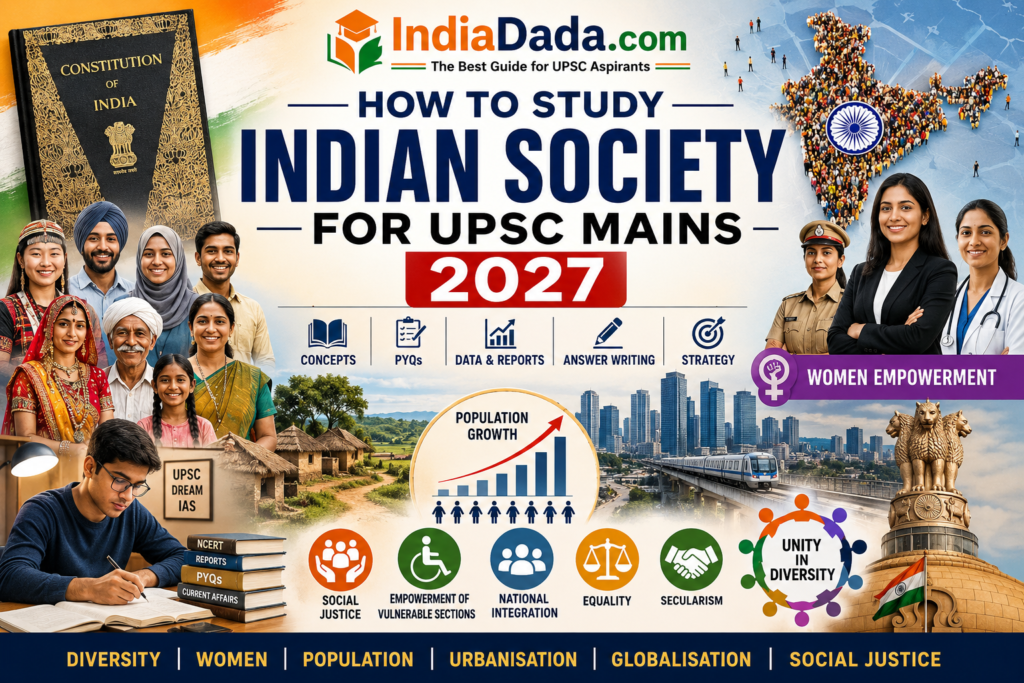
How to Study Indian Society for UPSC Mains 2027: Complete Introduction & Strategy
UPSC Mains GS Paper-1 में Indian Society एक अत्यंत महत्वपूर्ण और स्कोरिंग भाग है। अधिकांश अभ्यर्थी History और Geography पर अधिक ध्यान देते हैं, लेकिन Society को अपेक्षाकृत कम महत्व देते हैं। यही कारण है कि कई उम्मीदवार GS-1 में अच्छे अंक प्राप्त करने का अवसर खो देते हैं।
पिछले वर्षों के प्रश्नपत्रों का विश्लेषण दर्शाता है कि Indian Society से नियमित रूप से प्रश्न पूछे जाते हैं। कई बार Society से जुड़े प्रश्न GS-2, Essay और Interview में भी अप्रत्यक्ष रूप से दिखाई देते हैं। इसलिए Indian Society केवल GS-1 का विषय नहीं बल्कि UPSC Preparation का एक Core Component है।
Why Indian Society is Important for UPSC?
- GS Paper-1 में नियमित प्रश्न पूछे जाते हैं।
- Essay Paper में Society आधारित विषय अक्सर आते हैं।
- GS-2 और Social Justice Topics से सीधा संबंध है।
- Current Affairs के साथ आसानी से Integrate किया जा सकता है।
- Answer Writing में Examples और Data का प्रयोग आसान होता है।
- कम समय में बेहतर स्कोर प्राप्त किया जा सकता है।
UPSC Society Question Trend
UPSC सीधे Definitions नहीं पूछता बल्कि Analytical Questions पूछता है। प्रश्नों का मुख्य फोकस भारतीय समाज की विशेषताओं, विविधता, महिलाओं की भूमिका, जनसंख्या, गरीबी, शहरीकरण, वैश्वीकरण, सामाजिक सशक्तिकरण, सांप्रदायिकता, क्षेत्रवाद और धर्मनिरपेक्षता जैसे विषयों पर रहता है।
Indian Society
Salient Features, Diversity & Social Change
Women Issues
Empowerment, Participation & Challenges
Population
Demographic Dividend & Population Issues
Urbanisation
Migration, Slums & Urban Challenges
Globalisation
Impact on Indian Society
Social Issues
Communalism, Regionalism & Secularism
What UPSC Really Wants?
UPSC यह नहीं देखता कि आपने कितनी किताबें पढ़ी हैं। UPSC यह देखता है कि आप भारतीय समाज की समस्याओं, परिवर्तनों, चुनौतियों और समाधानों को कितनी गहराई से समझते हैं।
यदि आप किसी भी सामाजिक विषय को Historical Background, Current Affairs, Government Initiatives और Future Solutions के साथ जोड़कर लिख सकते हैं, तो आपके उत्तर अधिक प्रभावशाली बनते हैं।
Examiner Expectations
Indian Society Complete Roadmap
Key Takeaway
Indian Society UPSC Mains का ऐसा भाग है जिसे सीमित स्रोतों, सही नोट्स, Current Affairs Integration और नियमित Answer Writing Practice के माध्यम से बहुत अच्छे स्तर पर तैयार किया जा सकता है। इस Complete Guide में हम Indian Society के प्रत्येक Topic को UPSC Perspective से विस्तारपूर्वक समझेंगे।
Indian Society: Meaning, Salient Features and Evolution of Indian Society
Indian Society UPSC GS Paper-1 का सबसे Fundamental Topic है। यदि इस Topic की Conceptual Understanding मजबूत हो जाती है तो Diversity, Women Issues, Population, Urbanisation, Globalisation और Social Justice जैसे सभी Topics को समझना आसान हो जाता है।
UPSC अक्सर Indian Society की विशेषताओं, उसकी ऐतिहासिक पृष्ठभूमि, आधुनिक परिवर्तनों और सामाजिक चुनौतियों पर आधारित Analytical Questions पूछता है। इसलिए केवल Definitions याद करना पर्याप्त नहीं है।
What is Society?
समाज (Society) व्यक्तियों, समूहों, संस्थाओं और सामाजिक संबंधों का ऐसा संगठित तंत्र है जो साझा मूल्यों, परंपराओं, संस्कृति और नियमों के आधार पर कार्य करता है।
दूसरे शब्दों में, समाज केवल लोगों का समूह नहीं बल्कि उनके बीच स्थापित सामाजिक संबंधों का एक जटिल नेटवर्क होता है।
What is Indian Society?
Indian Society विश्व की सबसे प्राचीन, विविधतापूर्ण और बहुआयामी समाजों में से एक है। यह विभिन्न धर्मों, भाषाओं, संस्कृतियों, जातियों, परंपराओं और सामाजिक समूहों का संगम है।
भारतीय समाज की सबसे बड़ी विशेषता "Unity in Diversity" मानी जाती है जहाँ अनेक विविधताओं के बावजूद राष्ट्रीय एकता बनी रहती है।
Major Salient Features of Indian Society
Diversity
भारत में धार्मिक, भाषाई, सांस्कृतिक और क्षेत्रीय विविधता अत्यंत व्यापक है।
Unity in Diversity
विविधताओं के बावजूद राष्ट्रीय एकता भारतीय समाज की सबसे महत्वपूर्ण पहचान है।
Family System
परिवार भारतीय समाज की मूल सामाजिक इकाई माना जाता है।
Spiritual Orientation
भारतीय समाज में धर्म और आध्यात्मिकता का गहरा प्रभाव देखा जाता है।
Tolerance
सहिष्णुता और सह-अस्तित्व भारतीय संस्कृति के मूल तत्व हैं।
Social Institutions
परिवार, विवाह, धर्म और समुदाय सामाजिक संरचना को मजबूत बनाते हैं।
Evolution of Indian Society
भारतीय समाज का विकास हजारों वर्षों में विभिन्न ऐतिहासिक चरणों से होकर हुआ है।
Ancient Period
- Vedic Culture
- Varna System
- Joint Family System
- Agrarian Society
Medieval Period
- Cultural Integration
- Bhakti Movement
- Sufi Traditions
- Social Reforms
Colonial Period
- Western Education
- Social Reform Movements
- Modern Political Consciousness
- Women's Education
Post-Independence
- Democracy
- Constitutional Values
- Social Justice
- Economic Development
Major Changes in Contemporary Indian Society
- Rapid Urbanisation
- Digital Revolution
- Increasing Education Levels
- Changing Family Structure
- Women's Participation in Workforce
- Rise of Middle Class
- Globalisation Impact
- Social Media Influence
Challenges Before Indian Society
UPSC Answer Writing Approach
Indian Society आधारित अधिकांश Questions में यह Framework अत्यंत प्रभावी रहता है।
Important UPSC Themes
- Salient Features of Indian Society
- Diversity and Unity
- Social Changes in Modern India
- Role of Family and Community
- Tradition vs Modernity
- Impact of Globalisation on Society
Key Takeaway
Indian Society को समझे बिना GS-1 Society के अन्य Topics को गहराई से समझना संभव नहीं है। इसलिए Indian Society की विशेषताओं, विकास, वर्तमान परिवर्तनों और चुनौतियों की स्पष्ट समझ UPSC Mains में उच्च अंक प्राप्त करने की आधारशिला है।
Diversity of India: Religious, Linguistic, Cultural, Regional & Ethnic Diversity
भारतीय समाज की सबसे महत्वपूर्ण विशेषता उसकी विविधता (Diversity) है। भारत विश्व के उन चुनिंदा देशों में से एक है जहाँ अनेक धर्म, भाषाएँ, संस्कृतियाँ, जातीय समूह, परंपराएँ और जीवनशैलियाँ एक साथ विद्यमान हैं।
UPSC Mains में Diversity और Unity in Diversity से जुड़े प्रश्न नियमित रूप से पूछे जाते हैं क्योंकि यह भारतीय समाज की मूल पहचान है। UPSC केवल विविधताओं की सूची नहीं पूछता बल्कि उनके सामाजिक प्रभाव, चुनौतियाँ और राष्ट्रीय एकता पर उनके प्रभाव का विश्लेषण भी पूछता है।
What is Unity in Diversity?
"Unity in Diversity" का अर्थ है कि विभिन्न धर्मों, भाषाओं, संस्कृतियों और सामाजिक समूहों के बावजूद भारत एक राष्ट्र के रूप में एकजुट बना हुआ है।
यही विशेषता भारतीय समाज को विश्व की अन्य सभ्यताओं से अलग बनाती है।
Major Forms of Diversity in India
Religious Diversity
भारत में हिन्दू, मुस्लिम, सिख, ईसाई, बौद्ध, जैन, पारसी तथा अन्य धर्मों के अनुयायी रहते हैं।
Linguistic Diversity
भारत में सैकड़ों भाषाएँ और बोलियाँ बोली जाती हैं। संविधान की आठवीं अनुसूची में 22 भाषाएँ शामिल हैं।
Cultural Diversity
विभिन्न राज्यों की संस्कृति, खान-पान, पहनावा, संगीत, नृत्य और त्योहार अलग-अलग हैं।
Regional Diversity
हिमालयी क्षेत्र, रेगिस्तानी क्षेत्र, तटीय क्षेत्र और पठारी क्षेत्रों की सामाजिक विशेषताएँ भिन्न हैं।
Ethnic Diversity
भारत में अनेक जनजातीय एवं जातीय समूह अपनी विशिष्ट पहचान बनाए हुए हैं।
Social Diversity
जाति, वर्ग, समुदाय और सामाजिक संरचनाओं की विविधता भारतीय समाज का महत्वपूर्ण भाग है।
Religious Diversity in India
भारत विश्व का सबसे बड़ा लोकतांत्रिक और बहुधार्मिक राष्ट्र है। धार्मिक विविधता भारतीय समाज की सबसे महत्वपूर्ण पहचान मानी जाती है।
- सभी प्रमुख विश्व धर्मों की उपस्थिति
- धार्मिक स्वतंत्रता का संवैधानिक अधिकार
- सांस्कृतिक समन्वय की परंपरा
- धर्मनिरपेक्ष लोकतांत्रिक व्यवस्था
Linguistic Diversity
भारत को भाषाओं का महासागर कहा जाता है। उत्तर से दक्षिण और पूर्व से पश्चिम तक भाषाई विविधता स्पष्ट दिखाई देती है।
Cultural Diversity
भारत की सांस्कृतिक विविधता उसकी Soft Power का प्रमुख स्रोत है।
- Classical Dances
- Regional Festivals
- Traditional Arts
- Folk Culture
- Handicrafts
- Cuisine Diversity
Regional Diversity
भारत के विभिन्न क्षेत्रों की भौगोलिक परिस्थितियाँ सामाजिक जीवन को प्रभावित करती हैं।
Why Diversity is Important?
- Strengthens Democracy
- Promotes Social Inclusion
- Enhances Cultural Richness
- Supports Tourism & Economy
- Encourages Innovation & Creativity
- Strengthens National Identity
Challenges Arising from Diversity
Constitutional & Institutional Safeguards
- Fundamental Rights
- Cultural & Educational Rights
- Secularism
- Federal Structure
- Language Protection Measures
- Minority Rights Protection
UPSC Answer Writing Framework
Important UPSC PYQ Themes
- Diversity and National Integration
- Unity in Diversity
- Cultural Pluralism
- Regionalism and Nationalism
- Linguistic Diversity
- Religious Diversity and Secularism
Way Forward
भारत की विविधता उसकी सबसे बड़ी शक्ति है। आवश्यक है कि संवैधानिक मूल्यों, सामाजिक समरसता, सहिष्णुता और समावेशी विकास को बढ़ावा देकर राष्ट्रीय एकता को और मजबूत बनाया जाए।
Women in Indian Society: Role, Challenges, Empowerment, SHGs, Education & Political Participation
भारतीय समाज में महिलाओं की भूमिका अत्यंत महत्वपूर्ण रही है। प्राचीन काल से लेकर आधुनिक भारत तक महिलाओं ने सामाजिक, आर्थिक, राजनीतिक, शैक्षिक और सांस्कृतिक विकास में महत्वपूर्ण योगदान दिया है।
UPSC GS-1 Society Section में Women Related Topics सबसे अधिक पूछे जाने वाले विषयों में शामिल हैं। महिलाओं की स्थिति, चुनौतियाँ, सशक्तिकरण, SHGs, शिक्षा, कार्यबल में भागीदारी और राजनीतिक प्रतिनिधित्व जैसे विषय लगातार UPSC के फोकस में रहते हैं।
Why Women in Society is Important for UPSC?
- GS-1 Society का सबसे महत्वपूर्ण Topic
- Essay Paper में बार-बार पूछा जाता है
- GS-2 Social Justice से जुड़ा हुआ
- Current Affairs से Direct Linkage
- Government Schemes से Integration
- Interview में भी उपयोगी
Role of Women in Indian Society
महिलाएँ केवल परिवार की आधारशिला नहीं बल्कि समाज और राष्ट्र निर्माण की महत्वपूर्ण भागीदार हैं।
Family Role
परिवार के निर्माण और सामाजिक मूल्यों के संरक्षण में महत्वपूर्ण भूमिका।
Economic Role
कृषि, उद्योग, सेवा क्षेत्र और उद्यमिता में योगदान।
Political Role
लोकतांत्रिक संस्थाओं और नीति निर्माण में भागीदारी।
Social Role
सामाजिक परिवर्तन और सामुदायिक विकास में योगदान।
Educational Role
मानव संसाधन विकास और ज्ञान निर्माण में भूमिका।
Leadership Role
प्रशासन, विज्ञान, खेल और कॉर्पोरेट क्षेत्र में नेतृत्व।
Major Challenges Faced by Women
Women and Education
महिला शिक्षा सामाजिक परिवर्तन का सबसे प्रभावी माध्यम मानी जाती है। शिक्षित महिला न केवल स्वयं सशक्त होती है बल्कि पूरे परिवार और समाज को सशक्त बनाती है।
- Female Literacy Improvement
- Higher Education Participation
- Skill Development
- Digital Literacy
- STEM Education
Women in Workforce
भारत में महिला श्रम बल भागीदारी दर (Female Labour Force Participation Rate) लगातार चर्चा का विषय रही है।
Role of Self Help Groups (SHGs)
Self Help Groups महिलाओं के आर्थिक और सामाजिक सशक्तिकरण का सबसे सफल मॉडल माने जाते हैं।
- Financial Inclusion
- Microfinance Access
- Women Entrepreneurship
- Community Participation
- Leadership Development
- Rural Empowerment
Deendayal Antyodaya Yojana – National Rural Livelihood Mission (DAY-NRLM) ने लाखों महिलाओं को SHGs के माध्यम से सशक्त बनाया है।
Women in Political Participation
राजनीतिक भागीदारी महिला सशक्तिकरण का महत्वपूर्ण संकेतक है।
- Panchayati Raj Institutions
- Urban Local Bodies
- State Legislatures
- Parliament Representation
- Women Reservation Initiatives
Government Initiatives for Women Empowerment
Why Women Empowerment is Important?
- Inclusive Development
- Economic Growth
- Poverty Reduction
- Gender Equality
- Social Justice
- Sustainable Development Goals (SDGs)
UPSC Answer Writing Framework
Important UPSC PYQ Themes
- Women Empowerment and Development
- Changing Role of Women in Society
- Women and Workforce Participation
- Challenges Before Women in India
- Role of SHGs in Women Empowerment
- Political Representation of Women
- Gender Equality and Social Justice
Way Forward
महिला सशक्तिकरण केवल महिलाओं का मुद्दा नहीं बल्कि समावेशी विकास, सामाजिक न्याय और राष्ट्र निर्माण का आधार है। शिक्षा, आर्थिक अवसर, राजनीतिक भागीदारी और सामाजिक सुरक्षा को मजबूत बनाकर महिलाओं को समाज के प्रत्येक क्षेत्र में समान अवसर प्रदान किए जा सकते हैं।
Population, Poverty and Development Issues in India: Demographic Dividend, HDI, Poverty & Human Development
भारतीय समाज के विकास को समझने के लिए Population, Poverty और Development का अध्ययन अत्यंत महत्वपूर्ण है। UPSC GS-1 में यह Topic बार-बार पूछा जाता है क्योंकि यह सीधे Economic Development, Social Justice, Human Development और Inclusive Growth से जुड़ा हुआ है।
UPSC केवल Population Growth नहीं पूछता बल्कि Population Dividend, Ageing Population, Poverty, Hunger, Human Development और Government Interventions को जोड़कर Analytical Questions पूछता है।
Why This Topic is Important for UPSC?
- GS-1 Society का Core Topic
- Essay में बार-बार पूछा जाता है
- GS-2 Social Justice से Linkage
- GS-3 Economy से संबंध
- Current Affairs Integration आसान
- Data & Reports आधारित Questions
Population in India
भारत विश्व के सबसे अधिक जनसंख्या वाले देशों में से एक है। जनसंख्या देश के लिए अवसर भी है और चुनौती भी।
Large Workforce
Economic Growth की संभावना बढ़ती है।
Huge Consumer Base
Market Expansion में सहायता।
Human Resource
Development का महत्वपूर्ण आधार।
Pressure on Resources
जल, भूमि और रोजगार पर दबाव।
Demographic Dividend
जब किसी देश की Working Age Population (15–64 Years) आश्रित जनसंख्या की तुलना में अधिक हो जाती है, तो उसे Demographic Dividend कहा जाता है।
Benefits of Demographic Dividend
- Higher Economic Growth
- More Productive Workforce
- Higher Savings Rate
- Increased Investment Potential
- Innovation and Entrepreneurship
Challenges
- Unemployment
- Skill Gap
- Low Female Workforce Participation
- Regional Inequalities
Ageing Population
भारत धीरे-धीरे Ageing Society की ओर बढ़ रहा है। बुजुर्ग जनसंख्या में वृद्धि Social Security और Healthcare के लिए नई चुनौतियाँ उत्पन्न कर रही है।
- Healthcare Demand
- Pension Burden
- Dependency Ratio Increase
- Social Security Requirements
Poverty in India
गरीबी केवल आय की कमी नहीं बल्कि शिक्षा, स्वास्थ्य, पोषण और अवसरों की कमी भी है।
Multidimensional Poverty
आज गरीबी को केवल आय के आधार पर नहीं मापा जाता बल्कि शिक्षा, स्वास्थ्य और जीवन स्तर के आधार पर भी मापा जाता है।
Hunger and Malnutrition
कुपोषण और खाद्य असुरक्षा भारत के सामाजिक विकास की बड़ी चुनौतियों में शामिल हैं।
- Child Malnutrition
- Stunting
- Wasting
- Anaemia
- Food Security Challenges
Human Development Index (HDI)
HDI किसी देश के मानव विकास का व्यापक संकेतक है।
UPSC अक्सर HDI को Inclusive Development, Poverty Reduction और Social Justice के साथ जोड़कर पूछता है।
Major Development Challenges
Government Initiatives
UPSC Answer Writing Framework
Important UPSC PYQ Themes
- Demographic Dividend
- Population Growth & Development
- Ageing Population
- Poverty & Inequality
- Human Development
- Multidimensional Poverty
- Food Security & Malnutrition
- Inclusive Growth
Way Forward
भारत के लिए जनसंख्या को बोझ नहीं बल्कि मानव संसाधन के रूप में विकसित करना सबसे बड़ी प्राथमिकता होनी चाहिए। गुणवत्तापूर्ण शिक्षा, स्वास्थ्य, कौशल विकास, रोजगार सृजन और समावेशी विकास के माध्यम से Demographic Dividend को वास्तविक विकास में बदला जा सकता है।
Urbanisation and Migration in India: Challenges, Opportunities, Smart Cities & Social Transformation
Urbanisation और Migration भारतीय समाज में हो रहे सबसे बड़े सामाजिक परिवर्तनों में से हैं। UPSC GS-1 में यह Topic लगातार पूछा जाता है क्योंकि इसका संबंध Population, Development, Economy, Infrastructure, Employment और Social Change से है।
भारत में ग्रामीण क्षेत्रों से शहरी क्षेत्रों की ओर बढ़ता Migration और तेजी से बढ़ता Urbanisation विकास के अवसर भी प्रदान करता है और कई नई चुनौतियाँ भी उत्पन्न करता है।
Why Urbanisation & Migration are Important for UPSC?
- GS-1 Society का Core Topic
- Population & Development से जुड़ा हुआ
- Current Affairs Based Questions
- GS-2 Governance और GS-3 Economy से Linkage
- Essay में Frequently Asked Topic
- Urban Planning & Smart Cities से सम्बन्ध
What is Urbanisation?
Urbanisation वह प्रक्रिया है जिसमें जनसंख्या का एक बड़ा भाग ग्रामीण क्षेत्रों से शहरों में निवास करने लगता है तथा शहरी क्षेत्रों का विस्तार होता है।
What is Migration?
Migration का अर्थ है लोगों का एक स्थान से दूसरे स्थान पर स्थायी या अस्थायी रूप से स्थानांतरण।
Major Causes of Migration
Positive Impact of Urbanisation
- Economic Growth
- Industrial Development
- Better Infrastructure
- Employment Generation
- Innovation & Entrepreneurship
- Improved Living Standards
Challenges of Urbanisation
Growth of Slums
अनियोजित Urbanisation के कारण झुग्गी-बस्तियों (Slums) का विस्तार भारत के प्रमुख शहरी मुद्दों में से एक बन चुका है।
- Inadequate Housing
- Poor Sanitation
- Health Risks
- Social Exclusion
- Lack of Basic Services
Brain Drain & Skilled Migration
उच्च शिक्षित एवं कुशल मानव संसाधन का विदेशों या बड़े शहरों की ओर जाना Brain Drain कहलाता है।
Smart Cities and Urban Transformation
भारत में Smart Cities Mission का उद्देश्य तकनीक आधारित, टिकाऊ और नागरिक-अनुकूल शहरों का विकास करना है।
Government Initiatives
Social Impact of Migration
- Cultural Integration
- Changing Family Structures
- Women Empowerment
- Urban Diversity
- Economic Mobility
- Social Inclusion Challenges
UPSC Answer Writing Framework
Important UPSC PYQ Themes
- Urbanisation and Development
- Migration and Social Change
- Urban Poverty
- Smart Cities Mission
- Challenges of Urban Growth
- Rural to Urban Migration
- Brain Drain and Human Capital
- Inclusive Urban Development
Way Forward
Urbanisation को समस्या नहीं बल्कि अवसर के रूप में देखने की आवश्यकता है। Sustainable Urban Planning, Affordable Housing, Smart Infrastructure, Employment Generation और Inclusive Governance के माध्यम से भारत Urbanisation को विकास के इंजन में बदल सकता है।
साथ ही Migration को मानव विकास और आर्थिक प्रगति के साधन के रूप में स्वीकार करते हुए Migrant Workers के लिए बेहतर सामाजिक सुरक्षा और अवसर सुनिश्चित किए जाने चाहिए।
Globalisation and Indian Society: Opportunities, Challenges, Cultural Change & Social Transformation
Globalisation 21वीं सदी की सबसे महत्वपूर्ण सामाजिक और आर्थिक प्रक्रियाओं में से एक है। इसका प्रभाव केवल व्यापार और अर्थव्यवस्था तक सीमित नहीं है बल्कि भारतीय समाज, संस्कृति, परिवार, शिक्षा, रोजगार और जीवनशैली पर भी गहराई से पड़ा है।
UPSC GS-1 Society में Globalisation एक अत्यंत महत्वपूर्ण Topic है। UPSC अक्सर Globalisation के भारतीय समाज पर पड़ने वाले सकारात्मक और नकारात्मक प्रभावों का विश्लेषणात्मक अध्ययन पूछता है।
Why Globalisation is Important for UPSC?
- GS-1 Society का Core Topic
- Essay में Frequently Asked Theme
- GS-2 Governance से Linkage
- GS-3 Economy से Direct Relation
- Current Affairs आधारित प्रश्न
- Society, Culture और Development से जुड़ा हुआ
What is Globalisation?
Globalisation वह प्रक्रिया है जिसमें विश्व के विभिन्न देशों के बीच आर्थिक, सामाजिक, सांस्कृतिक, राजनीतिक और तकनीकी संबंधों का विस्तार होता है।
Economic Impact of Globalisation
Social Impact of Globalisation
Globalisation ने भारतीय समाज में कई महत्वपूर्ण सामाजिक परिवर्तन उत्पन्न किए हैं।
- Changing Lifestyle Patterns
- Rise of Nuclear Families
- Increased Mobility
- Women's Workforce Participation
- Digital Communication Growth
- Global Awareness
Cultural Impact of Globalisation
Globalisation के कारण भारतीय संस्कृति पर बाहरी प्रभाव बढ़ा है, लेकिन साथ ही भारतीय संस्कृति का वैश्विक प्रसार भी हुआ है।
Technology and Social Change
Internet, Smartphones, Artificial Intelligence, Social Media और Digital Platforms ने भारतीय समाज को तेजी से बदल दिया है।
Impact on Women
- Increased Employment Opportunities
- Financial Independence
- Entrepreneurship Growth
- Access to Education
- Global Exposure
- Leadership Opportunities
Positive Effects of Globalisation
Challenges of Globalisation
Role of Media & Social Media
Social Media Platforms ने Globalisation को अभूतपूर्व गति प्रदान की है। आज Information, Culture और Ideas सेकंडों में दुनिया भर में फैल जाते हैं।
- Information Exchange
- Global Awareness
- Social Movements
- Digital Activism
- Online Communities
- Influence on Youth
Government Response & Policy Measures
UPSC Answer Writing Framework
Important UPSC PYQ Themes
- Impact of Globalisation on Indian Society
- Globalisation and Cultural Change
- Westernisation vs Modernisation
- Role of Technology in Social Transformation
- Consumerism and Society
- Social Media and Youth
- Globalisation and Family Structure
- Women Empowerment through Globalisation
Way Forward
भारत को Globalisation के अवसरों का लाभ उठाते हुए अपनी सांस्कृतिक पहचान, सामाजिक समरसता और संवैधानिक मूल्यों को संरक्षित रखना होगा।
संतुलित दृष्टिकोण अपनाते हुए Technology, Innovation, Education और Inclusive Growth को बढ़ावा देना आवश्यक है ताकि Globalisation का लाभ समाज के सभी वर्गों तक पहुँच सके।
Social Empowerment and Vulnerable Sections in India: SC, ST, OBC, Minorities, Transgender, PwDs & Social Justice
भारतीय संविधान का मूल उद्देश्य केवल राजनीतिक लोकतंत्र स्थापित करना नहीं बल्कि सामाजिक और आर्थिक न्याय सुनिश्चित करना भी है। इसी कारण Social Empowerment UPSC GS-1 Society का अत्यंत महत्वपूर्ण विषय माना जाता है।
भारतीय समाज में कई ऐसे वर्ग हैं जो ऐतिहासिक, सामाजिक, आर्थिक या सांस्कृतिक कारणों से वंचित एवं कमजोर स्थिति में रहे हैं। इन वर्गों को Vulnerable Sections कहा जाता है।
Why Social Empowerment is Important for UPSC?
- GS-1 Society का Core Area
- GS-2 Social Justice से सीधा संबंध
- Essay एवं Interview में महत्वपूर्ण
- Constitutional Values से जुड़ा विषय
- Current Affairs आधारित Questions
- Inclusive Development का आधार
What is Social Empowerment?
Social Empowerment का अर्थ है समाज के सभी वर्गों को समान अवसर, सम्मान, संसाधनों तक पहुँच और निर्णय प्रक्रिया में भागीदारी प्रदान करना।
Who are Vulnerable Sections?
Scheduled Castes (SCs)
SC समुदाय ऐतिहासिक रूप से सामाजिक भेदभाव और अस्पृश्यता जैसी समस्याओं से प्रभावित रहा है।
Major Challenges
- Social Discrimination
- Educational Backwardness
- Economic Inequality
- Limited Access to Opportunities
Scheduled Tribes (STs)
जनजातीय समुदाय भारत की सांस्कृतिक विविधता का महत्वपूर्ण हिस्सा हैं।
- Displacement Issues
- Forest Rights Challenges
- Education Gap
- Healthcare Access Problems
- Livelihood Vulnerability
Other Backward Classes (OBCs)
OBC वर्ग सामाजिक और शैक्षिक पिछड़ेपन के आधार पर विशेष सहायता प्राप्त करता है।
- Educational Inclusion
- Reservation Benefits
- Skill Development
- Economic Advancement
Minorities in India
भारतीय संविधान सभी धार्मिक एवं भाषाई अल्पसंख्यकों को समान अधिकार और संरक्षण प्रदान करता है।
Transgender Community
Transgender व्यक्तियों को लंबे समय तक सामाजिक बहिष्कार और भेदभाव का सामना करना पड़ा है।
- Identity Recognition
- Employment Opportunities
- Healthcare Access
- Social Inclusion
- Legal Protection
Persons with Disabilities (PwDs)
दिव्यांगजन समाज का महत्वपूर्ण हिस्सा हैं और उन्हें समान अवसर प्रदान करना सामाजिक न्याय का आधार है।
Senior Citizens
Ageing Population के बढ़ने के साथ वरिष्ठ नागरिकों से जुड़े मुद्दों का महत्व बढ़ रहा है।
- Healthcare Support
- Social Security
- Pension Coverage
- Elder Care Services
- Financial Protection
Children as a Vulnerable Group
- Child Labour
- Malnutrition
- School Dropouts
- Child Abuse
- Health Challenges
Government Initiatives
Social Justice and Inclusive Development
Inclusive Development का अर्थ है कि विकास का लाभ समाज के प्रत्येक वर्ग तक पहुँचे, विशेष रूप से उन वर्गों तक जो ऐतिहासिक रूप से वंचित रहे हैं।
UPSC Answer Writing Framework
Important UPSC PYQ Themes
- Social Empowerment and Inclusion
- Challenges Faced by Vulnerable Sections
- Tribal Development
- Minority Rights and Inclusion
- Transgender Rights
- Disability Inclusion
- Social Justice in India
- Inclusive Growth and Development
Way Forward
भारत को सामाजिक न्याय आधारित विकास मॉडल को और मजबूत करना होगा। शिक्षा, स्वास्थ्य, रोजगार, सामाजिक सुरक्षा और समान अवसरों के माध्यम से कमजोर वर्गों को मुख्यधारा से जोड़ना आवश्यक है।
वास्तविक सामाजिक सशक्तिकरण तभी संभव है जब समाज का प्रत्येक व्यक्ति सम्मान, अवसर और भागीदारी के समान अधिकार प्राप्त कर सके।
Communalism, Regionalism, Secularism and National Integration in India
भारतीय समाज विविधताओं से परिपूर्ण है। धर्म, भाषा, संस्कृति, क्षेत्र और जातीय पहचान भारत की ताकत भी हैं और कभी-कभी चुनौतियों का कारण भी बन जाती हैं। UPSC GS-1 में Communalism, Regionalism, Secularism और National Integration सबसे अधिक Analytical Topics में शामिल हैं।
UPSC केवल इन अवधारणाओं की परिभाषा नहीं पूछता बल्कि इनके कारण, प्रभाव, संवैधानिक प्रावधान, वर्तमान चुनौतियाँ और समाधान पर आधारित बहुआयामी प्रश्न पूछता है।
Why This Topic is Important for UPSC?
- GS-1 Society का High Weightage Topic
- Essay Paper में Frequent Theme
- GS-2 Polity से Linkage
- Current Affairs आधारित Questions
- National Integration से Direct Relation
- Constitutional Values का महत्वपूर्ण हिस्सा
What is Communalism?
Communalism वह विचारधारा है जिसमें किसी धार्मिक समूह के हितों को राष्ट्रीय हितों से ऊपर रखा जाता है और अन्य समुदायों के प्रति अविश्वास या विरोध की भावना विकसित हो जाती है।
Causes of Communalism
- Historical Factors
- Political Mobilisation
- Religious Polarisation
- Misinformation & Fake News
- Socio-Economic Inequalities
What is Regionalism?
Regionalism वह भावना है जिसमें व्यक्ति या समूह अपने क्षेत्रीय हितों को राष्ट्रीय हितों से अधिक महत्व देने लगता है।
Positive Side of Regionalism
- Regional Development
- Cultural Preservation
- Local Participation
Linguism (Language-Based Conflicts)
भारत में भाषाई विविधता एक बड़ी शक्ति है, लेकिन कभी-कभी भाषाई पहचान के आधार पर संघर्ष भी देखने को मिलते हैं।
- Language Recognition Demands
- Official Language Debates
- Regional Language Movements
- Cultural Identity Issues
Secularism in India
भारतीय धर्मनिरपेक्षता (Secularism) का अर्थ सभी धर्मों के प्रति समान सम्मान और राज्य द्वारा किसी विशेष धर्म का पक्ष न लेना है।
Constitutional Provisions
Equality Before Law
No Discrimination
Freedom of Religion
Cultural & Educational Rights
Promote Harmony
Basic Structure Principle
Impact on Society and Development
National Integration
National Integration का अर्थ है देश के सभी नागरिकों में राष्ट्रीय एकता, साझा पहचान और संवैधानिक मूल्यों के प्रति प्रतिबद्धता विकसित करना।
Measures to Strengthen National Integration
- Value-Based Education
- Promotion of Constitutional Values
- Interfaith Dialogue
- Balanced Regional Development
- Inclusive Governance
- Social Media Regulation Against Hate Speech
- Community Participation
- Strengthening Federalism
Current Relevance for UPSC
UPSC अक्सर Communal Harmony, Cooperative Federalism, Cultural Diversity, National Unity, Social Cohesion और Constitutional Morality से जुड़े Contemporary Issues को प्रश्नों में शामिल करता है।
UPSC Answer Writing Framework
Important UPSC PYQ Themes
- Communalism and National Integration
- Regionalism in India
- Secularism and Constitutional Values
- Linguistic Diversity and Unity
- Challenges to National Integration
- Role of Education in Social Harmony
- Cultural Diversity and Nation Building
- Constitutional Morality and Social Cohesion
Way Forward
भारत की सबसे बड़ी शक्ति उसकी विविधता है। आवश्यकता इस बात की है कि विविधताओं को संघर्ष का कारण नहीं बल्कि सहयोग और समृद्धि का आधार बनाया जाए।
संवैधानिक मूल्यों, सामाजिक समरसता, समावेशी विकास, सहिष्णुता और लोकतांत्रिक संवाद को मजबूत करके ही राष्ट्रीय एकता को स्थायी रूप से सुदृढ़ किया जा सकता है।
Unity in Diversity is not merely a slogan; it is the foundation of India's nationhood and democratic strength.
UPSC Society Master Strategy: PYQs, Expected Questions, Answer Writing, Revision Plan & Success Blueprint
Indian Society GS-1 का ऐसा भाग है जिसे सही रणनीति अपनाकर सबसे अधिक Scoring Section बनाया जा सकता है। अधिकांश अभ्यर्थी Society को केवल Theory Subject मानते हैं, जबकि UPSC इसे Analytical, Contemporary और Multi-Dimensional Perspective से पूछता है।
यदि आप PYQs, Current Affairs, Reports, Examples और Structured Answer Writing को जोड़कर तैयारी करते हैं तो Society Section में उत्कृष्ट अंक प्राप्त कर सकते हैं।
PYQ Analysis: UPSC बार-बार क्या पूछता है?
Most Expected Society Questions for UPSC Mains 2027
- How does diversity strengthen Indian democracy?
- Discuss the changing role of women in contemporary India.
- Is India effectively utilizing its demographic dividend?
- Examine the social consequences of rapid urbanisation.
- Discuss the impact of migration on Indian society.
- How has globalisation transformed family structures in India?
- Evaluate the role of SHGs in women empowerment.
- Discuss challenges faced by vulnerable sections.
- Examine the causes and consequences of communalism.
- How can constitutional values strengthen national integration?
Important Reports & Data for Society Answers
Universal Society Answer Writing Framework
यह Framework लगभग सभी Society Questions में उपयोग किया जा सकता है।
Top Mistakes That Reduce Marks
- Only Theoretical Answers
- No Current Affairs Integration
- No Examples or Case Studies
- Poor Structure
- Lack of Data Usage
- Ignoring PYQs
- Overly Emotional Arguments
- No Balanced Conclusion
90 Days Society Revision Plan
Days 1–20
Indian Society + Diversity
Days 21–35
Women + Population
Days 36–50
Urbanisation + Migration
Days 51–65
Globalisation + Social Empowerment
Days 66–80
Communalism + Secularism
Days 81–90
PYQs + Mock Tests + Revision
What Top Rankers Do?
Top Rankers Society के लिए अलग-अलग Books नहीं पढ़ते बल्कि Current Affairs और Static Concepts को जोड़कर तैयारी करते हैं।
Quick FAQs
A. NCERT + Current Affairs + PYQs पर्याप्त हैं।
A. Data Answer को Credible बनाता है।
A. Women, Population, Urbanisation, Globalisation और Diversity।
A. कम से कम 3 बार।
Final Conclusion
Indian Society UPSC GS-1 का ऐसा विषय है जो Conceptual Clarity, Current Affairs Integration और Balanced Thinking की मांग करता है।
यदि आप Diversity, Women, Population, Urbanisation, Globalisation, Social Empowerment और National Integration जैसे Topics को PYQs तथा Current Affairs के साथ जोड़कर तैयार करते हैं, तो Society Section आपका सबसे मजबूत Scoring Area बन सकता है।
Understand Society • Think Analytically • Write Structurally • Score Consistently
Continue Learning with IndiaDada
UPSC Notes, PYQ Analysis, Daily Current Affairs, MCQs, Mains Answer Writing और Strategy Articles के लिए IndiaDada.com को Follow करें।
Continue Learning With IndiaDada
UPSC, SSC CGL, UPTET, Current Affairs, Government Jobs, School Education, Higher Education, Notes, PDF, MCQ, PYQ, Mock Tests और Exam Preparation की सम्पूर्ण सामग्री अब एक ही प्लेटफॉर्म पर।
Daily Current Affairs
Daily Current Affairs Notes, PDF & Analysis
🎯Current Affairs MCQ
Daily Quiz, Practice Sets & Mock Questions
🇮🇳UPSC Preparation
Prelims, CSAT, Mains Notes & PYQs
📑SSC CGL
Notes, Previous Papers & Mock Tests
🧠UPTET Preparation
Latest Notes, MCQ & Practice Sets
💼Government Jobs
Latest Sarkari Naukri & Recruitment Updates
🔥 Important Study Resources
🌐 Important Official Resources
🎯 Popular Exam Categories
🚀 Stay Connected With IndiaDada.com
Daily Current Affairs, UPSC, SSC CGL, UPTET, Government Jobs, Previous Year Papers, Notes, MCQ, Mock Tests तथा Latest Exam Updates प्राप्त करने के लिए IndiaDada.com के साथ जुड़े रहें।
Visit IndiaDada.com