
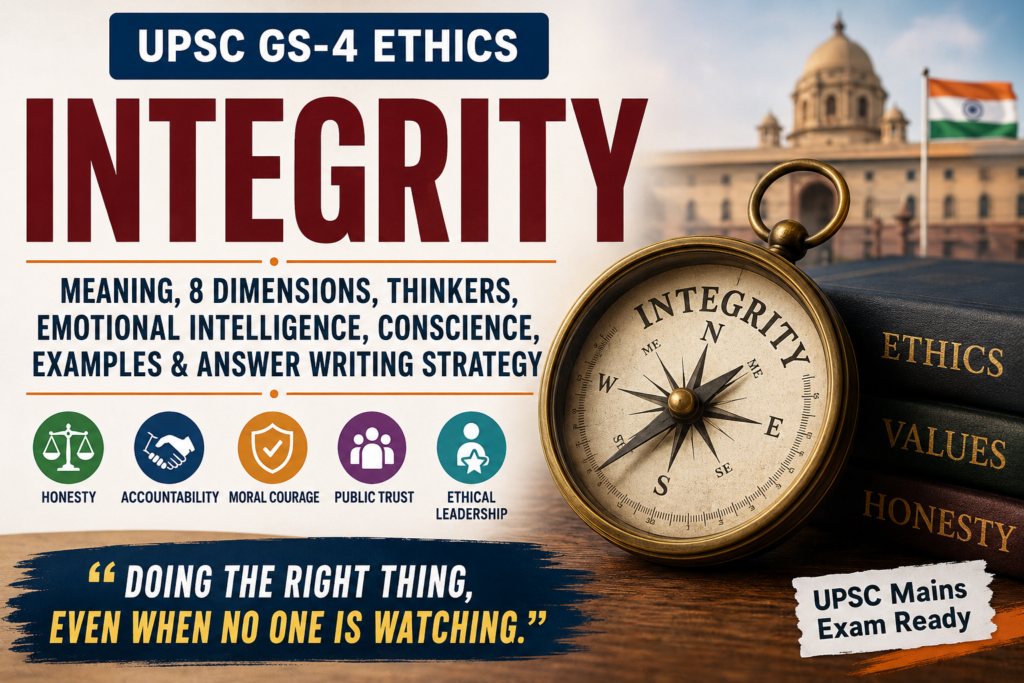
Integrity UPSC GS-4: Integrity क्या है और इसे कैसे समझें?
UPSC Ethics (GS Paper-4) में यदि कोई एक शब्द सबसे अधिक महत्वपूर्ण माना जाता है, तो वह है Integrity (सत्यनिष्ठा)। चाहे Ethics के सिद्धांत हों, Public Administration हो, Probity in Governance हो या Case Studies — हर जगह Integrity की भूमिका दिखाई देती है।
अधिकांश अभ्यर्थी Integrity को केवल ईमानदारी (Honesty) समझ लेते हैं। जबकि वास्तविकता में Integrity उससे कहीं व्यापक अवधारणा है। Integrity का अर्थ केवल झूठ न बोलना नहीं है, बल्कि अपने मूल्यों, विचारों और व्यवहार के बीच पूर्ण सामंजस्य स्थापित करना है।
Integrity वह गुण है जिसमें व्यक्ति के विचार (Thoughts), शब्द (Words) और कार्य (Actions) एक-दूसरे के अनुरूप होते हैं।
Integrity शब्द की उत्पत्ति (Origin of Integrity)
Integrity शब्द लैटिन भाषा के शब्द "Integritas" से आया है, जिसका अर्थ होता है —
- Wholeness (पूर्णता)
- Completeness (समग्रता)
- Purity (शुद्धता)
- Consistency (संगति)
यही कारण है कि Integrity को अक्सर व्यक्ति के चरित्र की पूर्णता और नैतिक मजबूती के रूप में देखा जाता है।
यह कथन Integrity की वास्तविक भावना को दर्शाता है। जब कोई व्यक्ति केवल नियमों के डर से नहीं बल्कि अपने आंतरिक नैतिक मूल्यों के कारण सही कार्य करता है, तब वह Integrity का प्रदर्शन करता है।
Integrity को UPSC क्यों महत्व देता है?
UPSC ऐसे प्रशासकों का चयन करना चाहता है जो केवल बुद्धिमान ही नहीं बल्कि नैतिक रूप से भी मजबूत हों। एक अधिकारी के पास शक्ति, संसाधन और निर्णय लेने की क्षमता होती है। यदि उसके पास Integrity नहीं होगी तो वही शक्ति भ्रष्टाचार, पक्षपात और प्रशासनिक विफलता का कारण बन सकती है।
- जनता का विश्वास बनाए रखने के लिए
- भ्रष्टाचार को रोकने के लिए
- निष्पक्ष निर्णय लेने के लिए
- लोकहित को प्राथमिकता देने के लिए
- सुशासन (Good Governance) सुनिश्चित करने के लिए
Integrity को समझने का सबसे सरल तरीका
कल्पना कीजिए कि कोई अधिकारी सार्वजनिक धन के उपयोग का निर्णय ले रहा है। कानून उसे कुछ छूट देता है और कोई उसकी निगरानी भी नहीं कर रहा। फिर भी यदि वह केवल जनहित को ध्यान में रखकर निर्णय लेता है, तो यह Integrity का उदाहरण है।
दूसरी ओर यदि कोई व्यक्ति केवल पकड़े जाने के डर से गलत काम नहीं करता, तो यह Compliance (नियम पालन) हो सकता है, लेकिन आवश्यक नहीं कि वह Integrity हो।
| Situation | Integrity? |
|---|---|
| कोई नहीं देख रहा, फिर भी सही काम करना | ✔ Integrity |
| सिर्फ सजा के डर से नियम मानना | ✘ केवल Compliance |
| जनहित को निजी लाभ से ऊपर रखना | ✔ Integrity |
| व्यक्तिगत लाभ के लिए पद का उपयोग करना | ✘ Lack of Integrity |
UPSC Answer Writing में Integrity की Definition कैसे लिखें?
या
इन दोनों Definitions का उपयोग UPSC Ethics GS-4 के उत्तरों और Case Studies में किया जा सकता है।
Integrity को केवल Honesty तक सीमित न रखें। UPSC के अनुसार Integrity में Honesty, Accountability, Transparency, Moral Courage, Commitment और Public Interest जैसे कई तत्व शामिल होते हैं।
अगले भाग में हम Integrity के 8 Dimensions को विस्तार से समझेंगे — Wholeness, Professional Responsibility, Moral Reflection, Values, Compliance, Moral Principles, Moral Courage और Moral Excellence।
Integrity के 8 Dimensions: UPSC GS-4 के लिए Complete Explanation
Integrity एक बहुत व्यापक अवधारणा है। अलग-अलग दार्शनिकों, नैतिक विचारकों और प्रशासनिक विशेषज्ञों ने Integrity को अलग-अलग दृष्टिकोण से समझाया है।
इसीलिए UPSC में Integrity को केवल Honesty या Rule Following तक सीमित नहीं माना जाता। Integrity के कई आयाम (Dimensions) हैं, जिन्हें समझना Ethics GS-4 के लिए अत्यंत आवश्यक है।
Integrity एक Single Trait नहीं है। यह कई नैतिक गुणों और दृष्टिकोणों का संयोजन (Combination) है।
Integrity के 8 प्रमुख Dimensions
| Dimension | मुख्य विचार |
|---|---|
| Wholeness | विचार, शब्द और कर्म में एकरूपता |
| Professional Responsibility | कर्तव्यों का निष्पक्ष निर्वहन |
| Moral Reflection | नैतिक आत्मचिंतन |
| Value-Based Integrity | मूल्यों के प्रति प्रतिबद्धता |
| Compliance Integrity | नियमों और कानूनों का पालन |
| Moral Principles | नैतिक सिद्धांतों के अनुसार कार्य |
| Moral Courage | सही के लिए खड़े होने का साहस |
| Moral Excellence | उच्च नैतिक चरित्र प्राप्त करना |
1. Integrity as Wholeness (पूर्णता एवं एकरूपता)
Integrity की सबसे प्राचीन और लोकप्रिय व्याख्या Wholeness या Completeness है। इसका अर्थ है कि व्यक्ति के विचार, शब्द और कर्म में कोई विरोधाभास न हो।
जो व्यक्ति जो सोचता है, वही बोलता है और वही करता है, उसे Integrity वाला व्यक्ति माना जाता है।
एक अधिकारी जो निष्पक्षता की बात करता है और वास्तव में सभी नागरिकों के साथ निष्पक्ष व्यवहार भी करता है।
2. Integrity as Professional Responsibility
कुछ विद्वानों के अनुसार Integrity का अर्थ अपने पेशेवर दायित्वों (Professional Duties) को ईमानदारी और जिम्मेदारी के साथ निभाना है।
यहाँ व्यक्तिगत पसंद-नापसंद से अधिक महत्व पेशेवर कर्तव्य को दिया जाता है।
एक न्यायाधीश व्यक्तिगत रूप से किसी कानून से सहमत नहीं है, फिर भी वह न्याय करते समय उसी कानून का पालन करता है।
3. Integrity as Moral Reflection
यह विचार मुख्य रूप से Socrates की दार्शनिक परंपरा से प्रेरित है। इसके अनुसार Integrity का अर्थ केवल नियमों का पालन करना नहीं बल्कि यह सोचना भी है कि क्या सही है और क्या गलत।
यह दृष्टिकोण व्यक्ति को नैतिक आत्मचिंतन (Moral Reflection) करने के लिए प्रेरित करता है।
क्या मेरा निर्णय न्यायपूर्ण है? क्या इससे समाज के कमजोर वर्गों पर नकारात्मक प्रभाव पड़ेगा?
4. Value-Based Integrity
इस दृष्टिकोण में Integrity को कुछ मूलभूत नैतिक मूल्यों से जोड़ा जाता है जैसे:
- Honesty
- Transparency
- Accountability
- Impartiality
- Incorruptibility
अर्थात व्यक्ति अपने मूल्यों के साथ समझौता नहीं करता।
5. Compliance-Based Integrity
कुछ विद्वानों का मानना है कि Integrity का अर्थ स्थापित नियमों, कानूनों और संस्थागत मानकों का पालन करना है।
इसे Compliance Approach भी कहा जाता है।
एक अधिकारी रिश्वत नहीं लेता क्योंकि यह कानूनन अपराध है।
हालाँकि कई दार्शनिक मानते हैं कि केवल नियम पालन करना ही Integrity नहीं है।
6. Integrity as Moral Principles
इस दृष्टिकोण में व्यक्ति केवल कानून नहीं बल्कि नैतिक सिद्धांतों का पालन करता है।
यदि कोई कार्य कानूनी रूप से सही हो लेकिन नैतिक रूप से गलत हो, तो Integrity वाला व्यक्ति उसे स्वीकार नहीं करेगा।
किसी संदिग्ध स्रोत से राजनीतिक चंदा लेना कानूनी हो सकता है, लेकिन नैतिक रूप से उचित नहीं।
7. Integrity as Moral Courage
कई विचारकों के अनुसार Integrity का वास्तविक परीक्षण कठिन परिस्थितियों में होता है।
जब व्यक्ति दबाव, डर या व्यक्तिगत नुकसान की संभावना के बावजूद सही कार्य करता है, तब वह Moral Courage प्रदर्शित करता है।
किसी विभाग में भ्रष्टाचार उजागर करने वाला Whistleblower।
8. Integrity as Moral Excellence
यह Integrity का सर्वोच्च स्तर माना जाता है। इसमें व्यक्ति केवल गलत कार्यों से बचता ही नहीं बल्कि लगातार नैतिक उत्कृष्टता (Moral Excellence) प्राप्त करने का प्रयास भी करता है।
यह Virtue Ethics से जुड़ा हुआ दृष्टिकोण है जहाँ व्यक्ति अपने चरित्र को बेहतर बनाने का प्रयास करता है।
एक लोकसेवक जो स्वेच्छा से अपनी संपत्ति सार्वजनिक करता है और पूर्ण पारदर्शिता बनाए रखता है।
UPSC के लिए सबसे महत्वपूर्ण Dimension कौन-सा है?
UPSC के दृष्टिकोण से Integrity के सभी आयाम महत्वपूर्ण हैं, लेकिन Public Administration में निम्न आयाम सबसे अधिक उपयोगी माने जाते हैं:
| Dimension | UPSC Relevance |
|---|---|
| Wholeness | Thought-Word-Action Consistency |
| Professional Responsibility | Civil Services Ethics |
| Moral Courage | Case Studies |
| Value-Based Integrity | Governance & Leadership |
| Moral Reflection | Ethical Decision Making |
Integrity पर उत्तर लिखते समय केवल Honesty न लिखें। Wholeness, Professional Responsibility, Moral Courage और Public Interest जैसे आयाम जोड़ने से उत्तर अधिक Mature और High Scoring बनता है।
अगले भाग में हम Integrity vs Honesty vs Probity को विस्तार से समझेंगे और जानेंगे कि UPSC इन तीनों अवधारणाओं को अलग-अलग क्यों मानता है।
Integrity vs Honesty vs Probity: UPSC Ethics GS-4 Complete Comparison
UPSC Ethics Paper में सबसे अधिक Confusion पैदा करने वाले शब्दों में Integrity, Honesty और Probity शामिल हैं। अधिकांश अभ्यर्थी इन तीनों को समान समझते हैं, जबकि UPSC के अनुसार इनका अर्थ, दायरा और प्रशासनिक उपयोग अलग-अलग है।
यदि आप GS-4 में अच्छे अंक प्राप्त करना चाहते हैं, तो इन तीनों अवधारणाओं के बीच का अंतर स्पष्ट रूप से समझना आवश्यक है।
Honesty एक गुण है।
Integrity एक व्यापक चरित्र विशेषता है।
Probity सार्वजनिक जीवन में Integrity का व्यावहारिक रूप है।
Honesty (ईमानदारी) क्या है?
Honesty का अर्थ है सत्य बोलना, धोखा न देना और तथ्यों को सही रूप में प्रस्तुत करना। यह व्यक्ति के व्यक्तिगत व्यवहार से संबंधित गुण है।
एक Honest व्यक्ति झूठ नहीं बोलता, गलत जानकारी नहीं देता और किसी को जानबूझकर भ्रमित नहीं करता।
यदि किसी अधिकारी से गलती हो जाए और वह उसे स्वीकार कर ले, तो यह Honesty का उदाहरण है।
Integrity (सत्यनिष्ठा) क्या है?
Integrity केवल सत्य बोलने तक सीमित नहीं है। यह व्यक्ति के विचार, मूल्य, शब्द और कार्यों के बीच सामंजस्य को दर्शाती है।
एक व्यक्ति Honest हो सकता है, लेकिन आवश्यक नहीं कि उसके पास Integrity भी हो। Integrity में Moral Courage, Accountability, Consistency और Commitment जैसे तत्व भी शामिल होते हैं।
एक अधिकारी जो राजनीतिक दबाव के बावजूद निष्पक्ष निर्णय लेता है, Integrity का प्रदर्शन कर रहा है।
Probity (शुचिता) क्या है?
Probity मुख्य रूप से Public Life और Governance से संबंधित अवधारणा है। इसका अर्थ है सार्वजनिक पद का उपयोग पूर्ण ईमानदारी, पारदर्शिता और जवाबदेही के साथ करना।
Probity यह सुनिश्चित करती है कि सार्वजनिक संसाधनों और अधिकारों का उपयोग केवल जनहित के लिए हो।
सरकारी टेंडर प्रक्रिया में पूर्ण पारदर्शिता बनाए रखना Probity का उदाहरण है।
Integrity, Honesty और Probity में मुख्य अंतर
| Basis | Honesty | Integrity | Probity |
|---|---|---|---|
| Meaning | सत्य बोलना | मूल्यों और कार्यों में सामंजस्य | सार्वजनिक जीवन में नैतिक शुचिता |
| Scope | संकीर्ण | व्यापक | प्रशासनिक एवं सार्वजनिक |
| Focus | Truthfulness | Consistency & Ethics | Transparency & Accountability |
| Applies To | Individual | Individual & Institution | Public Institutions |
| Key Element | Truth | Character | Good Governance |
क्या Honest व्यक्ति हमेशा Integrity वाला होता है?
नहीं। यह UPSC का एक महत्वपूर्ण Concept है।
कोई व्यक्ति Honest हो सकता है लेकिन उसके निर्णयों में Consistency या Moral Courage न हो।
एक अधिकारी सच बोलता है (Honesty), लेकिन राजनीतिक दबाव में गलत निर्णय ले लेता है।
यह Honesty तो है, लेकिन Integrity नहीं।
Integrity क्यों Honesty से बड़ी अवधारणा है?
- Integrity में Honesty शामिल है।
- Integrity में Moral Courage शामिल है।
- Integrity में Accountability शामिल है।
- Integrity में Commitment शामिल है।
- Integrity में Public Interest शामिल है।
- Integrity में Values-Based Decision Making शामिल है।
इसलिए कहा जाता है कि:
Probity और Integrity का संबंध
Integrity मुख्यतः व्यक्ति के चरित्र से संबंधित है जबकि Probity उस Integrity का सार्वजनिक जीवन में प्रदर्शन है।
यदि किसी अधिकारी के पास Integrity है, तो वह Probity in Governance को बढ़ावा देगा।
Integrity (Personal Character) ⬇
Ethical Behaviour ⬇
Probity in Public Life ⬇
Good Governance
UPSC Case Studies में इन Concepts का उपयोग
| Situation | Relevant Concept |
|---|---|
| गलती स्वीकार करना | Honesty |
| दबाव में भी सही निर्णय लेना | Integrity |
| पारदर्शी टेंडर प्रक्रिया | Probity |
| Conflict of Interest से बचना | Integrity + Probity |
| झूठी रिपोर्ट न देना | Honesty |
UPSC Mains Answer में कैसे लिखें?
यदि प्रश्न Integrity पर हो तो केवल Honesty न लिखें। उसमें Consistency, Moral Courage, Accountability और Public Interest अवश्य जोड़ें।
यदि प्रश्न Probity पर हो तो Transparency, Accountability, Rule of Law, Citizen Trust और Good Governance जैसे शब्दों का उपयोग करें।
Honesty व्यक्ति को सत्यवादी बनाती है, Integrity व्यक्ति को नैतिक रूप से मजबूत बनाती है और Probity सार्वजनिक जीवन में उस नैतिकता को संस्थागत रूप देती है। सुशासन के लिए तीनों आवश्यक हैं, लेकिन Integrity इन सभी का मूल आधार है।
अगले भाग में हम Philosophical Perspectives of Integrity को समझेंगे, जिसमें Socrates, Kant, Utilitarianism, Virtue Ethics और Ethics of Care के दृष्टिकोण से Integrity का विश्लेषण किया जाएगा।
Philosophical Perspectives of Integrity: UPSC Ethics GS-4
Integrity को समझने के लिए केवल प्रशासनिक या व्यवहारिक दृष्टिकोण पर्याप्त नहीं है। विभिन्न दार्शनिकों और नैतिक सिद्धांतों (Ethical Theories) ने भी Integrity को अपने-अपने तरीके से परिभाषित किया है।
यही कारण है कि UPSC Ethics में Integrity को कभी Duty के रूप में, कभी Character के रूप में, कभी Consequences के रूप में और कभी Relationships के रूप में देखा जाता है।
Integrity का कोई एक सार्वभौमिक अर्थ नहीं है। अलग-अलग Ethical Theories इसे अलग दृष्टिकोण से समझाती हैं।
Integrity और Ethical Theories
| Ethical Theory | Integrity का आधार |
|---|---|
| Socratic Ethics | Moral Reflection |
| Deontology (Kant) | Duty & Universal Rules |
| Utilitarianism | Consequences & Public Good |
| Virtue Ethics | Character & Moral Excellence |
| Ethics of Care | Relationships & Responsibility |
Socrates: Integrity as Moral Reflection
सॉक्रेटीस के अनुसार Integrity केवल नियमों का पालन करना नहीं है। व्यक्ति को लगातार यह प्रश्न करना चाहिए कि क्या सही है और क्या गलत।
उन्होंने Blind Obedience का समर्थन नहीं किया बल्कि Critical Moral Inquiry पर जोर दिया।
इस दृष्टिकोण में Integrity का अर्थ है –
- आत्मचिंतन (Self-Reflection)
- नैतिक प्रश्न पूछना
- सत्य की खोज करना
- सही और गलत का विवेक विकसित करना
एक Policy Maker केवल नियम लागू नहीं करता, बल्कि यह भी सोचता है कि नीति कमजोर वर्गों को कैसे प्रभावित करेगी।
Immanuel Kant: Integrity as Duty
जर्मन दार्शनिक Immanuel Kant ने Deontological Ethics का प्रतिपादन किया। उनके अनुसार किसी कार्य की नैतिकता उसके परिणामों पर नहीं बल्कि उसके पीछे के कर्तव्य (Duty) पर निर्भर करती है।
Kant के अनुसार Integrity का अर्थ है:
- कर्तव्य पालन (Duty)
- नियमों का सम्मान
- नैतिक सिद्धांतों का पालन
- परिणामों की परवाह किए बिना सही कार्य करना
यदि कोई अधिकारी राजनीतिक दबाव के बावजूद कानून के अनुसार निर्णय लेता है, तो Kant उसे Integrity मानेगा।
Utilitarianism: Integrity as Public Good
Jeremy Bentham और John Stuart Mill द्वारा प्रतिपादित Utilitarianism का मुख्य सिद्धांत है —
इस सिद्धांत के अनुसार Integrity का मूल्यांकन इस आधार पर किया जाता है कि निर्णय से समाज को कितना लाभ हुआ।
- Public Welfare
- Maximum Benefit
- Social Utility
- Collective Good
यदि सीमित संसाधनों को इस प्रकार वितरित किया जाए कि अधिकतम लोगों को लाभ मिले, तो Utilitarian दृष्टिकोण इसे Integrity के अनुरूप मान सकता है।
Virtue Ethics: Integrity as Character
Virtue Ethics का विकास मुख्यतः Aristotle ने किया। इस दृष्टिकोण में Integrity किसी नियम या परिणाम से नहीं बल्कि व्यक्ति के चरित्र (Character) से जुड़ी होती है।
Aristotle के अनुसार नैतिक व्यक्ति बनने के लिए अच्छे गुणों (Virtues) का निरंतर अभ्यास आवश्यक है।
Virtue Ethics में Integrity का अर्थ है:
- Character Building
- Moral Excellence
- Good Habits
- Balanced Behaviour
- Virtuous Living
Virtue Ethics Integrity को Moral Excellence और Character Development के रूप में देखती है।
Ethics of Care: Integrity as Responsibility
Ethics of Care आधुनिक नैतिक सिद्धांत है जो मानव संबंधों और जिम्मेदारियों पर जोर देता है।
इस दृष्टिकोण के अनुसार Integrity केवल नियमों का पालन करना नहीं है, बल्कि दूसरों की जरूरतों और भावनाओं को समझना भी है।
- Empathy
- Compassion
- Human Relationships
- Moral Responsibility
- Care for Others
यही कारण है कि आधुनिक Public Administration में Emotional Intelligence और Empathy को Integrity का महत्वपूर्ण हिस्सा माना जाता है।
Different Perspectives, Same Goal
हालाँकि सभी Ethical Theories Integrity को अलग-अलग तरीके से परिभाषित करती हैं, लेकिन उनका अंतिम उद्देश्य समान है — नैतिक, जिम्मेदार और न्यायपूर्ण व्यवहार को बढ़ावा देना।
| Theory | Integrity Means |
|---|---|
| Socrates | Moral Reflection |
| Kant | Duty & Principles |
| Utilitarianism | Public Good |
| Virtue Ethics | Character Development |
| Ethics of Care | Relationships & Empathy |
UPSC Answer Writing Tip
Integrity से जुड़े उत्तरों में Thinkers और Ethical Theories का उपयोग करने से उत्तर अधिक Analytical और Mature बनता है।
- Duty → Kant
- Public Welfare → Bentham
- Character → Aristotle
- Moral Reflection → Socrates
- Empathy → Ethics of Care
Integrity को केवल Honesty या Rule Following तक सीमित नहीं किया जा सकता। Socrates इसे Moral Reflection, Kant Duty, Utilitarianism Public Welfare, Virtue Ethics Character Development और Ethics of Care Human Responsibility के रूप में देखती है। UPSC के लिए इन सभी दृष्टिकोणों का संतुलित उपयोग सबसे प्रभावी माना जाता है।
अगले भाग में हम Integrity in Public Administration & Civil Services को समझेंगे और जानेंगे कि एक लोकसेवक के लिए Integrity क्यों सबसे महत्वपूर्ण प्रशासनिक मूल्य माना जाता है।
Integrity in Public Administration & Civil Services
यदि Ethics प्रशासन की आत्मा है, तो Integrity उसकी रीढ़ (Backbone) है। किसी भी लोकतांत्रिक व्यवस्था की सफलता केवल कानूनों, संस्थाओं और नीतियों पर निर्भर नहीं करती, बल्कि उन लोगों की Integrity पर भी निर्भर करती है जो इन संस्थाओं का संचालन करते हैं।
इसी कारण UPSC GS-4 में Integrity को Civil Services का सबसे महत्वपूर्ण मूल्य माना गया है। एक लोकसेवक के निर्णय लाखों लोगों के जीवन को प्रभावित कर सकते हैं, इसलिए उसके भीतर उच्च स्तर की नैतिक सत्यनिष्ठा होना अनिवार्य है।
Integrity ensures that public power is exercised for public good and not for private gain.
Public Administration में Integrity का अर्थ
Public Administration में Integrity का अर्थ है कि अधिकारी अपने अधिकारों, संसाधनों और निर्णय लेने की शक्ति का उपयोग केवल जनहित (Public Interest) में करे।
यह केवल भ्रष्टाचार से दूर रहने तक सीमित नहीं है, बल्कि निष्पक्षता, जवाबदेही, पारदर्शिता और नैतिक साहस को भी शामिल करती है।
- Honesty (ईमानदारी)
- Accountability (जवाबदेही)
- Transparency (पारदर्शिता)
- Objectivity (वस्तुनिष्ठता)
- Impartiality (निष्पक्षता)
- Moral Courage (नैतिक साहस)
- Public Interest Orientation
Integrity क्यों आवश्यक है?
लोकसेवक जनता और सरकार के बीच सबसे महत्वपूर्ण कड़ी होते हैं। यदि प्रशासनिक व्यवस्था में Integrity की कमी हो जाए, तो भ्रष्टाचार, भाई-भतीजावाद, पक्षपात और संसाधनों का दुरुपयोग बढ़ने लगता है।
| Integrity होने पर | Integrity न होने पर |
|---|---|
| जनविश्वास बढ़ता है | अविश्वास पैदा होता है |
| भ्रष्टाचार कम होता है | भ्रष्टाचार बढ़ता है |
| निष्पक्ष निर्णय होते हैं | पक्षपातपूर्ण निर्णय होते हैं |
| सुशासन मजबूत होता है | प्रशासन कमजोर होता है |
| लोकतांत्रिक वैधता बढ़ती है | संस्थागत संकट उत्पन्न होता है |
Integrity और Public Trust
Public Trust किसी भी प्रशासनिक व्यवस्था की सबसे मूल्यवान संपत्ति होती है।
जब नागरिक यह महसूस करते हैं कि अधिकारी निष्पक्ष, ईमानदार और जवाबदेह हैं, तब वे प्रशासन पर विश्वास करते हैं। लेकिन यदि Integrity कमजोर हो जाए, तो जनता का विश्वास भी कमजोर हो जाता है।
यदि किसी जिले में सरकारी योजनाओं का लाभ निष्पक्ष रूप से पात्र लोगों तक पहुँचता है, तो नागरिकों का प्रशासन पर विश्वास बढ़ता है।
Integrity → Trust → Legitimacy → Good Governance
Integrity और Administrative Decision Making
प्रशासनिक निर्णय केवल कानूनी नहीं होते, वे नैतिक भी होते हैं। कई बार अधिकारी को ऐसी परिस्थितियों का सामना करना पड़ता है जहाँ नियम, जनभावना और नैतिकता के बीच संतुलन बनाना पड़ता है।
ऐसी परिस्थितियों में Integrity निर्णय लेने का नैतिक आधार प्रदान करती है।
- Facts पर आधारित हो
- Public Interest को प्राथमिकता दे
- Transparency बनाए रखे
- Rule of Law का पालन करे
- Ethical Values से निर्देशित हो
Integrity और Good Governance
Good Governance केवल कुशल प्रशासन नहीं है। यह ऐसा शासन है जो जवाबदेह, पारदर्शी और नागरिक-केंद्रित हो।
Integrity Good Governance का आधार है क्योंकि यह सुनिश्चित करती है कि सार्वजनिक संसाधनों का उपयोग व्यक्तिगत लाभ के बजाय सामाजिक कल्याण के लिए हो।
| Good Governance Element | Integrity का योगदान |
|---|---|
| Transparency | जानकारी को खुला बनाती है |
| Accountability | उत्तरदायित्व सुनिश्चित करती है |
| Rule of Law | कानून का निष्पक्ष पालन |
| Participation | जनभागीदारी बढ़ाती है |
| Responsiveness | जन समस्याओं का समाधान |
Civil Services में Integrity के उदाहरण
भारत में कई ऐसे अधिकारी हुए हैं जिन्होंने Integrity को अपने प्रशासनिक जीवन का आधार बनाया।
- Ashok Khemka – भूमि घोटालों के विरुद्ध कार्रवाई
- E. Sreedharan – Delhi Metro में पारदर्शिता एवं दक्षता
- T.N. Seshan – चुनाव सुधार एवं निष्पक्षता
- Armstrong Pame – जनसहयोग से सड़क निर्माण
इन अधिकारियों ने दिखाया कि Integrity केवल सिद्धांत नहीं बल्कि प्रशासनिक व्यवहार का आधार हो सकती है।
Integrity के सामने प्रमुख चुनौतियाँ
| Challenge | Impact |
|---|---|
| Political Pressure | निष्पक्षता प्रभावित होती है |
| Corruption | Public Trust कमजोर होता है |
| Conflict of Interest | Objectivity समाप्त होती है |
| Red Tapism | जनहित प्रभावित होता है |
| Lack of Accountability | प्रशासनिक विफलता |
Integrity को कैसे मजबूत करें?
- Ethics Training
- Strong Institutional Mechanisms
- Transparency Measures
- Whistleblower Protection
- Social Accountability
- Leadership by Example
- Citizen Participation
Integrity Public Administration की आत्मा है। यह केवल व्यक्तिगत चरित्र का गुण नहीं बल्कि प्रशासनिक संस्थाओं की विश्वसनीयता, सार्वजनिक विश्वास और सुशासन का आधार है। एक लोकसेवक की वास्तविक पहचान उसके पद से नहीं, बल्कि उसकी Integrity से होती है।
अगले भाग में हम Integrity and Emotional Intelligence (EI) को समझेंगे और जानेंगे कि Self-Awareness, Empathy, Self-Regulation और Emotional Maturity किस प्रकार Integrity को मजबूत बनाते हैं।
Integrity, Law and Conscience: Rules, Morality & Ethical Decision Making
UPSC Ethics GS-4 में Integrity को समझने का सबसे गहरा आयाम तब सामने आता है जब कानून (Law), नैतिकता (Morality) और अंतरात्मा (Conscience) के बीच संघर्ष उत्पन्न होता है।
वास्तविक प्रशासनिक जीवन में कई बार ऐसी परिस्थितियाँ आती हैं जहाँ नियम कुछ कहते हैं, समाज कुछ और अपेक्षा करता है और व्यक्ति की अंतरात्मा उसे किसी तीसरे विकल्प की ओर संकेत करती है। ऐसे समय में Integrity ही सही मार्गदर्शन प्रदान करती है।
Law tells us what is legal.
Morality tells us what is right.
Conscience tells us what we ought to do.
Law (कानून) क्या है?
Law वह औपचारिक नियम व्यवस्था है जिसे राज्य द्वारा बनाया और लागू किया जाता है। कानून का मुख्य उद्देश्य समाज में व्यवस्था, न्याय और स्थिरता बनाए रखना है।
- राज्य द्वारा निर्मित
- सभी पर समान रूप से लागू
- उल्लंघन पर दंड संभव
- सामाजिक व्यवस्था बनाए रखता है
लेकिन हर कानूनी कार्य नैतिक हो, यह आवश्यक नहीं है।
Morality (नैतिकता) क्या है?
Morality उन नैतिक सिद्धांतों, मूल्यों और आदर्शों का समूह है जो सही और गलत का मार्गदर्शन करते हैं।
नैतिकता का स्रोत समाज, संस्कृति, धर्म, दर्शन और व्यक्तिगत मूल्य हो सकते हैं।
किसी गरीब व्यक्ति की सहायता करना कानूनी दायित्व नहीं हो सकता, लेकिन नैतिक दृष्टि से यह उचित माना जाता है।
Conscience (अंतरात्मा) क्या है?
Conscience व्यक्ति के भीतर स्थित नैतिक चेतना है जो उसे सही और गलत के बीच अंतर समझने में सहायता करती है।
इसे अक्सर Inner Voice या Moral Compass भी कहा जाता है।
Conscience is the inner sense that guides a person to distinguish right from wrong and act accordingly.
Integrity और Conscience का संबंध
Integrity का वास्तविक परीक्षण तब होता है जब व्यक्ति को अपने Conscience के अनुसार कार्य करने के लिए कठिन निर्णय लेने पड़ते हैं।
यदि व्यक्ति अपनी अंतरात्मा की आवाज को समझते हुए सही कार्य करता है, तो वह Integrity का प्रदर्शन करता है।
एक अधिकारी को पता है कि उसके वरिष्ठ का आदेश तकनीकी रूप से वैध है लेकिन उससे गरीब लोगों को अन्याय होगा। उसकी अंतरात्मा उसे पुनर्विचार करने और वैकल्पिक समाधान खोजने के लिए प्रेरित कर सकती है।
Law vs Morality
कई बार कानून और नैतिकता एक-दूसरे के पूरक होते हैं, लेकिन कुछ परिस्थितियों में दोनों के बीच टकराव भी हो सकता है।
| Basis | Law | Morality |
|---|---|---|
| Source | State | Values & Ethics |
| Nature | Formal | Informal |
| Enforcement | Legal Punishment | Social & Moral Pressure |
| Focus | Order & Stability | Right & Wrong |
| Flexibility | Relatively Fixed | More Dynamic |
क्या Conscience हमेशा सही होती है?
UPSC Ethics में यह एक महत्वपूर्ण प्रश्न है।
Conscience नैतिक मार्गदर्शन देती है, लेकिन यह व्यक्ति की शिक्षा, अनुभव, संस्कृति और मूल्यों से भी प्रभावित होती है। इसलिए Conscience को Reason, Facts और Public Interest के साथ संतुलित करना आवश्यक है।
Conscience should guide decisions, but it should not replace reason, law and public accountability.
Public Life में Conscience की भूमिका
लोकसेवकों के लिए Conscience अत्यंत महत्वपूर्ण है क्योंकि सभी परिस्थितियों के लिए विस्तृत नियम उपलब्ध नहीं होते।
कई बार अधिकारियों को ऐसे निर्णय लेने पड़ते हैं जहाँ केवल कानून पर्याप्त नहीं होता। वहाँ Conscience और Ethical Reasoning महत्वपूर्ण भूमिका निभाते हैं।
- Ethical Decision Making
- Public Interest Protection
- Moral Courage
- Whistleblowing
- Human-Centric Governance
Integrity, Law and Conscience: Practical Example
एक अधिकारी को आपदा के दौरान तत्काल राहत सामग्री वितरित करनी है। नियमों के अनुसार लंबी स्वीकृति प्रक्रिया आवश्यक है, लेकिन देरी से लोगों की जान को खतरा हो सकता है।
Law: प्रक्रिया का पालन करें।
Conscience: लोगों की जान बचाना प्राथमिकता है।
Integrity: ऐसा समाधान चुनना जो जनहित, जवाबदेही और नियमों के संतुलन को बनाए रखे।
Ethical Decision Making Framework
- Facts पहचानें
- Stakeholders पहचानें
- Legal Position समझें
- Ethical Values पहचानें
- Conscience की भूमिका समझें
- Public Interest का मूल्यांकन करें
- Balanced Decision लें
Integrity और Moral Courage
कई बार व्यक्ति को पता होता है कि सही क्या है, लेकिन उसे लागू करने के लिए साहस की आवश्यकता होती है।
यहीं Moral Courage और Integrity का मेल दिखाई देता है।
एक अधिकारी भ्रष्टाचार के खिलाफ कार्रवाई करता है, भले ही उसे राजनीतिक या प्रशासनिक दबाव का सामना करना पड़े।
UPSC Answer Writing Tip
Conscience आधारित प्रश्नों में केवल भावनात्मक उत्तर न लिखें। हमेशा Law, Ethics, Public Interest और Accountability के बीच संतुलन दिखाएँ।
| Question Theme | Keywords to Use |
|---|---|
| Conscience | Inner Voice, Moral Compass |
| Integrity | Consistency, Moral Courage |
| Law | Rule of Law, Accountability |
| Ethics | Justice, Fairness, Public Interest |
Integrity, Law and Conscience तीनों प्रशासनिक नैतिकता के महत्वपूर्ण स्तंभ हैं। कानून व्यवस्था प्रदान करता है, नैतिकता दिशा प्रदान करती है और Conscience व्यक्ति को सही निर्णय लेने की आंतरिक प्रेरणा देती है। एक आदर्श लोकसेवक वह है जो इन तीनों के बीच संतुलन स्थापित कर सके।
अगले भाग में हम Real Life Examples of Integrity को समझेंगे, जिसमें Ashok Khemka, E. Sreedharan, Lal Bahadur Shastri, Ratan Tata और अन्य प्रेरणादायक उदाहरणों का अध्ययन करेंगे।
Real Life Examples of Integrity: UPSC GS-4 Ready Examples
UPSC Ethics GS-4 में केवल Definitions और Theories लिखना पर्याप्त नहीं होता। Examiner यह देखना चाहता है कि आप Integrity जैसी अवधारणा को वास्तविक जीवन से जोड़ सकते हैं या नहीं।
यही कारण है कि Integrity आधारित प्रश्नों में Real-Life Examples का उपयोग उत्तर को अधिक प्रभावशाली, व्यावहारिक और High Scoring बनाता है।
Definition + Thinker + Real Example = Excellent Ethics Answer
Ashok Khemka: Integrity Against Pressure
Ashok Khemka भारतीय प्रशासनिक सेवा (IAS) के उन अधिकारियों में गिने जाते हैं जिन्होंने राजनीतिक एवं प्रशासनिक दबाव के बावजूद अपने सिद्धांतों से समझौता नहीं किया।
उन्होंने कई विवादास्पद भूमि सौदों की जांच की और अनियमितताओं को उजागर किया, जिसके कारण उन्हें बार-बार Transfer का सामना करना पड़ा।
Moral Courage + Professional Responsibility
उनका उदाहरण दिखाता है कि Integrity केवल ईमानदारी नहीं बल्कि सही कार्य के लिए व्यक्तिगत नुकसान उठाने की क्षमता भी है।
E. Sreedharan: Professional Integrity
E. Sreedharan को "Metro Man of India" कहा जाता है। Delhi Metro Project की सफलता का एक बड़ा कारण उनकी Professional Integrity और Transparency थी।
उन्होंने समयबद्ध परियोजना प्रबंधन, जवाबदेही और भ्रष्टाचार मुक्त कार्य संस्कृति को बढ़ावा दिया।
Professional Responsibility + Accountability + Transparency
Lal Bahadur Shastri: Personal Integrity
भारत के पूर्व प्रधानमंत्री Lal Bahadur Shastri अपनी सादगी और नैतिक मूल्यों के लिए प्रसिद्ध थे।
रेल दुर्घटना के बाद उन्होंने नैतिक जिम्मेदारी लेते हुए रेल मंत्री पद से इस्तीफा दे दिया, जबकि कानूनी रूप से वे सीधे दोषी नहीं थे।
Accountability + Moral Responsibility
Dr. APJ Abdul Kalam: Integrity with Humility
डॉ. ए.पी.जे. अब्दुल कलाम को भारत के सबसे प्रेरणादायक सार्वजनिक व्यक्तित्वों में गिना जाता है।
उन्होंने सार्वजनिक जीवन में ईमानदारी, विनम्रता, राष्ट्र निर्माण और सेवा भावना का उदाहरण प्रस्तुत किया।
Values-Based Integrity + Public Service Orientation
Ratan Tata: Ethical Business Leadership
Ratan Tata भारतीय कॉर्पोरेट जगत में Ethical Leadership के प्रतीक माने जाते हैं।
उन्होंने हमेशा दीर्घकालिक प्रतिष्ठा और नैतिक व्यावसायिक मूल्यों को अल्पकालिक लाभ से ऊपर रखा।
Value-Based Integrity + Ethical Decision Making
Armstrong Pame: Public Service Integrity
मणिपुर के IAS अधिकारी Armstrong Pame ने सरकारी फंड के अभाव में जनता के सहयोग से सड़क निर्माण करवाया।
इस पहल ने दिखाया कि Integrity केवल भ्रष्टाचार से बचना नहीं बल्कि जनहित के लिए रचनात्मक समाधान खोजना भी है।
Public Interest + Leadership + Commitment
Integrity Examples at a Glance
| Personality | Integrity Dimension | UPSC Usage |
|---|---|---|
| Ashok Khemka | Moral Courage | Ethical Dilemmas |
| E. Sreedharan | Professional Integrity | Governance & Leadership |
| Lal Bahadur Shastri | Accountability | Public Ethics |
| APJ Abdul Kalam | Value-Based Integrity | Public Service |
| Ratan Tata | Ethical Leadership | Corporate Ethics |
| Armstrong Pame | Citizen-Centric Governance | Case Studies |
Case Studies में Integrity Examples कैसे Use करें?
UPSC Case Studies में केवल समाधान देना पर्याप्त नहीं है। यदि आप किसी उपयुक्त Real-Life Example का संक्षिप्त उल्लेख करते हैं, तो उत्तर अधिक विश्वसनीय और प्रभावशाली बन जाता है।
यदि Case Study में राजनीतिक दबाव के बावजूद सही निर्णय लेने की बात हो, तो Ashok Khemka का उदाहरण दिया जा सकता है।
यदि प्रश्न Transparency और Project Management पर हो, तो E. Sreedharan का उदाहरण उपयोग किया जा सकता है।
UPSC Mains में Example Writing Formula
Integrity Dimension ⬇
Administrative Relevance ⬇
Answer Enrichment
Mini Examples for Quick Revision
| Theme | Example |
|---|---|
| Moral Courage | Ashok Khemka |
| Accountability | Lal Bahadur Shastri |
| Transparency | E. Sreedharan |
| Public Service | APJ Abdul Kalam |
| Leadership | Armstrong Pame |
| Corporate Ethics | Ratan Tata |
Integrity को समझने का सबसे प्रभावी तरीका उन व्यक्तियों के जीवन का अध्ययन करना है जिन्होंने कठिन परिस्थितियों में भी अपने नैतिक मूल्यों से समझौता नहीं किया। UPSC उत्तरों में ऐसे उदाहरणों का उपयोग उत्तर को अधिक प्रामाणिक, विश्लेषणात्मक और उच्च गुणवत्ता वाला बनाता है।
अगले भाग में हम UPSC Ethics Answer Writing Strategy for Integrity को समझेंगे, जिसमें Definitions, Quotes, Thinkers, Examples और Case Study Integration की पूरी रणनीति शामिल होगी।
UPSC Integrity Answer Writing Strategy (GS-4 Ethics)
Integrity UPSC Ethics GS-4 का सबसे महत्वपूर्ण Topic है। लगभग हर वर्ष प्रत्यक्ष या अप्रत्यक्ष रूप से Integrity, Honesty, Probity, Accountability, Moral Courage और Public Service Values से जुड़े प्रश्न पूछे जाते हैं।
लेकिन केवल Definition याद कर लेने से अच्छे अंक नहीं मिलते। UPSC ऐसे उत्तर चाहता है जिनमें Conceptual Clarity, Ethical Understanding, Thinkers, Examples और Administrative Relevance दिखाई दे।
Definition + Thinker + Example + Ethical Analysis + Administrative Relevance + Positive Conclusion
Integrity पर Answer की आदर्श Structure
Definition of Integrity ⬇
Core Features ⬇
Thinker / Ethical Theory ⬇
Real Life Example ⬇
Administrative Relevance ⬇
Conclusion
Best Definitions for UPSC Answers
Integrity आधारित किसी भी प्रश्न की शुरुआत एक मजबूत Definition से की जा सकती है।
इन Definitions का उपयोग 10 Marks और 15 Marks दोनों प्रकार के उत्तरों में किया जा सकता है।
Integrity के Core Keywords
UPSC उत्तरों में Keywords का उपयोग उत्तर को अधिक Mature और Ethical बनाता है।
- Consistency
- Moral Courage
- Accountability
- Transparency
- Public Trust
- Objectivity
- Impartiality
- Public Interest
- Ethical Leadership
- Good Governance
Integrity पर कौन-कौन से Thinkers लिख सकते हैं?
| Thinker | Integrity Perspective |
|---|---|
| Socrates | Moral Reflection |
| Immanuel Kant | Duty & Moral Principles |
| Aristotle | Character & Virtue |
| Mahatma Gandhi | Thought-Word-Action Consistency |
| APJ Abdul Kalam | Public Service & Values |
Gandhian Perspective on Integrity
यह उद्धरण Integrity की Wholeness Approach को बहुत प्रभावी ढंग से दर्शाता है।
Examples कैसे जोड़ें?
Integrity आधारित उत्तर में एक वास्तविक उदाहरण जोड़ने से उत्तर तुरंत मजबूत हो जाता है।
| Theme | Example |
|---|---|
| Moral Courage | Ashok Khemka |
| Professional Integrity | E. Sreedharan |
| Accountability | Lal Bahadur Shastri |
| Ethical Leadership | Ratan Tata |
| Public Service | APJ Abdul Kalam |
10 Marker Question Approach
10 Marks के प्रश्नों में संक्षिप्त लेकिन प्रभावी उत्तर लिखना चाहिए।
- Definition (20-25 words)
- 2-3 Core Features
- 1 Thinker
- 1 Example
- Short Conclusion
15 Marker Question Approach
15 Marks के उत्तर में Analytical Depth आवश्यक होती है।
- Definition
- Dimensions of Integrity
- Thinker Perspective
- Administrative Relevance
- Real-Life Example
- Challenges
- Conclusion
Model Introduction
Model Conclusion
Integrity-Based Diagram for UPSC Answers
Integrity ⬇
Ethical Behaviour ⬇
Public Trust ⬇
Good Governance
Common Mistakes Students Make
| Mistake | Impact |
|---|---|
| Integrity = Honesty only | Conceptual Error |
| No Thinker Mentioned | Weak Analysis |
| No Example | Generic Answer |
| No Administrative Link | Low GS-4 Relevance |
| Negative Conclusion | Poor Impression |
Case Studies में Integrity कैसे लिखें?
Case Study में Integrity को Stakeholders, Public Interest, Rule of Law, Transparency और Moral Courage से जोड़कर लिखना चाहिए।
Integrity + Public Interest + Accountability + Compassion + Rule of Law = Best Ethical Solution
Last Minute Revision Notes
- Integrity ≠ Only Honesty
- Integrity = Consistency + Values + Actions
- Socrates = Moral Reflection
- Kant = Duty
- Aristotle = Character
- Ashok Khemka = Moral Courage
- E. Sreedharan = Professional Integrity
- Integrity Builds Public Trust
- Integrity Leads to Good Governance
UPSC Ethics में Integrity केवल एक Concept नहीं बल्कि उत्तरों की आत्मा है। यदि Definition, Thinkers, Examples, Administrative Relevance और Positive Conclusion को संतुलित रूप से जोड़ा जाए, तो Integrity आधारित प्रश्नों में उत्कृष्ट अंक प्राप्त किए जा सकते हैं।
अगले और अंतिम भाग में हम UPSC Integrity FAQs, PYQ Approach, Revision Strategy और Final Preparation Roadmap को विस्तार से समझेंगे।
Integrity UPSC: FAQ, Revision Strategy & Final Preparation Roadmap
अब तक हमने Integrity के Meaning, Dimensions, Thinkers, Public Administration, Emotional Intelligence, Conscience, Real-Life Examples और Answer Writing Strategy को विस्तार से समझ लिया है।
इस अंतिम भाग में हम UPSC Mains के दृष्टिकोण से Revision Strategy, PYQ Approach और Frequently Asked Questions को समझेंगे।
Integrity को केवल Definition के रूप में नहीं बल्कि Ethical Thinking Framework के रूप में समझना।
UPSC PYQ Approach for Integrity
UPSC सीधे "Integrity क्या है?" पूछ सकता है, लेकिन अधिकतर प्रश्न Integrity को Governance, Leadership, Accountability, Conscience या Public Service Values से जोड़कर पूछे जाते हैं।
| Question Type | Approach |
|---|---|
| Definition Based | Meaning + Features + Example |
| Analytical | Importance + Challenges + Solutions |
| Governance Based | Integrity + Public Trust + Governance |
| Case Study | Stakeholders + Public Interest + Integrity |
| Thinker Based | Theory + Application |
30 Seconds Revision Framework
Consistency of Values, Words & Actions ⬇
Honesty + Accountability + Moral Courage ⬇
Public Trust ⬇
Good Governance
One Page Integrity Notes में क्या लिखें?
- 2 Definitions
- 8 Dimensions of Integrity
- Socrates, Kant, Aristotle
- Integrity vs Honesty vs Probity
- 2 Quotes
- 5 Real-Life Examples
- 1 Diagram
- Case Study Formula
Frequently Asked Questions (FAQ)
Honesty सत्य बोलने से संबंधित है, जबकि Integrity विचार, शब्द और कार्यों की एकरूपता तथा नैतिक प्रतिबद्धता को दर्शाती है।
क्योंकि Integrity प्रशासनिक निष्पक्षता, सार्वजनिक विश्वास और सुशासन का आधार है।
Socrates (Moral Reflection), Kant (Duty) और Aristotle (Character Development) सबसे अधिक उपयोगी माने जाते हैं।
Ashok Khemka, E. Sreedharan, Lal Bahadur Shastri, APJ Abdul Kalam और Ratan Tata।
Public Interest, Transparency, Accountability, Rule of Law और Moral Courage को संतुलित करके।
7-Day Integrity Revision Plan
| Day | Topic |
|---|---|
| Day 1 | Meaning & Dimensions |
| Day 2 | Integrity vs Honesty vs Probity |
| Day 3 | Thinkers & Ethical Theories |
| Day 4 | Public Administration & Governance |
| Day 5 | Examples & Quotes |
| Day 6 | Answer Writing Practice |
| Day 7 | Case Studies Revision |
UPSC Mains Ready Quotes on Integrity
"Integrity is doing the right thing even when no one is watching."
"Happiness is when what you think, what you say and what you do are in harmony." — Mahatma Gandhi
"The strength of a nation derives from the integrity of the home." — Confucius
Final Integrity Mind Map
Honesty + Accountability + Transparency + Moral Courage + Public Interest ⬇
Ethical Governance ⬇
Public Trust ⬇
Good Governance
Final UPSC Preparation Strategy
Integrity को अलग Topic की तरह याद करने के बजाय GS-4 के लगभग सभी Topics से जोड़कर पढ़ें। Human Values, Emotional Intelligence, Attitude, Probity, Governance और Case Studies सभी में Integrity का उपयोग होता है।
यदि आप Definitions, Thinkers, Examples, Quotes और Case Study Applications को नियमित रूप से अभ्यास करते हैं, तो Integrity आधारित किसी भी प्रश्न का उत्तर आत्मविश्वास के साथ लिख सकते हैं।
Integrity केवल एक नैतिक गुण नहीं बल्कि एक जीवन दर्शन है। यह व्यक्ति को सही निर्णय लेने, सार्वजनिक विश्वास अर्जित करने और जिम्मेदार नेतृत्व विकसित करने की क्षमता प्रदान करती है। UPSC Ethics GS-4 में Integrity को गहराई से समझना न केवल परीक्षा में सफलता दिलाता है बल्कि एक बेहतर लोकसेवक बनने की दिशा भी दिखाता है।
Continue Learning With IndiaDada
UPSC, SSC CGL, UPTET, Current Affairs, Government Jobs, School Education, Higher Education, Notes, PDF, MCQ, PYQ, Mock Tests और Exam Preparation की सम्पूर्ण सामग्री अब एक ही प्लेटफॉर्म पर।
Daily Current Affairs
Daily Current Affairs Notes, PDF & Analysis
🎯Current Affairs MCQ
Daily Quiz, Practice Sets & Mock Questions
🇮🇳UPSC Preparation
Prelims, CSAT, Mains Notes & PYQs
📑SSC CGL
Notes, Previous Papers & Mock Tests
🧠UPTET Preparation
Latest Notes, MCQ & Practice Sets
💼Government Jobs
Latest Sarkari Naukri & Recruitment Updates
🔥 Important Study Resources
🌐 Important Official Resources
🎯 Popular Exam Categories
🚀 Stay Connected With IndiaDada.com
Daily Current Affairs, UPSC, SSC CGL, UPTET, Government Jobs, Previous Year Papers, Notes, MCQ, Mock Tests तथा Latest Exam Updates प्राप्त करने के लिए IndiaDada.com के साथ जुड़े रहें।
Visit IndiaDada.com