
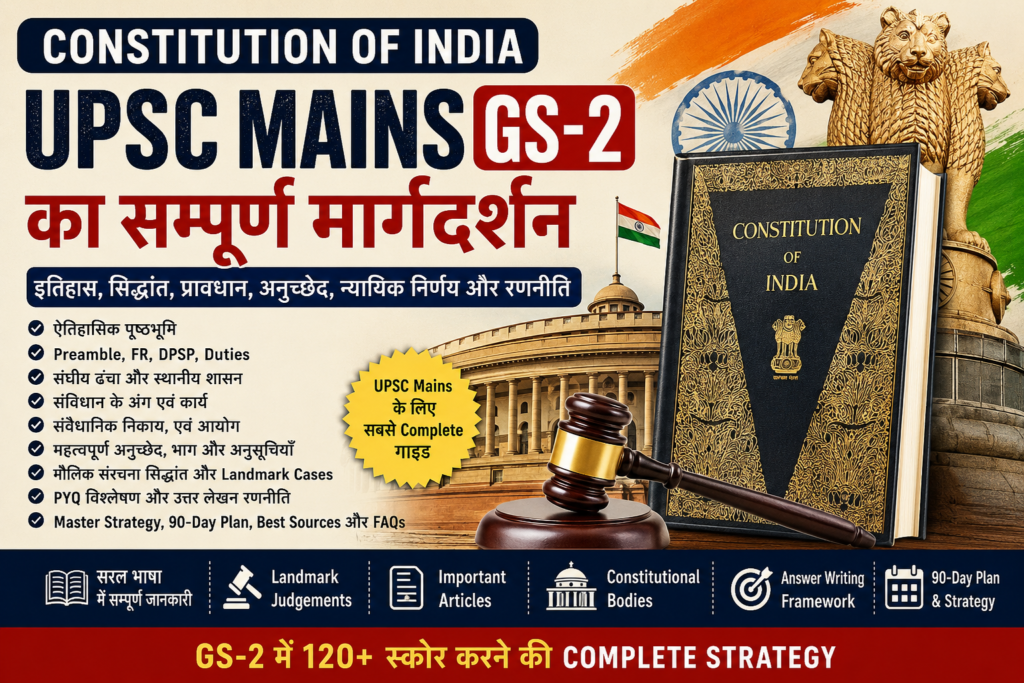
How to Study GS Paper 2 for UPSC Mains 2027: Complete Strategy, Sources, PYQs & Answer Writing Framework
UPSC Mains GS Paper 2 (Governance, Constitution, Polity, Social Justice & International Relations) को अधिकांश अभ्यर्थी आसान विषय मानते हैं क्योंकि इसके Topics जैसे Parliament, Supreme Court, Constitution, Fundamental Rights, Panchayati Raj और International Relations पहले से परिचित होते हैं। लेकिन यही सबसे बड़ी गलती होती है।
GS-2 में Familiarity अधिक होती है लेकिन Marks अपेक्षाकृत कम आते हैं क्योंकि अधिकांश अभ्यर्थी Prelims वाली तैयारी को ही Mains की तैयारी समझ लेते हैं। UPSC अब केवल Facts नहीं पूछता बल्कि Analytical, Issue-Based और Application-Oriented Questions पूछता है।
Why Most Aspirants Score Low in GS-2?
- Over Reliance on Laxmikanth
- Improper Understanding of Syllabus
- Lack of Current Affairs Integration
- Poor Answer Writing Practice
- Constitution पढ़कर Governance भूल जाना
- Social Justice और IR को Ignore करना
- Reports, Judgements और Committees का उपयोग न करना
- Demand of Question को न समझना
Biggest Myth About GS-2
अधिकांश Students सोचते हैं कि केवल Laxmikanth पढ़ लेने से GS-2 तैयार हो जाएगा। जबकि Laxmikanth केवल Foundation देता है।
GS-2 Mains में Constitution को Current Issues, Governance Challenges, Supreme Court Judgements, Parliamentary Reforms, Social Justice Issues और International Relations के साथ जोड़कर पढ़ना पड़ता है।
UPSC GS-2 Syllabus Simplified
Constitution & Polity
Constitution, Parliament, Judiciary, Executive, Federalism
Governance
Transparency, Accountability, NGOs, SHGs, E-Governance
Social Justice
Education, Health, Women, SC, ST, OBC, Minorities
International Relations
Neighbourhood, Major Powers, Global Organizations
Which Areas Generate Maximum Questions?
| Topic | Weightage |
|---|---|
| Constitution & Polity | 30-35% |
| Governance | 20-25% |
| Social Justice | 20-25% |
| International Relations | 20-25% |
Common Mistakes Made by Aspirants
What UPSC Actually Wants?
UPSC केवल जानकारी नहीं बल्कि आपकी विश्लेषण क्षमता, संवैधानिक समझ और शासन व्यवस्था की समझ को जांचता है।
What You Will Learn in This Complete GS-2 Guide?
- Indian Constitution Complete Foundation
- Constitutional Philosophy & Principles
- Parliament, Executive & Judiciary
- Federalism & Local Governance
- Constitutional Bodies
- Governance & Public Administration
- Social Justice
- International Relations
- Answer Writing Framework
- PYQ & Revision Strategy
Roadmap Ahead
अब अगले Section में हम Indian Constitution की Foundation को समझेंगे जिसमें Historical Background, Constitutional Development, Constituent Assembly, Salient Features और Basic Structure Doctrine को UPSC Mains Perspective से Cover करेंगे।
Indian Constitution: Historical Background, Constitutional Development, Constituent Assembly & Basic Structure
Indian Constitution UPSC GS-2 का सबसे महत्वपूर्ण भाग है। लगभग पूरा GS-2 Constitution के इर्द-गिर्द घूमता है। Parliament, Judiciary, Executive, Federalism, Governance, Fundamental Rights और Constitutional Bodies को समझने के लिए Constitution की मजबूत Foundation आवश्यक है।
UPSC Mains में केवल Articles याद होना पर्याप्त नहीं है। Constitution के पीछे की Philosophy, Historical Evolution और Constitutional Values को समझना अधिक महत्वपूर्ण है।
Why Constitution is the Backbone of GS-2?
- GS-2 का सबसे अधिक Weightage वाला भाग
- Governance और Public Administration की Foundation
- Judiciary एवं Fundamental Rights का आधार
- Federal Structure की समझ विकसित करता है
- Social Justice और Democracy से सीधा संबंध
- Essay और Interview में भी अत्यंत उपयोगी
Historical Background of Indian Constitution
भारतीय संविधान अचानक नहीं बना बल्कि लगभग 200 वर्षों के संवैधानिक विकास का परिणाम है।
1773
Regulating Act
1784
Pitt's India Act
1813–1853
Charter Acts
1858
Crown Rule
1909
Morley-Minto Reforms
1919
Montagu-Chelmsford Reforms
1935
Government of India Act
1947
Indian Independence Act
Government of India Act, 1935: Most Important Source
भारतीय संविधान का सबसे बड़ा संरचनात्मक आधार Government of India Act, 1935 माना जाता है।
Constituent Assembly
संविधान सभा भारतीय संविधान निर्माण की सबसे महत्वपूर्ण संस्था थी।
| Particular | Details |
|---|---|
| Formation | 1946 |
| First Meeting | 9 December 1946 |
| President | Dr. Rajendra Prasad |
| Drafting Committee Chairman | Dr. B.R. Ambedkar |
| Adoption | 26 November 1949 |
| Enforcement | 26 January 1950 |
Important Constitution Makers
Philosophy Behind the Constitution
भारतीय संविधान केवल कानूनी दस्तावेज नहीं बल्कि एक सामाजिक क्रांति का दस्तावेज है।
Salient Features of Indian Constitution
Borrowed Features of Constitution
| Country | Feature |
|---|---|
| United Kingdom | Parliamentary System |
| USA | Fundamental Rights |
| Ireland | DPSP |
| Canada | Federalism |
| Australia | Concurrent List |
| USSR | Fundamental Duties |
Basic Structure Doctrine
Basic Structure Doctrine भारतीय संविधान का सबसे महत्वपूर्ण Judicial Doctrine माना जाता है।
इसके अनुसार Parliament संविधान में संशोधन कर सकती है, लेकिन संविधान की मूल संरचना (Basic Structure) को नष्ट नहीं कर सकती।
Most Important Case: Kesavananda Bharati (1973)
यह भारतीय संवैधानिक इतिहास का सबसे महत्वपूर्ण निर्णय माना जाता है। इसी मामले में Supreme Court ने Basic Structure Doctrine स्थापित किया।
UPSC Answer Writing Framework
Most Important UPSC Themes
- Basic Structure Doctrine
- Constitutional Morality
- Constitutionalism
- Parliamentary Democracy
- Federalism
- Judicial Review
- Rule of Law
- Separation of Powers
Roadmap Ahead
अब अगले Section में हम Constitutional Framework & Philosophy को समझेंगे जिसमें Preamble, Citizenship, Fundamental Rights, DPSP, Fundamental Duties, Constitutional Morality और Rule of Law को UPSC Mains Perspective से Cover करेंगे।
Preamble, Citizenship, Fundamental Rights, DPSP, Fundamental Duties & Constitutional Morality
भारतीय संविधान केवल शासन चलाने का दस्तावेज नहीं है बल्कि भारत के सामाजिक, राजनीतिक और आर्थिक परिवर्तन का मार्गदर्शक भी है। UPSC GS-2 में Preamble, Fundamental Rights, DPSP, Fundamental Duties और Constitutional Morality से सीधे एवं अप्रत्यक्ष रूप से प्रश्न पूछे जाते हैं।
यह Section संविधान की आत्मा (Soul of Constitution) को समझने के लिए सबसे महत्वपूर्ण माना जाता है।
Why This Section is Important for UPSC?
- GS-2 का सबसे Fundamental Area
- Judiciary Questions की Foundation
- Governance Issues से Direct Link
- Supreme Court Judgements में Frequent Use
- Essay और Interview में अत्यंत महत्वपूर्ण
- Current Affairs आधारित Questions का Core
The Preamble: Soul of the Constitution
Preamble संविधान की प्रस्तावना है जो संविधान के उद्देश्यों, दर्शन और मूल मूल्यों को व्यक्त करती है।
Objectives of the Preamble
Social, Economic & Political
Thought, Expression, Belief
Status & Opportunity
Dignity & National Unity
Citizenship in India
भारत में Single Citizenship की व्यवस्था है, अर्थात सभी भारतीय केवल भारत के नागरिक होते हैं।
Fundamental Rights (Part III)
Fundamental Rights भारतीय लोकतंत्र की आधारशिला हैं और नागरिकों को राज्य के विरुद्ध सुरक्षा प्रदान करते हैं।
Most Important Articles for UPSC
| Article | Provision |
|---|---|
| 14 | Equality Before Law |
| 19 | Freedom Rights |
| 21 | Right to Life |
| 25 | Freedom of Religion |
| 32 | Constitutional Remedies |
Directive Principles of State Policy (DPSP)
DPSP राज्य को Welfare State बनाने के लिए दिशा-निर्देश प्रदान करते हैं।
Fundamental Duties
Fundamental Duties नागरिकों को राष्ट्र के प्रति उनके दायित्वों की याद दिलाती हैं।
- Respect Constitution
- Protect National Unity
- Promote Harmony
- Protect Environment
- Develop Scientific Temper
- Safeguard Public Property
Fundamental Rights vs DPSP
| Fundamental Rights | DPSP |
|---|---|
| Justiciable | Non-Justiciable |
| Individual Rights | Social Welfare |
| Negative Obligations | Positive Obligations |
| Legally Enforceable | Policy Guidelines |
Constitutional Morality
Constitutional Morality का अर्थ संविधान के मूल्यों, सिद्धांतों और लोकतांत्रिक आदर्शों का सम्मान करना है।
Rule of Law
Rule of Law का अर्थ है कि कोई भी व्यक्ति कानून से ऊपर नहीं है और सभी नागरिक कानून के समक्ष समान हैं।
Important Supreme Court Cases
UPSC Answer Writing Framework
Most Important UPSC Themes
- Constitutional Morality
- Rule of Law
- Fundamental Rights vs DPSP
- Right to Privacy
- Freedom of Speech
- Secularism
- Citizenship Issues
- Constitutional Governance
Roadmap Ahead
अगले Section में Parliament, Executive & Judiciary को UPSC Mains Perspective से समझेंगे, जिसमें Legislative Process, President, Prime Minister, Supreme Court, Judicial Review, Judicial Activism और Tribunals शामिल होंगे।
Parliament, Executive and Judiciary: Structure, Functions, Challenges & Constitutional Balance
भारतीय लोकतंत्र तीन प्रमुख स्तंभों पर आधारित है — Legislature (विधायिका), Executive (कार्यपालिका) और Judiciary (न्यायपालिका)। UPSC GS-2 में इन तीनों संस्थाओं से हर वर्ष प्रश्न पूछे जाते हैं क्योंकि यही भारतीय शासन व्यवस्था का मूल आधार हैं।
UPSC केवल इनके Structure नहीं पूछता बल्कि Accountability, Transparency, Judicial Activism, Parliamentary Reforms, Separation of Powers और Institutional Challenges पर आधारित Analytical Questions पूछता है।
Why This Topic is Important for UPSC?
- GS-2 का Highest Weightage Area
- Current Affairs से Direct Link
- Supreme Court Judgements आधारित Questions
- Parliamentary Reforms पर Questions
- Executive Accountability महत्वपूर्ण Topic
- Separation of Powers बार-बार पूछा जाता है
Three Pillars of Indian Democracy
Legislature
Lawmaking Institution
Executive
Law Implementation
Judiciary
Law Interpretation
Parliament of India
Parliament भारत की सर्वोच्च विधायी संस्था है।
Legislative Process
Executive in India
Executive कानूनों और नीतियों को लागू करने का कार्य करती है।
Prime Minister: Real Executive
भारत में Prime Minister वास्तविक कार्यपालिका प्रमुख (Real Executive Head) होता है।
- Head of Government
- Leader of Council of Ministers
- Chief Policy Maker
- Link Between President and Cabinet
- Leader of Parliament
President of India
President भारत का संवैधानिक प्रमुख (Constitutional Head) होता है।
Judiciary in India
भारतीय न्यायपालिका संविधान की संरक्षक (Guardian of Constitution) मानी जाती है।
Supreme Court: Guardian of Constitution
Judicial Review
Judicial Review के माध्यम से Supreme Court एवं High Courts संविधान के विरुद्ध किसी भी कानून या सरकारी कार्यवाही को असंवैधानिक घोषित कर सकते हैं।
Judicial Activism vs Judicial Overreach
| Judicial Activism | Judicial Overreach |
|---|---|
| Protects Rights | Interferes Excessively |
| Strengthens Democracy | May Disturb Balance |
| Public Interest Focus | Policy Intervention |
Tribunals in India
Tribunals विशेष प्रकार के न्यायिक निकाय होते हैं जो विशेष मामलों के त्वरित निपटारे के लिए बनाए जाते हैं।
Checks and Balances
भारतीय लोकतंत्र में शक्ति संतुलन (Checks and Balances) सुनिश्चित किया गया है ताकि कोई भी संस्था अत्यधिक शक्तिशाली न बन सके।
Current Issues for UPSC
- Parliamentary Productivity
- Judicial Pendency
- Judicial Appointments
- Tribunal Reforms
- Parliamentary Committees
- Executive Accountability
- Judicial Activism Debate
- Separation of Powers
UPSC Answer Writing Framework
Most Important UPSC Themes
- Judicial Review
- Judicial Activism
- Parliamentary Reforms
- Role of Prime Minister
- Separation of Powers
- Judicial Accountability
- Tribunal Reforms
- Legislature vs Judiciary Debate
Roadmap Ahead
अगले Section में Federalism, Centre-State Relations, Inter-State Relations, Cooperative Federalism, Competitive Federalism, Panchayati Raj Institutions और Urban Local Bodies को UPSC Mains Perspective से Cover करेंगे।
Federalism, Centre-State Relations, Cooperative Federalism, Panchayati Raj & Urban Local Governance
Federalism भारतीय संविधान की मूल संरचना (Basic Structure) का महत्वपूर्ण भाग है। UPSC GS-2 में Federalism, Centre-State Relations, Local Governance और Decentralisation से लगभग हर वर्ष प्रश्न पूछे जाते हैं।
UPSC केवल Federal Structure की परिभाषा नहीं पूछता बल्कि Cooperative Federalism, Competitive Federalism, Fiscal Federalism, Local Governance Reforms और Contemporary Challenges पर आधारित Analytical Questions पूछता है।
Why Federalism is Important for UPSC?
- GS-2 का High Weightage Topic
- Basic Structure Doctrine से जुड़ा हुआ
- Current Affairs आधारित Questions
- Governance एवं Development से Direct Link
- Parliament और State Legislatures दोनों से संबंध
- Cooperative Federalism पर बार-बार Questions
What is Federalism?
Federalism ऐसी शासन व्यवस्था है जिसमें शक्तियों का विभाजन केन्द्र और राज्यों के बीच किया जाता है।
भारत को Constitution में "Union of States" कहा गया है, इसलिए भारतीय संघवाद (Indian Federalism) को Quasi-Federal System भी कहा जाता है।
Features of Indian Federalism
Division of Powers
| List | Examples |
|---|---|
| Union List | Defence, Foreign Affairs, Currency |
| State List | Police, Public Health, Agriculture |
| Concurrent List | Education, Forests, Marriage |
Centre-State Relations
Cooperative Federalism
Cooperative Federalism का अर्थ है कि केन्द्र और राज्य सरकारें सहयोग और समन्वय के माध्यम से विकास के लक्ष्य प्राप्त करें।
Competitive Federalism
Competitive Federalism में राज्य आपस में बेहतर Governance, Investment Attraction और Ease of Doing Business के लिए प्रतिस्पर्धा करते हैं।
- Investment Competition
- Ease of Doing Business Rankings
- Innovation Rankings
- Startup Ecosystem Development
Fiscal Federalism
Fiscal Federalism केन्द्र और राज्यों के बीच वित्तीय संसाधनों के वितरण से संबंधित है।
Challenges to Federalism
Panchayati Raj Institutions (73rd Amendment)
Panchayati Raj ग्रामीण स्थानीय स्वशासन (Rural Local Self Government) की व्यवस्था है।
Urban Local Bodies (74th Amendment)
Urban Local Bodies शहरी क्षेत्रों में स्थानीय स्वशासन सुनिश्चित करते हैं।
Challenges in Local Governance
- Insufficient Funds
- Limited Administrative Capacity
- Political Interference
- Lack of Skilled Personnel
- Weak Accountability Mechanisms
- Dependence on State Governments
Way Forward for Strengthening Federalism
UPSC Answer Writing Framework
Most Important UPSC Themes
- Cooperative Federalism
- Competitive Federalism
- Fiscal Federalism
- Centre-State Relations
- Governor's Role
- Inter-State Water Disputes
- Panchayati Raj Reforms
- Urban Local Governance
Roadmap Ahead
अगले Section में Constitutional Bodies, Statutory Bodies, Regulatory Bodies और Quasi-Judicial Bodies जैसे Election Commission, UPSC, CAG, Finance Commission, NHRC, CIC, CVC आदि को UPSC Mains Perspective से Cover करेंगे।
Constitutional Bodies, Statutory Bodies, Regulatory Bodies & Quasi-Judicial Institutions in India
UPSC GS-2 में Constitutional Bodies, Statutory Bodies, Regulatory Bodies और Quasi-Judicial Bodies अत्यंत महत्वपूर्ण Topic हैं। लगभग हर वर्ष इन संस्थाओं की भूमिका, स्वतंत्रता, चुनौतियों और सुधारों पर प्रश्न पूछे जाते हैं।
UPSC केवल संस्थाओं के नाम नहीं पूछता बल्कि Governance, Accountability, Transparency, Independence और Institutional Reforms के संदर्भ में प्रश्न पूछता है।
Why This Topic is Important for UPSC?
- GS-2 में नियमित प्रश्न
- Governance से सीधा संबंध
- Current Affairs आधारित Questions
- Constitutional Accountability का आधार
- Parliamentary Democracy की मजबूती
- Essay एवं Interview में उपयोगी
Classification of Bodies
Constitutional Bodies
Constitution द्वारा स्थापित
Statutory Bodies
Parliament Act द्वारा स्थापित
Regulatory Bodies
Sector Regulation हेतु
Quasi-Judicial Bodies
Adjudication Functions
Major Constitutional Bodies
Election Commission
Free & Fair Elections
UPSC
Recruitment of Civil Servants
Finance Commission
Fiscal Federalism
CAG
Audit & Accountability
NCSC
SC Welfare Protection
NCST
ST Welfare Protection
Election Commission of India (ECI)
Election Commission भारत में स्वतंत्र और निष्पक्ष चुनाव सुनिश्चित करने वाली संवैधानिक संस्था है।
- Conduct Elections
- Model Code of Conduct
- Political Party Recognition
- Electoral Roll Management
- Election Monitoring
Union Public Service Commission (UPSC)
UPSC भारत की सर्वोच्च भर्ती संस्था है जो Civil Services एवं अन्य केंद्रीय सेवाओं के लिए भर्ती करती है।
Comptroller and Auditor General (CAG)
CAG को "Guardian of Public Purse" कहा जाता है।
- Audit Government Accounts
- Public Expenditure Monitoring
- Financial Accountability
- Transparency Enhancement
Finance Commission
Finance Commission केन्द्र और राज्यों के बीच वित्तीय संसाधनों के वितरण की सिफारिश करती है।
Important Statutory Bodies
Regulatory Bodies
Regulatory Bodies विभिन्न क्षेत्रों में नियमों के अनुपालन और निगरानी का कार्य करती हैं।
Quasi-Judicial Bodies
ये संस्थाएँ न्यायिक एवं प्रशासनिक दोनों प्रकार के कार्य करती हैं।
Major Challenges
Suggested Reforms
- Independent Appointment Mechanism
- Financial Autonomy
- Transparency in Functioning
- Technology Integration
- Capacity Building
- Periodic Performance Review
UPSC Answer Writing Framework
Most Important UPSC Themes
- Election Commission Reforms
- CAG and Accountability
- UPSC Independence
- Finance Commission Role
- NHRC Effectiveness
- CVC and Anti-Corruption
- Regulatory Governance
- Institutional Autonomy
Roadmap Ahead
अगले Section में Governance, Transparency, Accountability, Citizen Charter, E-Governance, RTI, Civil Services, NGOs, SHGs और Public Service Delivery को UPSC Mains Perspective से Cover करेंगे।
Basic Structure Doctrine, Constitutional Amendments & Landmark Supreme Court Judgements
भारतीय संविधान एक जीवंत दस्तावेज (Living Document) है, जिसे समय-समय पर संशोधित किया जा सकता है। लेकिन संविधान संशोधन की शक्ति असीमित नहीं है। Supreme Court ने Basic Structure Doctrine के माध्यम से संविधान की मूल आत्मा (Core Values) को सुरक्षित रखा है। UPSC GS-2 में यह Topic अत्यंत महत्वपूर्ण माना जाता है क्योंकि इससे Judicial Review, Constitutional Morality, Separation of Powers और Parliamentary Sovereignty जैसे Concepts जुड़े हुए हैं।
Why is Basic Structure Doctrine Important?
- UPSC GS-2 का सबसे अधिक पूछा जाने वाला Constitutional Topic
- Parliament vs Judiciary Debate की Foundation
- Constitutional Amendments को समझने का आधार
- Judicial Review की शक्ति का स्रोत
- Constitutional Morality से सीधा संबंध
- Essay एवं Interview में अत्यंत उपयोगी
Constitutional Amendment Procedure
संविधान के Article 368 के अंतर्गत Parliament को संविधान संशोधन की शक्ति प्राप्त है।
Types of Constitutional Amendments
Simple Majority
Ordinary Constitutional Changes
Special Majority
Most Constitutional Amendments
Special + State Ratification
Federal Provisions
What is Basic Structure Doctrine?
Basic Structure Doctrine के अनुसार Parliament संविधान में संशोधन कर सकती है लेकिन संविधान की मूल संरचना (Basic Structure) को नष्ट या परिवर्तित नहीं कर सकती।
Major Elements of Basic Structure
Evolution of Basic Structure Doctrine
| Year | Case | Importance |
|---|---|---|
| 1951 | Shankari Prasad | Parliament Can Amend FRs |
| 1965 | Sajjan Singh | Amendment Power Continued |
| 1967 | Golaknath | FRs Cannot Be Amended |
| 1973 | Kesavananda Bharati | Basic Structure Doctrine Introduced |
| 1980 | Minerva Mills | Limited Amending Power |
Most Important Landmark Judgements
Kesavananda Bharati (1973)
Basic Structure Doctrine Established
Golaknath Case
Fundamental Rights Debate
Minerva Mills
Balance Between FR & DPSP
S.R. Bommai
Secularism as Basic Structure
Maneka Gandhi
Expanded Article 21
Puttaswamy Case
Right to Privacy Fundamental Right
Judicial Review
Judicial Review के माध्यम से Supreme Court और High Courts संविधान के विरुद्ध किसी भी कानून या सरकारी कार्यवाही को असंवैधानिक घोषित कर सकते हैं।
Constitutional Morality
Constitutional Morality का अर्थ संविधान के मूल मूल्यों, लोकतांत्रिक सिद्धांतों और नागरिक स्वतंत्रताओं का सम्मान करना है।
UPSC Mains Perspective
- Basic Structure Doctrine पर Direct Questions
- Judicial Review vs Parliamentary Sovereignty
- Role of Supreme Court in Protecting Constitution
- Constitutional Morality in Governance
- Important Supreme Court Judgements
- Amendment Procedure and Federalism
Answer Writing Framework
Key Takeaway
Basic Structure Doctrine भारतीय लोकतंत्र की सुरक्षा कवच (Safety Shield) है। यह सुनिश्चित करती है कि Parliament संविधान को बदल सकती है लेकिन उसकी मूल आत्मा को समाप्त नहीं कर सकती। यही Doctrine भारतीय संविधान को विश्व के सबसे मजबूत संवैधानिक ढाँचों में से एक बनाती है।
Important Articles, Parts, Schedules & Constitutional Mapping Strategy for UPSC Mains GS-2
UPSC Mains में संविधान से जुड़े प्रश्नों का उत्तर लिखते समय यदि आप सही Article, Part, Schedule या Constitutional Provision का उल्लेख करते हैं तो उत्तर की गुणवत्ता कई गुना बढ़ जाती है। इसीलिए Constitution Mapping Strategy UPSC GS-2 की तैयारी का महत्वपूर्ण भाग है।
UPSC Articles रटने के लिए नहीं कहता बल्कि उनका Context, Application और Constitutional Significance समझने पर जोर देता है।
Why Articles & Schedules are Important?
- Answers में Constitutional Authenticity बढ़ती है
- Examiner पर Positive Impression पड़ता है
- Judgement-Based Questions में मदद मिलती है
- Governance एवं Polity Questions मजबूत होते हैं
- GS-2 तथा Essay दोनों में उपयोगी
- Interview में भी Frequently Used
Important Parts of Indian Constitution
| Part | Subject |
|---|---|
| Part I | Union and Territory |
| Part II | Citizenship |
| Part III | Fundamental Rights |
| Part IV | Directive Principles |
| Part IVA | Fundamental Duties |
| Part V | Union Government |
| Part VI | State Government |
| Part IX | Panchayats |
| Part IXA | Municipalities |
| Part XVIII | Emergency Provisions |
| Part XX | Constitutional Amendments |
Most Important Articles for UPSC Mains
Article 14
Equality Before Law
Article 19
Freedom Rights
Article 21
Right to Life & Liberty
Article 32
Right to Constitutional Remedies
Article 50
Separation of Judiciary
Article 51A
Fundamental Duties
Article 123
Ordinance Making Power
Article 136
Special Leave Petition
Article 141
Law Declared by SC
Article 142
Complete Justice
Article 280
Finance Commission
Article 368
Constitution Amendment
Fundamental Rights Article Mapping
| Article | Provision |
|---|---|
| 14-18 | Right to Equality |
| 19-22 | Right to Freedom |
| 23-24 | Right Against Exploitation |
| 25-28 | Freedom of Religion |
| 29-30 | Cultural & Educational Rights |
| 32 | Constitutional Remedies |
DPSP Important Articles
Social Order
Economic Justice
Panchayati Raj
Uniform Civil Code
Education
Environment Protection
12 Schedules of Constitution
High Yield Articles for UPSC Mains
Constitution Mapping Strategy
उदाहरण: Privacy → Article 21 → Puttaswamy Case → Data Protection Debate → UPSC Mains Answer
UPSC Answer Writing Trick
जब भी GS-2 में कोई Constitutional Question आए, Answer में कम से कम:
- 1 Relevant Article
- 1 Landmark Judgement
- 1 Constitutional Principle
- 1 Current Example
- 1 Balanced Conclusion
शामिल करने का प्रयास करें।
Most Asked Constitutional Areas in UPSC
- Fundamental Rights
- Judicial Review
- Federalism
- Constitutional Morality
- Parliamentary Democracy
- Emergency Provisions
- Anti Defection Law
- Constitutional Amendments
Roadmap Ahead
अगले Section में पिछले वर्षों के PYQ Analysis, Constitution Answer Writing Framework, Directive Keywords, Model Structures और UPSC Mains Constitution Questions को Decode करेंगे।
UPSC Constitution PYQ Analysis, Answer Writing Strategy & Mains Framework
UPSC Mains में Constitution केवल Static Subject नहीं है। UPSC बार-बार Constitutional Morality, Judicial Review, Federalism, Parliament, Judiciary, Fundamental Rights और Governance Issues को Contemporary Context के साथ पूछता है।
यदि आप पिछले 10 वर्षों के PYQs का विश्लेषण करते हैं तो स्पष्ट होता है कि UPSC Facts से अधिक Constitutional Understanding और Analytical Ability को महत्व देता है।
Why PYQ Analysis is Important?
- UPSC की वास्तविक Demand समझने में मदद मिलती है
- Important Topics Identify होते हैं
- Question Trends स्पष्ट होते हैं
- Answer Writing Structure विकसित होता है
- Revision Focused Preparation संभव होती है
- Marks Maximization Strategy बनती है
Last 10 Years Constitution PYQ Trends
Most Repeated Constitution Topics
| Topic | UPSC Frequency |
|---|---|
| Federalism | Very High |
| Judicial Review | Very High |
| Fundamental Rights | High |
| Parliament | High |
| Constitutional Bodies | High |
| Basic Structure | Medium-High |
Understanding Directive Keywords
Discuss
Explain both sides with balanced view
Examine
Investigate deeply and critically
Analyse
Break into components and explain
Critically Analyse
Strengths + Weaknesses
Evaluate
Assess and give judgement
Comment
Opinion with logical reasoning
Universal Constitution Answer Structure
How to Write Introduction?
How to Write Body?
- Use Constitutional Provisions
- Mention Relevant Articles
- Add Landmark Judgements
- Use Current Affairs Examples
- Present Balanced View
- Add Challenges & Reforms
How to Write Conclusion?
Conclusion हमेशा Constitutional Values, Democratic Principles, Good Governance और Citizen-Centric Approach पर आधारित होना चाहिए।
Features of High Scoring Constitution Answers
Common Mistakes in GS-2 Answers
15 Marks Constitution Question Framework
| Part | Words |
|---|---|
| Introduction | 30-40 |
| Main Body | 120-140 |
| Way Forward | 20-30 |
| Conclusion | 20-30 |
Most Expected Constitution Questions
- Basic Structure Doctrine and Parliamentary Sovereignty
- Judicial Review in Indian Democracy
- Constitutional Morality and Governance
- Federalism in Contemporary India
- Role of Supreme Court in Protecting Rights
- Parliamentary Accountability
- Constitutional Bodies and Governance
- Balance Between Rights and Duties
Roadmap Ahead
अगले और अंतिम Section में Constitution Master Strategy, Best Sources, Laxmikanth Reading Plan, 90-Day Revision Schedule, FAQs, Conclusion और Final UPSC Preparation Blueprint Cover किया जाएगा।
Constitution for UPSC Mains GS-2: Master Strategy, 90-Day Plan, Best Sources, FAQs & Final Blueprint
यदि आपने इस Guide के सभी Sections को समझ लिया है, तो अब समय है पूरी Constitution Preparation को एक व्यवस्थित Strategy में बदलने का। UPSC Mains में सफलता केवल पढ़ने से नहीं मिलती, बल्कि सही Sources, Smart Revision, PYQ Analysis और Answer Writing के संयोजन से मिलती है।
Constitution GS-2 का Foundation Topic है। यदि आपकी Constitution मजबूत है तो Governance, Federalism, Judiciary और Constitutional Bodies जैसे Topics स्वतः आसान हो जाते हैं।
UPSC Constitution Success Formula
Best Sources for Constitution Preparation
| Source | Purpose |
|---|---|
| NCERT Polity | Basic Understanding |
| Indian Polity by M. Laxmikanth | Core Preparation |
| Constitution of India | Important Articles |
| Supreme Court Judgements | Advanced Understanding |
| UPSC PYQs | Exam Trend Analysis |
| Current Affairs | Contemporary Relevance |
90-Day Constitution Preparation Plan
Days 1-30
- Historical Background
- Preamble
- Fundamental Rights
- DPSP
- Fundamental Duties
- Daily Notes Making
Days 31-60
- Parliament
- Executive
- Judiciary
- Federalism
- Constitutional Bodies
- PYQ Practice
Days 61-90
- Revision
- Important Articles
- Landmark Judgements
- Answer Writing
- Mock Tests
- Current Affairs Integration
30-Day Revision Strategy
Fundamental Rights + DPSP
Parliament + Executive
Judiciary + Federalism
Bodies + Cases + Articles
Most Important Constitution Topics for UPSC
Top Mistakes to Avoid
How to Score 120+ in GS-2?
- Use Constitutional Articles in Answers
- Mention Landmark Judgements
- Integrate Current Affairs
- Follow Structured Answer Format
- Practice PYQs Regularly
- Revise Multiple Times
- Develop Constitutional Perspective
Frequently Asked Questions (FAQs)
Q1. Is Laxmikanth enough for UPSC GS-2 Constitution?
Laxmikanth Foundation के लिए पर्याप्त है, लेकिन Mains के लिए Current Affairs, Judgements और PYQs भी आवश्यक हैं।
Q2. Which Articles are most important for UPSC?
Articles 14, 19, 21, 32, 50, 123, 136, 142, 280 और 368 सबसे अधिक महत्वपूर्ण माने जाते हैं।
Q3. How many times should I revise Constitution?
कम से कम 4-5 बार Revision आवश्यक है ताकि Articles, Concepts और Judgements मजबूत हो जाएँ।
Q4. How to improve Constitution Answer Writing?
Articles + Judgements + Current Affairs + Balanced Analysis + Constitutional Values का उपयोग करें।
Final Conclusion
भारतीय संविधान UPSC GS-2 का सबसे महत्वपूर्ण विषय है। यह केवल एक कानूनी दस्तावेज नहीं बल्कि भारतीय लोकतंत्र की आत्मा है। यदि आप Historical Background, Fundamental Rights, Judiciary, Federalism, Constitutional Bodies, Important Articles और Landmark Judgements को व्यवस्थित रूप से तैयार करते हैं, तो GS-2 में उत्कृष्ट प्रदर्शन कर सकते हैं।
याद रखें — UPSC Facts नहीं बल्कि Constitutional Understanding, Analytical Thinking और Balanced Opinion को पुरस्कृत करता है।
🚀 Ready to Master Constitution for UPSC Mains?
इस Complete Constitution Guide को Bookmark करें, नियमित Revision करें और प्रत्येक Topic के साथ PYQ एवं Answer Writing Practice अवश्य करें।
Start Your Constitution Revision TodayContinue Learning With IndiaDada
UPSC, SSC CGL, UPTET, Current Affairs, Government Jobs, School Education, Higher Education, Notes, PDF, MCQ, PYQ, Mock Tests और Exam Preparation की सम्पूर्ण सामग्री अब एक ही प्लेटफॉर्म पर।
Daily Current Affairs
Daily Current Affairs Notes, PDF & Analysis
🎯Current Affairs MCQ
Daily Quiz, Practice Sets & Mock Questions
🇮🇳UPSC Preparation
Prelims, CSAT, Mains Notes & PYQs
📑SSC CGL
Notes, Previous Papers & Mock Tests
🧠UPTET Preparation
Latest Notes, MCQ & Practice Sets
💼Government Jobs
Latest Sarkari Naukri & Recruitment Updates
🔥 Important Study Resources
🌐 Important Official Resources
🎯 Popular Exam Categories
🚀 Stay Connected With IndiaDada.com
Daily Current Affairs, UPSC, SSC CGL, UPTET, Government Jobs, Previous Year Papers, Notes, MCQ, Mock Tests तथा Latest Exam Updates प्राप्त करने के लिए IndiaDada.com के साथ जुड़े रहें।
Visit IndiaDada.com